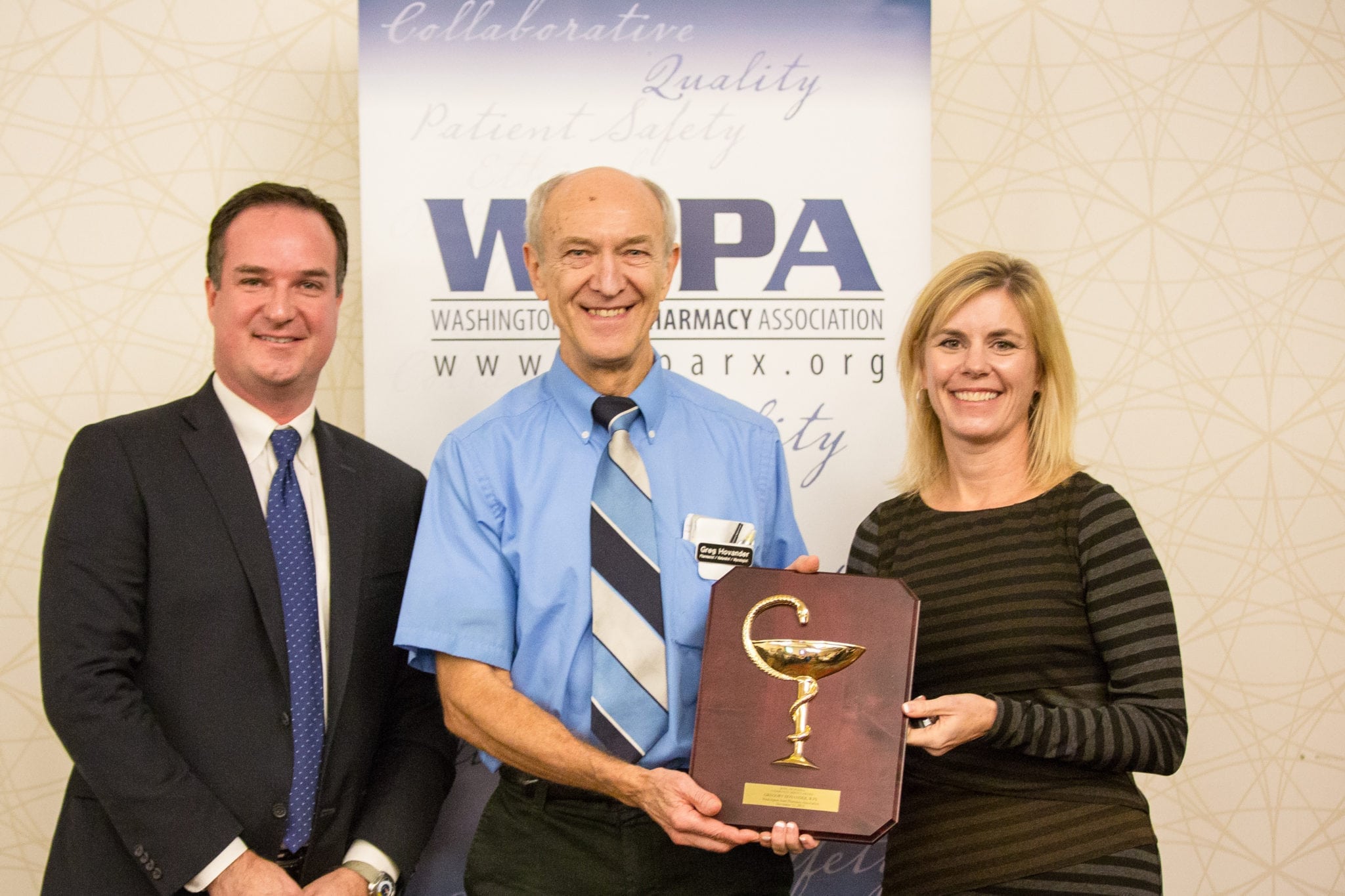
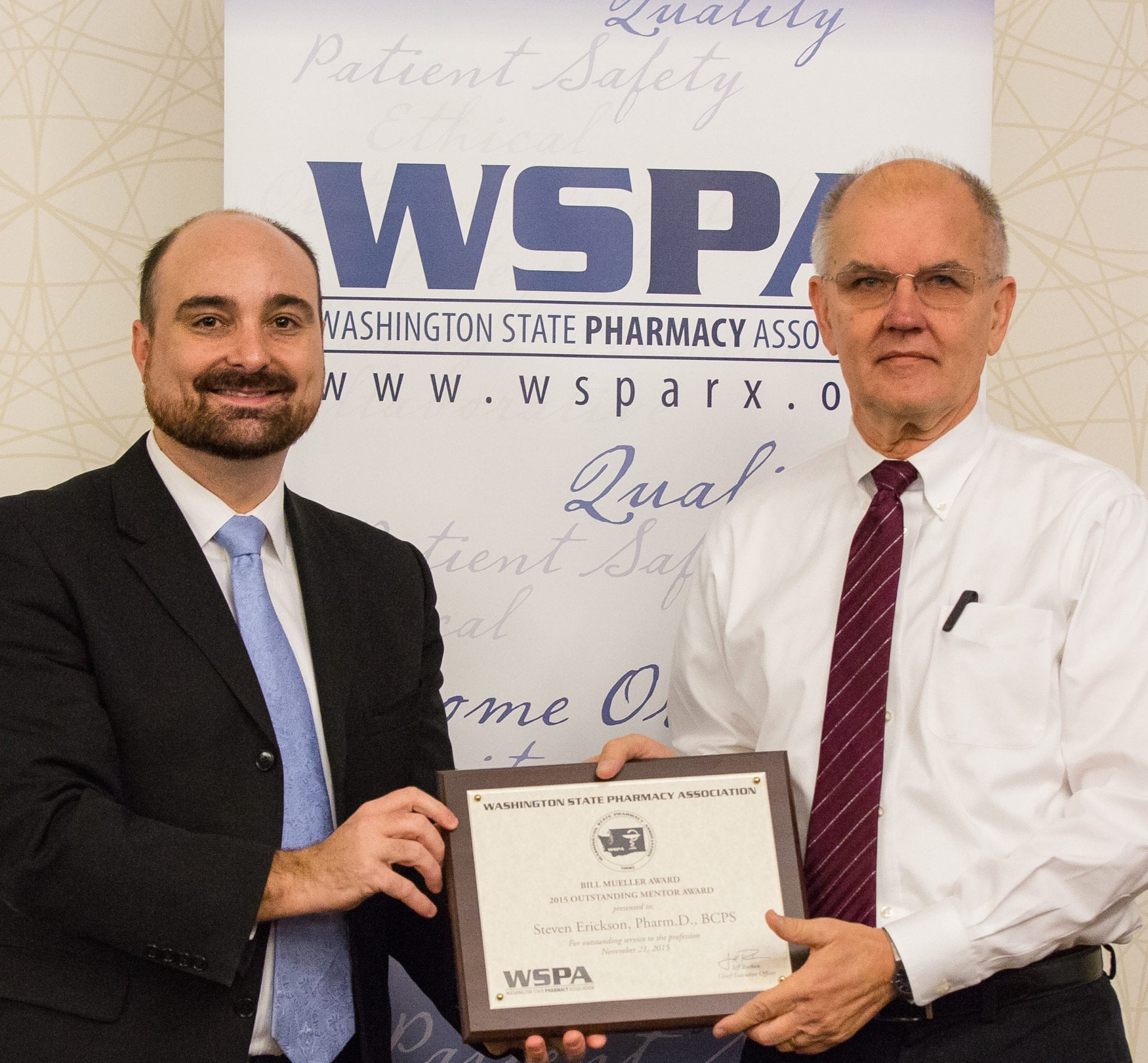
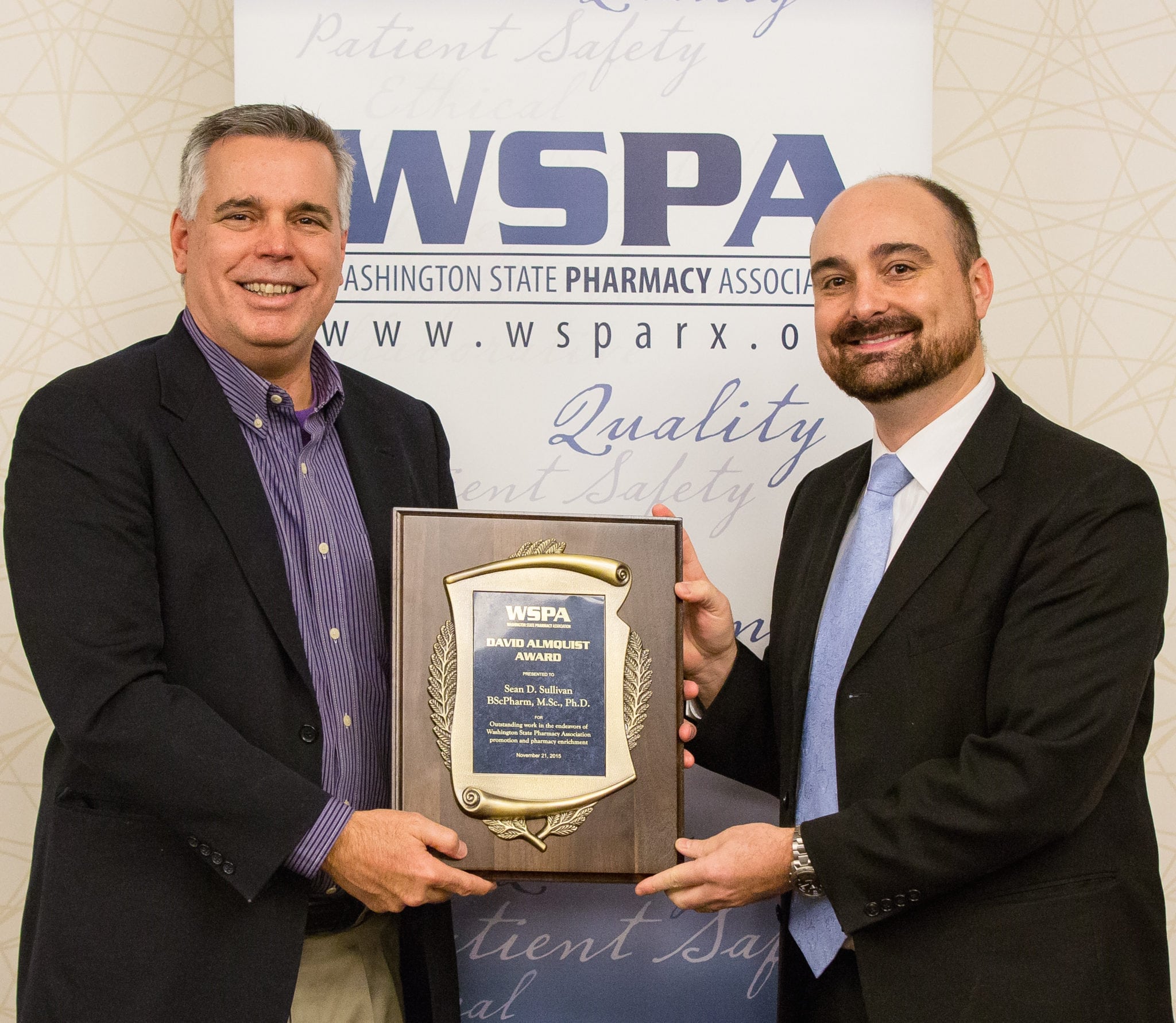
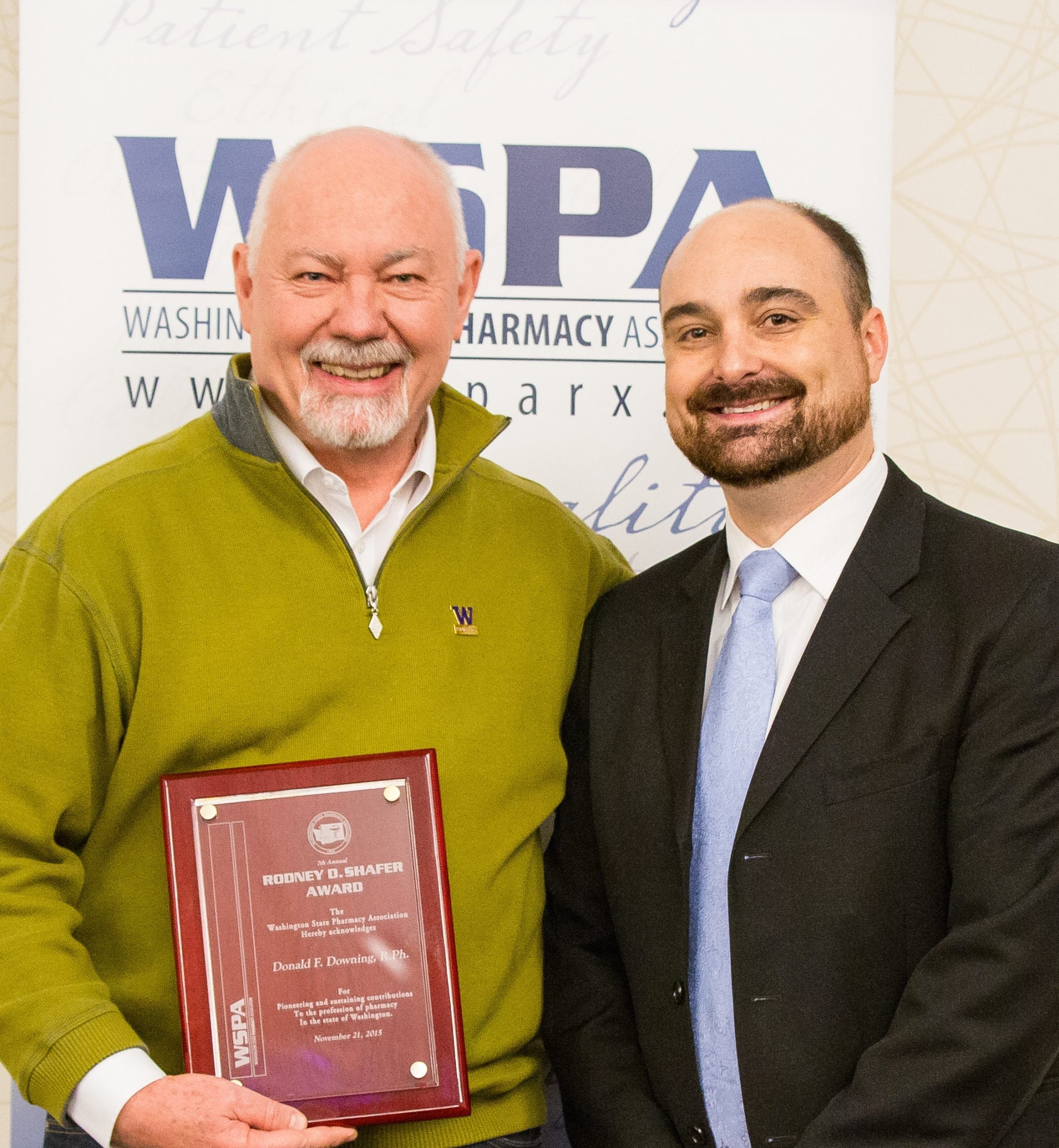
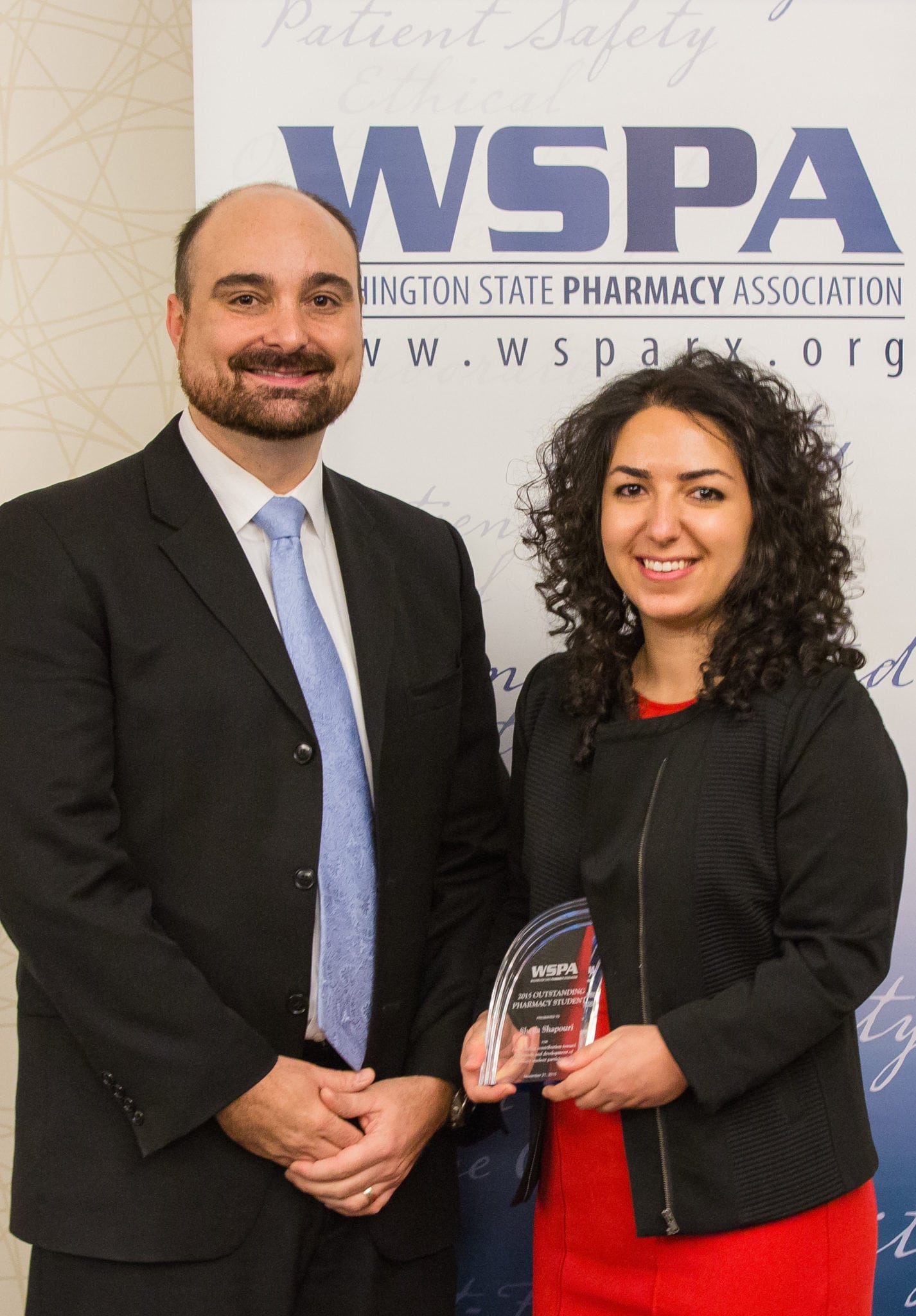
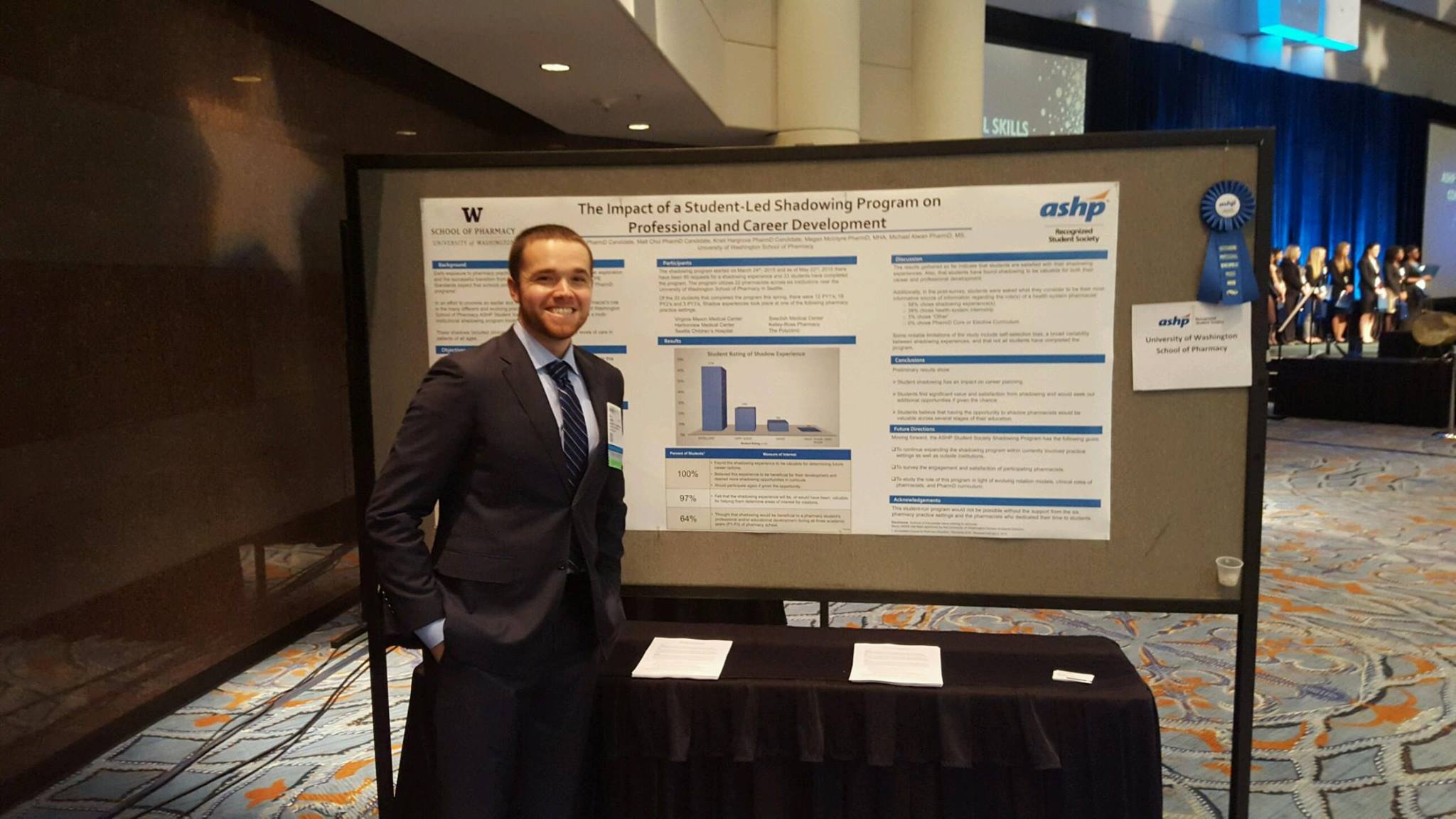
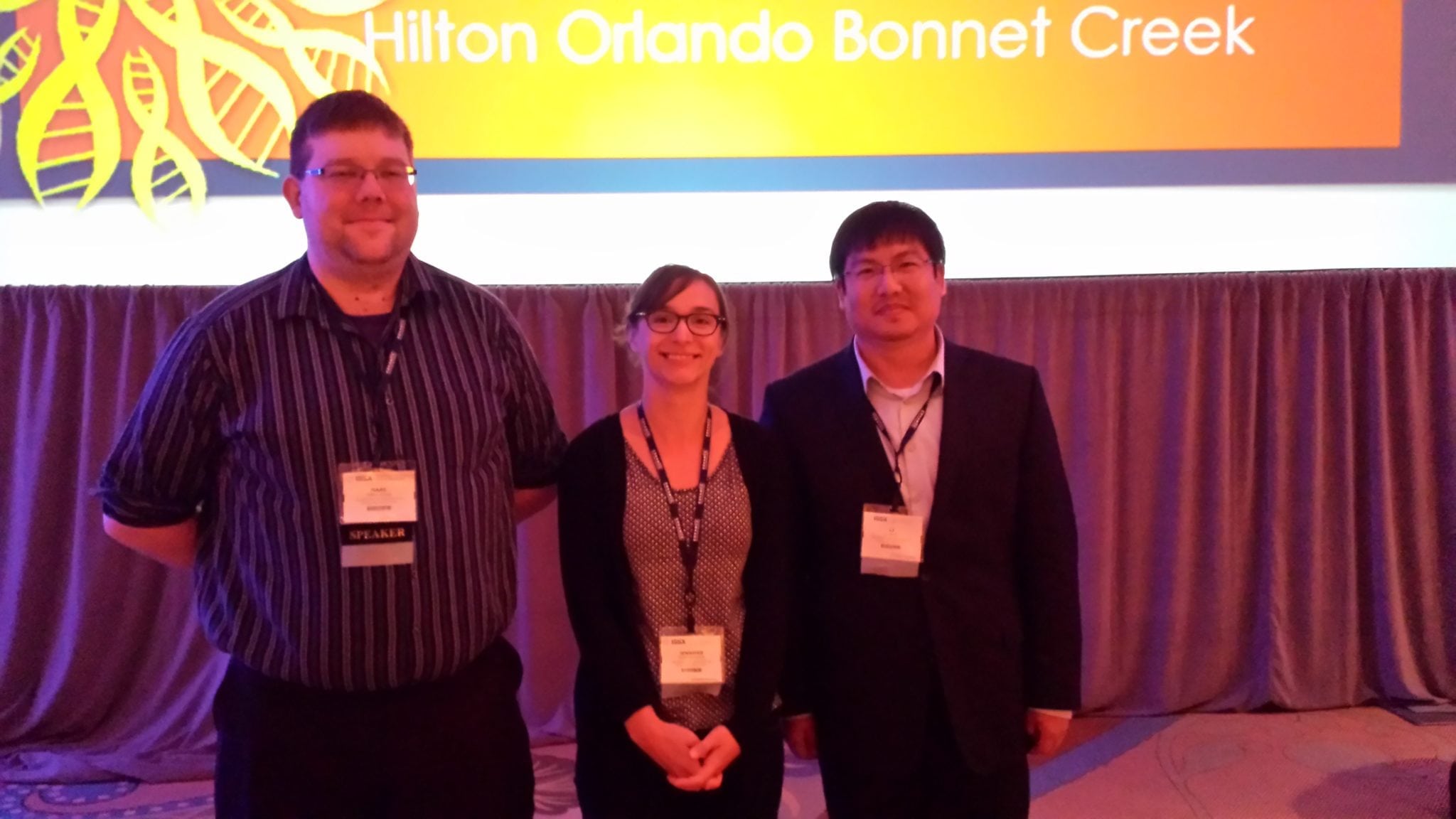
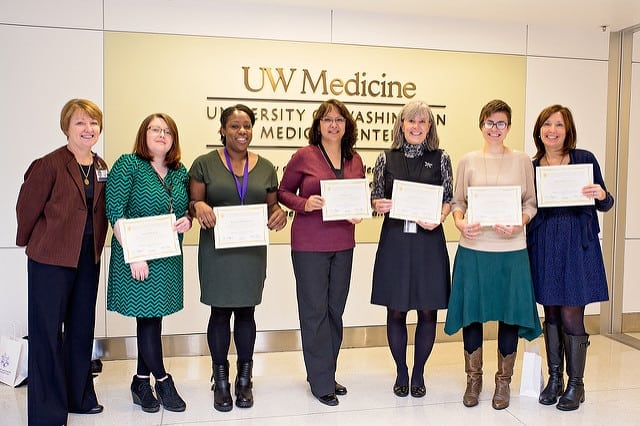
The UW School of Pharmacy had a strong presence at the recent Northwest Pharmacy Convention in Coeur d’Alene, ID, with 8 students, 7 faculty, and many alumni in attendance.
Highlights:
Dakota Fletcher (Class of 2027) completed his two-year term serving on the WSPA Board of Directors.
Our recent graduate, Amanda Bryan (Class of 2025), won the resident poster presentation competition for her project, “Optimizing Patient Care Service Implementation and Engagement in Independent Pharmacies Through a Resident-Led Coaching Model.” Her co-investigators included Jennifer Bacci and clinical faculty Matt Binder and Sirena Kalinski.
UW faculty also contributed several CE presentations:
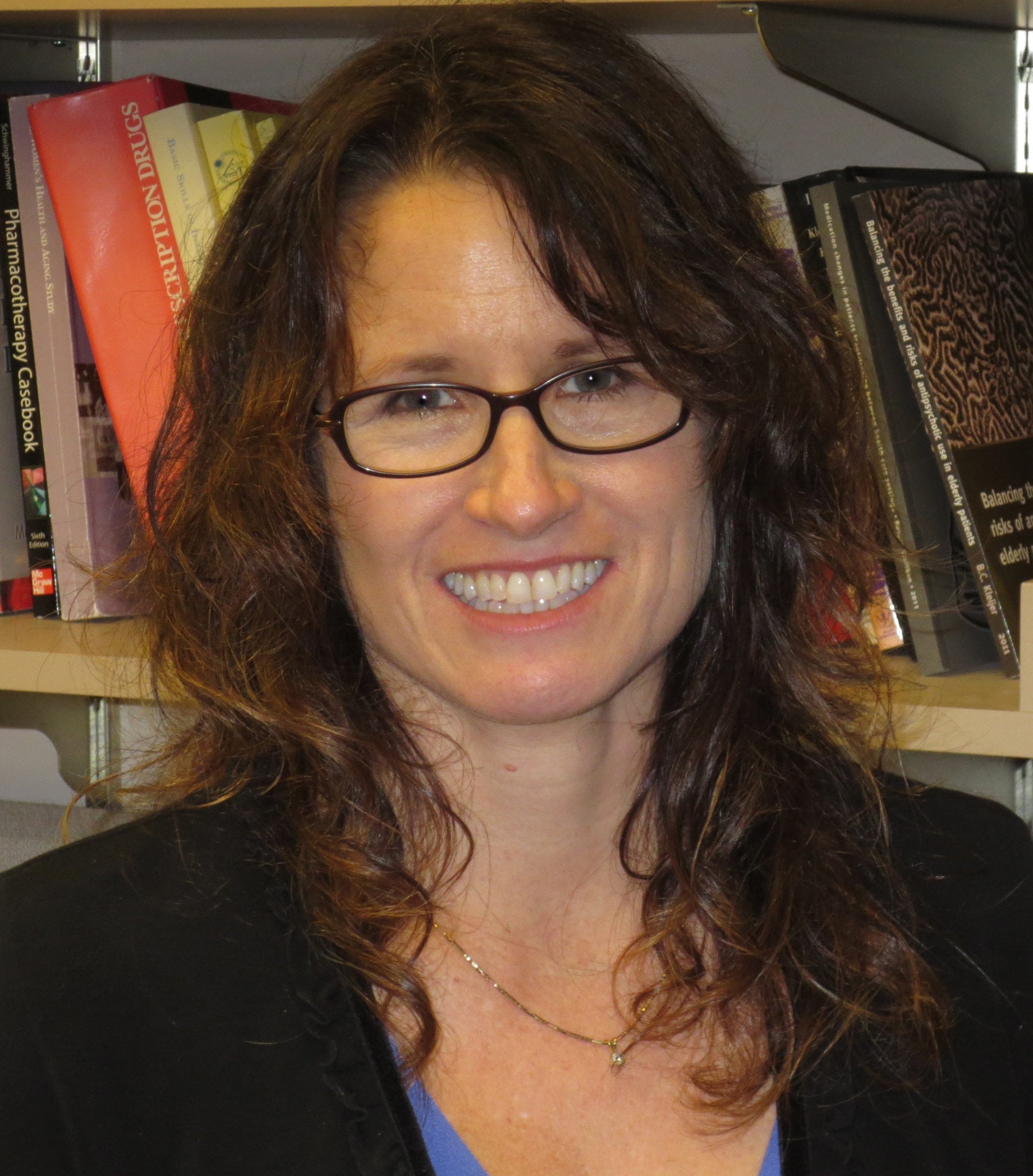
Dr. Kyu Lee, PhD, Assistant Professor of Health Decision Science, The CHOICE Institute
University of Washington Assistant Professor of Health Decision Science, Dr. Kyu Lee, PhD, has been awarded a 5-year K01 career development award from the National Institute of Health (NIH), National Institute of Allergy and Infectious Diseases (NIAID) for research on the role of vaccine antigenic match in improving the effectiveness of seasonal influenza vaccines and the value of expanding genomic surveillance to inform vaccine strain selection.
The NIAID K01 provides a structured framework for Lee to accelerate the development of an independent, interdisciplinary research program. Through targeted mentorship and collaboration with experts in health economics, infectious diseases, viral evolution, and biostatistics, the award supports the expansion of her research portfolio in influenza and other evolving pathogens.
Lee, a faculty member in the UW Department of Pharmacy and The CHOICE Institute, sees the award as a pivotal step in establishing an independent research program at the intersection of decision science, vaccinology, and pathogen evolution.
“The K01 award represents an important milestone in my transition to independence as a researcher,” she said. “It provides a unique opportunity to build on my expertise in decision science and simulation-based policy evaluation while expanding into new areas such as vaccinology and pathogen evolution. This interdisciplinary training will allow me to integrate methods across fields to advance influenza policy research.”
Her work addresses a gap that has long complicated influenza vaccine research: isolating the contribution of antigenic match — how well a vaccine strain resembles the viruses actually circulatingin a given season — from the many other factors that shape vaccine effectiveness. Using quantitative approaches including geospatial analysis and value-of-information analysis, Lee aims to generate evidence that supports more efficient resource allocation and decision-making for seasonal influenza vaccination programs.
Lee’s path to influenza research was shaped in part by the COVID-19 pandemic, which drew her attention to the unique challenges posed by continuously evolving respiratory viruses.
“Influenza has a long history of vaccine development, yet continuous viral evolution poses persistent challenges to vaccine effectiveness,” she noted. “The potential for pandemics driven by major antigenic shifts underscores the importance of rapidly translating surveillance data into policy decisions. This intersection of uncertainty, data, and decision-making makes influenza policy an especially compelling area for applying decision science methods.”
The award will support close collaboration with an outstanding team of mentors, including Dr. Anirban Basu, Stergachis Family Endowed Director and Professor of Health Economics at The CHOICE Institute; Dr. Janet Englund, Professor of Pediatric Infectious Diseases at Seattle Children’s Hospital; Dr. Trevor Bedford, Professor in the Vaccine and Infectious Disease Division at Fred Hutch and a leading expert in viral evolution and genomic surveillance; and Dr. Adam Szpiro, Professor of Biostatistics at the University of Washington. Together, their expertise will be instrumental in shaping Lee’s long-term research trajectory.
Please join us in congratulating Dr. Lee on this well-deserved recognition. We look forward to seeing the impact her work will have on influenza vaccine policy and public health for years to come.
CHOICE PhD candidate Yunjoo Karris Jeon leads research providing a more nuanced picture of what federal drug price negotiation is projected to save.
Study Lead Author, Karris Jeon, MSc
A new study published in Value in Healthoffers the first drug-level analysis of projected Medicare savings from the Inflation Reduction Act’s drug price negotiation program to incorporate drug-specific utilization and price trajectories — and projects lower savings than prior estimates.
Led by CHOICE PhD candidate Yunjoo Karris Jeon, MSc, the study represents the first aim of her dissertation, projecting savings at the individual drug level for the ten Medicare Part D drugs selected for the inaugural round of negotiation, with prices taking effect in 2026. This drug-level approach reveals which drugs drive greater savings and why.
Key Findings
The research projects $2.3 billion in 2026 savings — an 8.8% reduction — compared to a historical benchmark scenario without negotiation. That figure is notably lower than prior estimates from the Congressional Budget Office (CBO, $3.7 billion) and the Centers for Medicare & Medicaid Services (CMS, $6.0 billion) — a difference the study attributes to three factors neither the CBO nor CMS accounted for: how drug use and prices naturally change over time, the anticipated entry of generic and biosimilar alternatives for five of the ten drugs, and a redesign of Medicare’s manufacturer discount structure, which affects how net prices are calculated. When generic and biosimilar competition alone was removed, projected savings rose to $4.7 billion, more in line with CBO and CMS figures. Savings projections should account for anticipated generic and biosimilar competition, which can substantially reduce negotiation’s impact.
The drug-level results showed that negotiation appears most effective for drugs with low prior rebates and long periods of market exclusivity — products that have not benefited from existing rebate systems and that have maintained sustained market dominance.
The team also went beyond a simple before-and-after comparison, evaluating negotiated prices against a counterfactual in which the selected drugs were not negotiated but instead subject to the new Manufacturer Discount Program. Under that comparison, negotiation was projected to save $2.4 billion (9.0%).
Implications for Policy
As the negotiation program expands to additional drugs, these results underscore that projected savings will vary widely.
“Medicare drug price negotiation is not a one-size-fits-all mechanism. How much it saves depends on the rebates and competitive history of each drug selected — a consideration that will grow more important as subsequent rounds proceed,” Jeon says.
The study was co-authored with CHOICE faculty Professor Sean D. Sullivan, BScPharm, MSc, PhD, and Professor Ryan Hansen, PharmD, PhD, alongside Kristi Martin, MPA, Director (Health Care) at Camber Collective and Nico Gabriel, MA, Health Insurance Specialist at the Centers for Medicare & Medicaid Services.
Honor recognizes decades of leadership in health economics and outcomes research through scholarship, policy impact and mentorship.
Sean D. Sullivan, Professor and former Dean in the University of Washington (UW) School of Pharmacy, and longtime leader of the Comparative Health Outcomes, Policy, and Economics Institute, or CHOICE Institute, has received the Avedis Donabedian Lifetime Achievement Award from the International Society for Pharmacoeconomics and Outcomes Research (ISPOR), the Professional Society for Health Economics and Outcomes Research. The award recognizes a career of sustained contribution to the science and practice of improving healthcare quality, value and decision-making.
Over more than three decades, Sullivan has helped shape the field of health economics and outcomes research through scholarship, policy leadership, teaching and mentorship. He also serves on the ISPOR Board of Directors as its current Treasurer and has previously served as President of the Society. Colleagues who nominated him for the award described his career as one defined by “scientific excellence, methodological rigor, and health policy,” and credited him with helping build CHOICE into one of the world’s leading academic centers in the field.
His work has had a lasting effect on how evidence is developed and used by payers, policymakers and clinicians, and Sullivan has played a pivotal role in advancing the Academy of Managed Care Pharmacy Format, budget impact analysis methods and value-based formulary design — contributions that helped change how clinical and economic evidence are presented and applied in coverage and reimbursement decisions in the United States.
Sullivan’s scholarship is both broad and influential. He has authored more than 440 peer-reviewed publications across a wide range of health conditions, with research that has informed clinical guidelines, payer and government policies, and health technology assessment processes. Most recently, his work has helped bring clarity to the complex and evolving policy landscape surrounding Medicare drug price negotiation under the Inflation Reduction Act.
Just as significant is the reach of his mentorship. Over the course of his career, Sullivan has mentored more than 90 trainees and faculty members, many of whom now serve in leadership roles across academia, state and federal governments, industry and payer organizations. That legacy has extended his influence far beyond his own scholarship.
Those who have worked alongside Sullivan point not only to the significance of his scholarship, but to the community of inquiry and mentorship he helped build around it.
“Simply put, I came to UW to work with and be trained by Sean Sullivan,” said Jonathan H. Watanabe, Professor and Goyan Presidential Chair, Department of Clinical Pharmacy, University of California, San Francisco School of Pharmacy. “The environment he has cultivated, the innovations he has fostered, the friendships he has nurtured that have all nucleated from the steadfast notion of applying scientific thinking and principles to better understand, quantify, and promote health in the real-world is unique on earth.”
Shelby Reed, Professor in Population Health Sciences and Medicine, Duke University, emphasized both the quality and relevance of Sullivan’s work, as well as the example he has set for others in the field.
“Sean’s massive body of research exemplifies best practice in addressing questions that matter,” Reed said. “His recent work investigating the impact of changes in drug pricing in the U.S. sheds light on the thorny intersection of affordability, innovation, and improving health outcomes for patients.” She added, “Sean’s impact on health economics and outcomes research is exponentiated through his steadfast commitment to lifelong mentoring to so many people in the field. I am lucky to be one of them.”
Andy Stergachis, Professor of Pharmacy and Global Health at the UW School of Pharmacy, said Sullivan’s career has left a lasting mark on both the profession and the many people shaped by his work.
“Having known Sean since his graduate school days, I have had the privilege of witnessing the truly remarkable trajectory of his academic and professional career and its impact,” Stergachis said. “His achievements have yielded lasting benefits for generations of his mentees, the profession of pharmacy, the healthcare system, and society at large. This lifetime achievement honor is a fitting recognition of his pioneering and enduring leadership and many contributions to the economic evaluation of health care technologies and practices, as well as to pharmaceutical and medical technology pricing and policy.”
Scott Ramsey, Director of the Hutchinson Institute for Cancer Outcomes Research at Fred Hutch Cancer Center, Professor of Medicine, and Adjunct Professor of Pharmacy, underscored the breadth of Sullivan’s influence as a scholar, teacher and mentor.
“Through his leadership, mentorship of generations of students, and scholarship, Sean has elevated the School of Pharmacy, launched dozens of successful careers, and built a legacy of research and teaching that is without peer,” Ramsey said. “He is a true giant in the field, and an incredibly positive force for the profession.”
Ryan Hansen, Professor and Chair at the UW Department of Pharmacy was first introduced to the field of Health Economics and Outcomes Research by Sullivan, and was mentored by him through graduate school. Hansen said: “Sean has had a lasting impact on so many lives around the globe, from patients to clinicians, and of course scientists in the field of HEOR. The Donabedian Award is a wonderful testament to his many scientific achievements and ongoing career.”
The field has evolved over the course of Sullivan’s career. When he entered health economics and outcomes research, the discipline was still establishing itself. Over time, the questions it raised — about value, affordability and evidence — moved from the margins to the center of healthcare decision-making.
Still, the central responsibility of the field has not changed: to produce rigorous evidence, communicate it clearly and ensure that it is used appropriately.
“It isn’t about data or methods,” Sullivan said. “It’s about patients who need medicines they can afford, and policymakers who need evidence they can trust.”
Sullivan’s career has also been recognized through his election to the National Academy of Medicine, designation as a Fellow of the American Association for the Advancement of Science, and the Academy of Managed Care Pharmacy Foundation Steven G. Avey Award for sustained and distinguished service to managed care pharmacy.
Along with the Donabedian Award, these honors reflect a career devoted not only to advancing a field, but to strengthening the connection between evidence and better healthcare decisions.
About the UW School of Pharmacy
The University of Washington School of Pharmacy advances better health through innovative research, education and service, and prepares the next generation of scientists, pharmacists and health care leaders.
The CHOICE Institute is pleased to announce the 2026-2028 cohort of HEOR Fellows who will start their programs on July 1, 2026. Our HEOR fellows work closely with faculty in the CHOICE Institute on projects where they learn first-hand how to apply the principles of outcomes research to real-life problems. These fellowships provide students with a year of study at the University of Washington, usually combined with a period of applied research at the sponsoring company. The year of study leads to an MS degree in Health Economics & Outcomes Research.
These training programs in health economics, outcomes research, and policy each combine the resources of a leading academic center for pharmaceutical economics and policy with the dynamic, real-world training of major pharmaceutical and biotechnology companies recognized for their commitment to innovation. Read more about our industry fellowship programs.
Meet the fellows:
AbbVie
Sharon Kim, University of California-Irvine
UW Mentor: Kyu Lee, PhD, Assistant Professor, Department of Pharmacy, The CHOICE Institute
Bayer
Quinn Lifschitz, University of Utah
UW Mentor: Ryan Hansen, PharmD, PhD, Professor & Chair, Department of Pharmacy, The CHOICE Institute
Duc Pham, University of Minnesota
UW Mentor: Ryan Hansen, PharmD, PhD, Professor & Chair, Department of Pharmacy, The CHOICE Institute
Genentech
Brianne Burns, Thomas Jefferson University
UW Mentor: Dave Veenstra, PharmD, PhD, Professor, Department of Pharmacy, The CHOICE Institute
Pfizer
Julia Song, University of Utah
UW Mentor: Josh Carlson, MPH, PhD, Professor, Department of Pharmacy, The CHOICE Institute
Sanofi
Kendall Derber, University of Utah
UW Mentor: Sean D. Sullivan, BScPharm, MSc, PhD, Professor, Department of Pharmacy, The CHOICE Institute
Aging is one of the few experiences that is both deeply personal and entirely universal.
If we are fortunate, we grow older. We notice small changes first — a little more effort getting out of a chair, a second look at a medication label, a new awareness of balance or memory. Over time, aging reshapes routines. It invites new kinds of independence and, sometimes, new kinds of support.
Most of us will also find ourselves caring for someone older — a parent, a partner, a friend. We will learn how much daily life depends on small, steady acts: a reminder, a lift, a check-in call, a quiet reassurance.
And now, woven into that everyday reality, is artificial intelligence.
AI is already drafting emails and diagnosing diseases. But its most meaningful role may not be in laboratories or corporate boardrooms. It may be in homes — helping someone live safely, stay connected, and remain independent longer than was once possible.
The question is no longer whether technology will shape aging.
It already is.
The more important question is this:
How can we ensure it does so in ways that strengthen dignity, connection, and choice?
Rethinking What “Value” Means
For Jing Li, Associate Professor of Health Economics and Associate Director of The CHOICE Institute, the word “value” sits at the center of this conversation.
“In the current era,” she explains, “the unprecedented speed at which new technology develops — including advances in AI — has prompted policymakers, researchers, providers, and end users to look for ways to leverage these technologies to maximize their value.”
But value, she emphasizes, is not just about innovation.
“Value, at its core, involves both cost and benefit.”
That balance is broader than it sounds. Benefits include not only technical breakthroughs, but practicality, scalability, sustainability, and ease of use. Economists also look at what Li calls “marginal benefit” — the real, measurable improvement beyond what we already have. Does a tool meaningfully reduce falls? Improve medication adherence? Ease caregiver stress?
Costs are layered, too. There is the price of the technology itself, but also the time required to learn it, the adjustments in workflow, and the systems needed to support it. Trust and ethics, Li notes, cut across both sides of the equation. If people feel confident and respected, value increases.
The goal is not simply to build smarter tools. It is to build tools that make life better — in ways that are tangible and lasting.
Supporting the People Who Support Us
When we talk about aging, we often focus on older adults themselves. But caregiving is part of the picture — and often an invisible one.
For Karen Eggleston, Director, Asia Health Policy Program, Shorenstein Asia-Pacific Research Center, Stanford University, one of the most promising aspects of AI and robotics lies in how they can support care partners.
“One aspect that might be often overlooked,” she says, “is that AI and robotics can bring value to older adults through supporting their care partners — relieving the stress, time burden, or even the back pain of caregivers.”
That support can be transformative. A robotic lift that prevents injury. A digital platform that simplifies coordination. A monitoring tool that provides reassurance from a distance. Small improvements in caregiver burden can ripple outward — preserving energy, patience, and emotional bandwidth.
Eggleston underscores the importance of evidence to ensure these tools truly help. “For assessing value, it will be critical to gather evidence about what works in practice — including both the intended and unintended consequences.”
Done thoughtfully, technology has the potential to make care not only more efficient, but more humane.
Independence, With Support
For Shuai Huang, Professor, Department of Industrial & Systems Engineering at the University of Washington School of Engineering, the measure of success is clear.
“To define value in aging technology,” he says, “the primary metric should be how effectively a tool enhances an older adult’s quality of life, independence, and dignity — according to their own personal goals.”
That focus shifts the conversation. It reframes AI not as a replacement for human care, but as a partner.
“There’s a trade-off between a device providing ‘security’ for a clinician versus ‘surveillance’ for a senior,” Huang explains. Designing thoughtfully means ensuring safety without sacrificing autonomy.
Generative AI and digital tools are already enabling more proactive models of care. Sensors can detect subtle changes in routine. Predictive models can flag risks before they escalate. Virtual companions can supplement social engagement, especially for those aging alone.
The key, Huang believes, is inclusion. When older adults are invited into the design process — when their voices shape the tools meant to serve them — trust grows. The result is what one design participant described as an “ultimate partnership” — technology that feels made for me.
From Innovation to Real Life
In hospitals and long-term care settings, even the most promising technologies must prove themselves in the complexity of daily life.
For Oleg Zaslavsky, Director of the Digital Health Innovation Hub and Associate Professor in Aging, Biobehavioral Nursing at the University of Washington School of Nursing, value comes down to what people experience.
“Value should center on functional independence, caregiver burden, and quality of life — not just utilization or cost offsets,” he says. “True value in aging care must integrate both.”
AI now allows clinicians to detect patterns — changes in speech, movement, or behavior — that were previously invisible. That capability opens the door to earlier intervention and more personalized support.
At the same time, thoughtful implementation matters. Technology works best when it integrates smoothly into existing workflows and respects the people using it — from nurses to family members to older adults themselves.
When done well, these tools do not dominate the experience of aging. They recede into the background, quietly extending safety and support.
A Hopeful Future
If there is a through line in these conversations, it is this: technology should strengthen the experience of aging — not complicate it.
The most powerful tools may not be the flashiest or most visible. They may be the ones that quietly extend independence. The sensor that prevents a fall. The algorithm that catches a subtle health shift early. The digital platform that lightens a caregiver’s load. The interface that feels intuitive rather than intimidating.
Shuai Huang imagines a future in which AI becomes “an empowering, quiet partner — omnipresent yet never overbearing.” Success, he says, would sound like this: “I live alone, but I never feel alone or helpless.”
It is a modest vision, and that is precisely its strength.
Aging does not need to be reengineered. It needs to be supported — with tools that respect autonomy, preserve dignity, and make everyday life safer and more connected. When technology aligns with those goals, it expands choice rather than narrowing it.
The GenAI era offers extraordinary capability. The opportunity now is to apply that capability with care — designing systems that meet people where they are, that adapt to real lives, and that remain accessible beyond early adopters.
If we do that well, the future of aging will not feel futuristic at all.
It will feel steady. Supported. Human.
And perhaps most importantly, it will feel like life — continuing forward, with confidence and connection.
A new viewpoint article published in the Journal of Managed Care & Specialty Pharmacy examines how key provisions of the Inflation Reduction Act (IRA) of 2022 may unintentionally destabilize long‑term care (LTC) pharmacies—providers that serve many of the nation’s most vulnerable older adults.
The analysis, authored by PhD Candidate Shiven Bhardwaj and Associate Professor Douglas Barthold of the University of Washington School of Pharmacy’s CHOICE Institute, Weston Schmutz (Schmutz Health Solutions), and Jonathan H. Watanabe (University of California, San Francisco) evaluates how the law’s drug‑pricing reforms could create significant financial and operational challenges for pharmacies operating in LTC settings.
One of the paper’s central findings points to the projected impact of the IRA’s Maximum Fair Price (MFP) reimbursement structure. For drugs selected under the Drug Price Negotiation Program, LTC pharmacies could face an estimated 85% decline in revenue, a shift driven by reduced payments paired with already inadequate dispensing fees.
The researchers also highlight cash‑flow concerns arising from new Medicare Part D payment flows. Reimbursement timelines are expected to lengthen from roughly 14 days to 22–24 days, potentially creating liquidity shortfalls for pharmacies operating on narrow margins.
Douglas Barthold, PhD
The article further notes that requirements tied to the IRA’s Monthly Prescription Payment Plan (M3P) are often incompatible with the retroactive billing processes common in long‑term care. These conflicts could increase administrative burden and introduce friction in medication access for residents.
Beyond identifying risks, the authors outline several policy recommendations designed to stabilize the LTC pharmacy sector. These include codifying refund amounts to maintain acquisition discounts, aligning reimbursement with value‑based care models, and implementing targeted adjustments to ensure continuity of care. The work was supported in part by the Plein Center for Aging.
The researchers emphasize that without policy responses, the future of LTC pharmacies and their essential functions may be jeopardized.
The full viewpoint article is available through JMCP at this link.
Thirty years ago, a quietly ambitious idea began to take shape at the University of Washington—one that would go on to redefine how we measure value in healthcare, train generations of leaders, and build a model for collaborative, human-centered research.
Today, The Comparative Health Outcomes, Policy, and Economics (CHOICE) Institute—stands as one of the world’s leading centers for health economics and outcomes research (HEOR). But its origins were humble. Its growth, deliberate. And its impact, profound.
The first graduating PhD cohort in 2001: Eric Johnson, Sean D. Sullivan, Todd Lee, Mitch Higashi, Dave Veenstra, Nui Chaiyakunapruk, Tom Hazlet, Holly Trautman, Jackie Gardner.
A Foundation of Vision: The Early Years
The story begins in 1989, when Dr. Andy Stergachis joined the UW School of Pharmacy. With a background in pharmacy and public health, Stergachis saw an opportunity to create something beyond the traditional academic mold. In 1990, he began laying the groundwork for what would become the Pharmaceutical Outcomes Research and Policy Program—PORPP, the academic forerunner to CHOICE. Stergachis envisioned an institute that would anchor rigorous graduate training in applied pharmaceutical outcomes research—and help shape pharmacy’s broader role in public health.
From the start, the work was policy-relevant and globally impactful. Stergachis’ own research helped shift World Health Organization guidelines on anti-malarial drug safety during pregnancy. The ethos was clear: CHOICE would be about science, but also service. “The field has grown, and CHOICE has grown with it,” he said. From substance use and tobacco cessation to maternal health and medical devices, CHOICE faculty and alumni are tackling the most complex issues in healthcare today—always with collaboration at the core. But Stergachis believes CHOICE’s most lasting contribution may be its people.
“Our alumni are change makers,” Stergachis said. “They’re leading in government, industry, and global health. That’s the legacy.”
He and his wife Joanne have helped ensure that legacy continues—through endowments supporting global learning, faculty leadership, and future scholars. “It’s about investing in the future,” he said. “Because we’re not done. Not even close.”
Building a Research Engine: The Rise of Outcomes Science
Soon, Stergachis was joined by epidemiologist Dr. Jackie Gardner, and pharmacist and recent PhD health economist from UC Berkeley, Dr. Sean D. Sullivan. Together, they formed a nucleus of scholars committed to rigorous science, collaborative inquiry, and the belief that pharmacy should be as much about population health as pills. When Sullivan arrived in 1991, the idea of evaluating “value for money” in healthcare was still novel, and they saw an urgent need to ask better questions in this space—and train people to answer them.
“CHOICE is a community,” Sullivan said. “A home for educators, researchers, and students who are passionate about improving health outcomes through better decision-making.”
Andy and Sean at the historic APhA Meeting where the idea of PORPP was put into motion.
In 1995 the team, support, and funding were in place; the time was right to officially establish PORPP and a new graduate program. Under Sullivan’s leadership—as faculty, the Director of PORPP, and later dean—CHOICE helped pioneer the field of Health Economics and Outcomes Research (HEOR). Its graduate program became a launchpad for policy-influencing scientists. And its faculty—like Josh Carlson, Lou Garrison, Beth Devine, Dave Veenstra, Ryan Hansen, Aasthaa Bansal, and others—produced work that shaped real-world access, pricing, and regulation. “We’re often cited as a top institute globally,” Sullivan noted. “Not because of marketing—but because of the quality of our work, our dynamic students, and the staff behind it.”
The Institute’s impact can be seen in federal reforms, precision medicine policy, and groundbreaking cost-effectiveness methods. But its greatest influence, Sullivan said, may be its leadership pipeline: “Seven of the 30 ISPOR presidents have come from CHOICE. That’s not an accident. That’s a culture.”
Careers Defined: Purpose and Progress
For Dr. Beth Devine, CHOICE has been more than an academic home, it has been her purpose. “It wasn’t yet called CHOICE when I joined,” she recalled. “But the energy and ambition were unmistakable.”
Denise Boudreau, Shelby Reed, Kristin Marciante, Beth Devine
Across her career, Devine’s work has helped transform electronic health records, genomic screening, and evidence synthesis for national guidelines. She partnered across disciplines and continents, always keeping science in service to patients. “What sets CHOICE apart,” she said, “is that our research is never in isolation. It’s connected—to medicine, public health, informatics, and global policy.”
Reflecting on the evolution of CHOICE, Devine sees the next chapter of the Institute already underway. “We’re entering an era of real-world data, machine learning, and global collaboration,” she said. “But the core remains: rigorous, patient-centered science—and a culture of mentorship that multiplies our impact.”
Professor Emeritus Lou Garrison echoes Dr. Devine’s perspectives and is pleased to see the evolution and success of CHOICE over these 30 years and its contribution to the science of HEOR. Having mentored many students and junior colleagues, including Dr. Devine, he said, “I have had the privilege and pleasure of working with the dedicated and talented CHOICE faculty, students, and staff over this entire period—first, at Roche, as collaborator and mentor, and then, as a faculty member. My debt is immense—as is my gratitude for my good fortune.” In September 2022, Garrison received the Avedis Donabedian Outcomes Research Lifetime Achievement Award from ISPOR.
2012 Graduation Ceremony. Top row: Cara McDermott, Sean D. Sullivan, Beth Devine, Dave Veenstra, Josh Carlson, Denise Boudreau, Veena Shankaran. Bottom Row: Ryan Hansen, Heidi Wirtz, Jon Watanabe, Rafael Alfonso Cristancho, Josh Roth, Joanna Sanderson.
Dr. Josh Carlson, who serves as Graduate Program Director, sees collaborative culture as central to CHOICE’s success. “It’s not about individual excellence. It’s about building something together,” Carlson said.
His work with the Institute for Clinical and Economic Review (ICER) has led to more than 25 health technology assessment models used across the country. “It’s been a way to stay connected to both the policy implications and the methodological frontiers of our field. That dual relevance—rigor and impact—is what keeps CHOICE vibrant.”
A Broader Identity: Redefining Choice
Initial strategic plan brainstorming for The CHOICE Institute.
In 2014, when Sullivan became the Dean, he initiated the search for a new Director of PORPP. The search Committee, led by Andy Stergachis, identified Dr. Anirban Basu as the clear successor and he was appointed in 2015. At that time, the transformation from PORPP was already underway. But it was Basu who helped lead the redefinition. “Our faculty were working on vaccines, Alzheimer’s, financial behavior,” he said. “We needed a name—and an identity—that reflected that breadth.”
What’s in a name? Early brainstorming for PORPP’s new name: CHOICE.
Once CHOICE made its debut, it became an official university institute, unlocking broader scope and institutional support. Under Basu’s leadership, the Institute deepened its focus on real-world evidence, health insurance, and machine learning. Faculty like Noémi Kreif, Douglas Barthold, Jing Li, and Kyu Lee have brought new energy—and new questions.
“What sets CHOICE apart,” Basu said, “is that we train people not just to run models, but to interpret them. To connect economics, data, and ethics. That’s the work of a social scientist.”
He sees growing demand for that kind of thinking—and sees CHOICE rising to meet it.
“Healthcare is complex. Our job is to make sense of that complexity, and to train the next generation to do the same.”
A Culture of Belonging: Mentorship and Meaning
Since 1995, CHOICE has trained over 35 postdoctoral fellows, 90 master’s students, 84 PhD students, and more than 600 certificate students. CHOICE Institute alumni are a diverse community of experts who continue to shape the field—and their stories reflect the heart of the program.
Dr. Mark Bounthavong(’18) chose CHOICE not for the prestige—but for the people. He remembers entering the program with uncertainty, unsure whether he belonged in a rigorous PhD environment. But the culture he found at CHOICE quickly reshaped his expectations. “There were no stupid questions—only a shared mission to learn, grow, and contribute,” he recalled. “They made me feel like part of a team.”
That mentorship extended far beyond the classroom. When Bounthavong’s father passed away, it was CHOICE faculty and peers who reached out with support, compassion, and presence. “That meant the world to me,” he said. “It wasn’t just academic—it was deeply human.”
CHOICE alumni and students connecting at an ISPOR dinner organized by Mark Bounthavong in 2022.
Today, as an Associate Professor of Clinical Pharmacy at UC San Diego, Bounthavong sees his work and mentorship style as a direct reflection of what CHOICE instilled in him—modeling the same accessibility and generosity he received, and carrying the CHOICE ethos into new institutions and communities.
“We’re all products of this place,” Bounthavong reflects. “And the way we honor it is by paying it forward—by mentoring others, by spreading the values, and by building environments that feel like CHOICE, wherever we go.”
Felipe and his mentor Professor Basu at the 2025 Graduate Recognition Ceremony.
This culture of mentorship resonates with our most recent alumni. Dr. Felipe Montano-Campos (’25) shared, “For me, the most important part of CHOICE has been the mentorship and the chance to work with so many faculty across a range of topics. It also meant having the resources to attend conferences, meet more people in the field, and reconnect with CHOICE friends who are making their contributions all over the globe.”
As Felipe begins a Postdoctoral Fellowship at the University of Southern California, he carries with him memories of friendship and a soft spot for his home of the past four years. “When I think of CHOICE, I think of a group of incredibly respected researchers in the field—who also happen to be people I genuinely enjoy being around. And, of course, I can’t help but think of Seattle too.”
The People Behind the Progress
For Penny Evans, a longtime staff member who joined UW in 1991, CHOICE’s growth mirrored her own journey. When she first arrived, she had no idea she would be a part of one of the country’s leading centers for health economics, outcomes research, and policy.
“I became involved when they were developing the program,” she recalled. “I helped write and distribute the quarterly PORPP reports and then continued producing the annual reports until I retired. It was quite a journey.”
But her contributions extended well beyond reports and logistics. She welcomed new students, supported faculty research efforts, and helped organize national conferences. Through it all, she found joy and meaning in the relationships she built.
“The students were my favorite part,” Evans said. “They’re just phenomenal—so smart, so motivated. It gave me hope for the future.”
Penny’s last retreat as a full-time staff member prior to her retirement.
Though she retired in 2017, Penny Evans still carries her CHOICE memories with pride. “It was bittersweet to leave, but I was proud of what we built. And I know it’s in good hands—still growing, still evolving.” For Penny, CHOICE wasn’t just a workplace, it was a community that mattered—and still does. Her legacy lives on through the Penny Evans UW ISPOR Student Chapter Support Fund, established in 2017 to honor her lasting impact on the program. The fund supports student activities within the UW ISPOR chapter, fostering professional development and engagement with the global HEOR community.
Today, the administrative leadership of The CHOICE Institute is guided by Marina Gano, who joined in 2019 as the Graduate Program and Operations Manager. In 2023 she was joined by Leana de la Torre, serving as the CHOICE Online Certificate Manager. Their leadership, dedication, and genuine care for our students have helped carry forward Penny’s legacy and sustain the supportive culture that defines CHOICE.
Data and Decency: The New Generation Carries It Forward
Faculty such as Jing Li, Douglas Barthold, Kyu Lee, and Noémi Kreif are advancing CHOICE’s mission through innovative, data-driven research. At the same time, they remain deeply committed to the human-centered values that have long defined the Institute.
CHOICE faculty, staff, and graduating students the 2024 SOP Graduate Recognition Ceremony.
Dr. Jing Li, Associate Director of CHOICE, reflects that commitment in her research, which spans Medicare policy, pharmaceutical marketing, and end-of-life care. “We’re asking hard questions—about how we define value, how incentives affect prescribing, how policy changes affect patients in the real world,” she said.
One of her recent studies on advance care planning showed how Medicare reimbursement shifted end-of-life outcomes for patients, which has opened new national healthcare practice discussions on how policy can align with patient preferences. “That’s what we strive for—research that not only advances knowledge, but helps people live better lives.”
Douglas Barthold, Associate Graduate Program Director, brings a health policy lens to his work on chronic disease management and cognitive decline. He emphasizes the importance of interpretation and empathy in a field increasingly driven by data.
“AI is coming,” Barthold said. “But we have to teach what machines can’t: judgment, critical thinking, compassion. That’s the heart of our teaching mission.”
CHOICE faculty at ISPOR 2025 in Montreal.
Through complex simulation modeling, Kyu Lee’s work forecasts the future burden of diseases and how sound health policies can mitigate their impact on individuals and communities. Her latest research, focused on optimizing the timing of seasonal influenza vaccine selections, exemplifies the power of interdisciplinary and international collaboration by bringing together global experts in decision science, epidemiology, and clinical medicine.
Noémi Kreif adds another dimension to CHOICE’s evolving research landscape by combining causal inference and machine learning to improve health policy and economic evaluations. Her work focuses on using healthcare data in flexible, equitable ways to inform personalized decision-making. She is also deeply committed to training the next generation of graduate students and researchers.
CHOICE’s impact is felt not only through its research, but also in the experiences of the students who shape and are shaped by the program. Current PhD students Karris Jeon, Carlos Pineda-Antunez, and Satoshi Koiso share what drew them to CHOICE—and what makes it stand out.
Jeon shared, “As someone who came to the U.S. for a PhD program, CHOICE has been a gateway to new and diverse ideas—and a community of kind, brilliant people, where purpose meets possibility.”
Koiso added, “I chose CHOICE because of its close-knit community, the diversity of its students and faculty, and its strong commitment to impactful research that contributes to society. This combination of a supportive environment and meaningful work felt unique compared to other programs.” And for Pineda-Antunez, the decision was simple: “Once I made my choice, I loved my CHOICE!”
Together, this new generation is exploring the intersection of economics, innovative methods, equity, and human behavior—expanding the scope of CHOICE while upholding its enduring mission.
As Li puts it, “This is where ideas grow—and where people support each other in making them better.”
Looking Forward
CHOICE Faculty, Staff, and Students – May 2024
As the institute marks its 30th anniversary, its legacy is clear. Not only in the research it produces or the policies it informs—but in the people it has trained, the questions it has asked, and the values it has carried forward. Basu is clear-eyed about what lies ahead for the institute. “Healthcare inefficiencies aren’t going away. The pressure to improve outcomes and control costs will only grow. And CHOICE is uniquely positioned to contribute to that conversation, both nationally and globally.”
And as for what makes it all worth it?
“Coming to work every day with people who care deeply, who challenge you, who make your ideas better—that’s what CHOICE is,” Basu said. “And that’s why it matters.”
Authored by Scott Braswell, with our appreciation for bringing this piece to life.
The award recognizes Basu’s paper, “Gene Therapy Versus Common Care for Eligible Individuals With Sickle Cell Disease in the United States,” which was developed in collaboration with faculty, students, and postdoctoral researchers at the CHOICE Institute and funded by the National Heart, Lung, and Blood Institute’s Cure Sickle Cell Initiative. The study was published in Annals of Internal Medicine and explores the comparative impact of gene therapy versus standard care for individuals with sickle cell disease in the U.S.
Basu was acknowledged during the ISPOR Awards Ceremony at ISPOR Europe in November 2025.
This award is given to research that demonstrates practical application of health outcomes research and is expected to influence health policy or healthcare decision-making. ISPOR gives preference to work that applies health economics methods to areas such as health technology assessment, policy evaluation, and other topics aligned with the Society’s mission.
A very special welcome to new Department of Pharmacy Assistant Professor, Dr. Jessica Beers, who officially joined the School September 2. Dr. Beers earned her PharmD in 2018 from Lipscomb University College of Pharmacy and completed her PhD in Pharmaceutical Sciences in 2023 at the University of North Carolina at Chapel Hill. She is passionate about improving drug safety in understudied populations, and her previous research has focused on precision medicine, drug-induced liver injury, and the use of advanced cell culture models to predict drug metabolism and toxicity. Her current work integrates both basic and clinical research to investigate drug metabolism and disposition during pregnancy and lactation.
A Health Affairs Forefront article, “Blockbusters and Loopholes: Expanding Exemptions in Medicare Drug Price Negotiations,” examines how certain high-cost “blockbuster” drugs may avoid Medicare’s Drug Price Negotiation Program (DPNP) as a result of a small provision in the One Big Beautiful Bill Act (OBBBA), signed into law July 2025 by the Trump administration. The provision broadens the definition of “orphan drugs” under the DPNP, ultimately excluding them from negotiation or delaying their eligibility. The article illustrates which drugs impacted by OBBBA would have otherwise been eligible for selection in 2026 and 2027 under the DPNP.
“This research demonstrates that the provisions in the OBBBA impact the eligibility of several blockbuster drugs, such as Keytruda and Darzalex, leading to rippling effects in how much Medicare will save from the Medicare Drug Price Negotiation Program and ultimately patient access.” -Emma Cousin, PharmD, 4th Year PhD Candidate and Co-Author
This work was authored by Professor Sean D. Sullivan, BScPharm, PhD and CHOICE PhD Candidate Emma M. Cousin, PharmD, in collaboration with Kristi Martin, MA, MPA.
The Plein Center for Aging is a global leader in transformative pharmacy research, education, and outreach. Committed to optimizing medication outcomes for older adults and promoting healthy aging, the Center supports innovative work at the intersection of pharmacy and aging. This year, five CHOICE graduate students were awarded Plein Center scholarships—an opportunity designed to foster student engagement in aging-related research.
Preetika Banerjee, 2nd year PhD Student
Exploring the Relationship Between Antiviral Treatment and Antibiotic Prescribing for Respiratory Illnesses in Older Adults: A MEPS-Based Analysis
Preetika’s research focuses on the intersection of antiviral use and antibiotic prescribing in older adults with respiratory viral infections. Using nationally representative data from the Medical Expenditure Panel Survey (MEPS), Preetika will examine whether early antiviral treatment, such as Paxlovid or Tamiflu, reduces the likelihood of inappropriate antibiotic use during subsequent illness episodes. This work addresses an important gap in antimicrobial stewardship by evaluating how timely antiviral therapy may help curb unnecessary antibiotic prescribing, a key driver of antimicrobial resistance. She will also investigate which patient and provider characteristics are associated with inappropriate antibiotic use, using predictors like frailty, comorbidities, and healthcare access. The goal is to generate real-world, policy-relevant evidence to inform safer, more effective prescribing practices for older adults, a population that disproportionately experiences the harms of both infection and medication overuse.
Shiven Bhardwaj, 4th year PhD Student
Assessing Impact of the Inflation Reduction Act on Long Term Care Pharmacies
Passed in 2022, the Inflation Reduction Act (IRA) includes provisions designed to lower Medicare Part D spending and improve prescription affordability. Several of these policies indirectly affect Long-Term Care (LTC) pharmacies. Shiven will systematically examine these provisions, highlighting their intended and unintended impacts on LTC pharmacies. He will also outline measures that the Centers for Medicare & Medicaid Services (CMS) have taken to mitigate potential harms, along with additional steps needed to ensure seniors continue receiving high-quality LTC pharmacy services
Julia Fox, 4th Year PhD Student
Investigating Disparities in Healthcare Utilization and Outcomes for Sexual Minority Older Adults
Julia Fox will be leveraging Medicare claims data linked with data from the Health and Retirement Survey (HRS) to investigate differences in rates of potentially inappropriate medications, polypharmacy, medication-related problems, and adverse drug events between sexual minority older adults and heterosexual older adults. As sexual minority older adults are less likely to have family caregivers and report higher anxiety about engaging with healthcare professionals, she aims to study if those differences impact pharmaceutical utilization and pharmacological outcomes. Results will additionally be analyzed by dementia status to determine if differences are exacerbated by the condition. She is deeply grateful to the Plein Center for supporting this important research.
Ben Nwogu, 5th Year PhD Student
Comparative Effectiveness of Multiple Treatments for Metastatic Hormone-Sensitive Prostate Cancer (mHSPC): A Target Trial Emulation Using Claims Data
Ben Nwogu is addressing a critical gap in cancer care for older adults through his innovative research on novel therapies for metastatic hormone-sensitive prostate cancer (mHSPC). Leveraging rich real-world data, he expertly combines the target trial emulation framework with advanced machine learning methods to evaluate survival outcomes among patients treated with androgen deprivation therapy (ADT) in combination with abiraterone, apalutamide, enzalutamide, or docetaxel. By comparing these four treatment strategies, his study addresses an important evidence gap resulting from the absence of head-to-head randomized clinical trials directly evaluating these therapies. His findings will generate robust real-world comparative effectiveness data to support evidence-based treatment decisions by clinicians and patients, while also informing clinical guidelines and policy recommendations.
Olivia Yip, 2nd Year MS Fellow
Cost-Utility Analysis of Non-Prescription Oseltamivir for Influenza Treatment
Influenza is a viral respiratory infection that causes significant morbidity and mortality in older adults. Oseltamivir, when initiated within 48 hours of symptom onset, has been shown to reduce the duration of symptoms and the risk of serious complications. However, the current requirement for a prescription can delay treatment initiation, limiting its potential benefit. With increasing availability of rapid diagnostic tests, reclassifying oseltamivir to be available without a prescription following a positive influenza test may improve timely access and utilization. To evaluate this strategy, Olivia is conducting a decision-analytic modeling assessing the cost-effectiveness of oseltamivir reclassification from both the U.S. healthcare sector and limited societal perspectives. The hope is that this work would help facilitate earlier initiation of antiviral therapy and reduce influenza-related complications, hospitalizations, and healthcare expenditures among older adults.
Julia Fox presented her work at the 2025 Plein Center Research Symposium
Are new cancer treatments benefiting everyone equally? A new study published in JCO Advances, led by CHOICE alumni Dr. Sara Khor (’24) and CHOICE faculty Dr. Josh Carlson, Dr. Aasthaa Bansal, and Dr. Anirban Basu, along with Dr. Veena Shankaran from Fred Hutchinson Cancer Center, reveals that while new therapies for advanced lung cancer and melanoma have significantly improved survival rates, they have also widened survival disparities based on area-level income levels. This raises important concerns about how these innovations may exacerbate existing disparity gaps in health outcomes.
The research analyzed data from over 357,000 adults diagnosed with advanced cancers between 2007 and 2016. It found that new treatments led to a 3.7 percentage point increase in two-year survival for lung cancer patients and a remarkable 16.8 percentage point increase for melanoma patients. However, the survival improvements were not equal; patients in low-income counties experienced less benefit compared to those in high-income areas. Specifically, the approval of targeted therapies and immunotherapies was associated with increased survival disparities of 2.4 percentage points for lung cancer and 6.1 percentage points for melanoma.
Figure 3A: Observed lung cancer disparity in 2-year survival across county-level income level over time, measured in absolute difference, and the expected disparity in the absence of the innovations. Vertical dark green lines indicate the time when an innovation was approved by the Food and Drug Administration.
The researchers call for a reevaluation of drug pricing, coverage policies, and dissemination strategies to ensure that all patients, regardless of socioeconomic status, can access the latest treatments. They stress the importance of integrating equity considerations into healthcare policies and addressing the broader structural factors contributing to these inequalities.
“As the healthcare community continues to innovate, it is crucial to ensure that advancements in cancer treatment do not leave behind the most vulnerable populations.” says Khor.
At the UW School of Pharmacy, excellence takes many forms. We celebrate not only academic success and groundbreaking research, but also the passion, initiative, and innovation our students bring to every challenge. This month, we’re proud to honor six exceptional students who embody the very best of our community through their creativity, leadership, and dedication to making a difference.
HUI-HSUAN CHAN – 2025 MAGNUSON SCHOLAR
CHOICE PhD student Hui-Hsuan Chan was selected as the School’s 2025 Magnuson Scholar—an honor presented annually to one student from each of UW’s six Health Sciences schools. Funded by the Warren G. Magnuson Institute, the award recognizes both academic achievement and the potential for impactful research in fields like diabetes and public health.
“I’m honored to be selected as a 2025 Magnuson Scholar representing the School of Pharmacy,” Hui-Hsuan said. “This award provides generous support for my continued research into improving healthcare sustainability and managing high-cost chronic conditions like diabetes. I’m grateful for the opportunity to contribute to meaningful, lasting impact.”
ZIZI ELSISI – OUTSTANDING DISSERTATION AWARD
Zizi Elsisi, a PhD graduate of the CHOICE Institute, was honored with the 2025 Outstanding Dissertation Award for her rigorous and timely work on subscription-based payment models for Hepatitis C treatment in Louisiana and Washington.
“It’s an incredible honor to receive the Outstanding Dissertation Award for my research on subscription-based payment models for hepatitis C treatment in Louisiana and Washington,” Zizi said. “This work highlights how innovative financing strategies can improve access to cure medications for vulnerable populations. I’m proud to contribute to research that bridges policy and real-world impact. I’m especially grateful to my advisor, Dr. Anirban Basu, and the CHOICE Institute for their invaluable mentorship and support throughout this journey.”
CHRIS ARIAN – OUTSTANDING DISSERTATION AWARD
Chris Arian, from the Department of Pharmaceutics, also received the 2025 Outstanding Dissertation Award for his development of an intestinal microphysiological system (MPS) using a long-term cultured enteroid monolayer model. His innovative research is poised to significantly advance the field of drug metabolism and drug–drug interaction (DDI) prediction.
“It is an incredible honor to receive the School of Pharmacy’s Outstanding Dissertation Award,” said Chris. “Achieving this award would not have been possible without the support of my mentors, Dr. Ken Thummel and Dr. Ed Kelly, my partner Marelle for her encouragement and presence in my life, and my lab mates for their friendship and scientific discussions.”
AURORA AUTHEMENT – GRADUATE STUDENT LEADERSHIP AWARD (PHARMACEUTICS)
PhD candidate Aurora Authement was recognized with the School’s 2025 Graduate Student Leadership Award for her outstanding contributions to the Pharmaceutics Department and her mentorship within the student community.
“I’m honored to receive the Graduate Student Leadership Award,” said Aurora. “This recognition affirms the importance of fostering an inclusive, collaborative scientific community, and I’m grateful for the opportunity to contribute to the growth and success of my peers. I’m also deeply thankful to my mentors, including Ken Thummel and Nina Isoherranen, whose guidance and support have been instrumental in shaping my development as a leader.”
ALESI ESCOBEDO – GRADUATE STUDENT LEADERSHIP AWARD (MEDICINAL CHEMISTRY)
Medicinal Chemistry PhD candidate Alesi Escobedo was selected for the 2025 Graduate Student Leadership Award in recognition of her exceptional service, mentorship, and positive impact across the department.
“I’m truly honored to receive this award,” said Alesi. “It’s been a privilege to contribute to our department and support the next generation of scientists coming up behind me. Receiving this recognition reinforces my belief that a supportive community empowers us all to grow and succeed together.”
TORI DAYER – GRADUATE STUDENT LEADERSHIP AWARD (CHOICE)
Tori Dayer, PharmD and current PhD student at the CHOICE Institute, received the 2025 Graduate Student Leadership Award for her lasting impact on the program and her peers.
“Being part of the CHOICE and School of Pharmacy community has continually inspired me to grow and collaborate,” Tori said. “I am very honored to receive this award and to have had the opportunity to contribute to such a wonderful community!”
These students represent the best of what our School stands for: academic excellence, leadership, and a deep commitment to improving healthcare for all. Please join us in congratulating Hui-Hsuan, Zizi, Chris, Aurora, Alesi, and Tori on their outstanding accomplishments. Their work is shaping the future of pharmacy and public health—and we couldn’t be prouder.
The UWSoP is proud to announce that CHOICE PhD student Hui-Hsuan Chan was selected last month as a 2025 Magnuson Award recipient. With a keen interest in improving healthcare sustainability through robust health economics research, Hui-Hsuan focuses on managing high-cost chronic conditions like diabetes in an effort to alleviate their economic burden.
As Jason Lindahl, the UW’s Director of Health Sciences Services explains, “each scholar was nominated by their respective school – Dentistry, Medicine, Nursing, Pharmacy, Public Health and Social Work – on the basis of outstanding academic performance and potential contributions to research in the health sciences.” Each scholar will receive $34,000 to support their education and research in the upcoming year.
The Magnuson Scholars Award is presented annually to one outstanding student from each of the six UW Health Sciences schools: Dentistry, Medicine, Nursing, Pharmacy, Public Health, and Social Work. Funded by the Warren G. Magnuson Institute, the award recognizes academic excellence and the potential to advance impactful research in health sciences, particularly in areas such as diabetes and public health. It also provides generous financial support for continued training and research.
We’re excited to share that Manpreet Dhankhar, a PhD student fromThe CHOICE Institute, has been selected as a 2025 Bonderman Fellow. Manpreet is one of just two students from the UW School of Pharmacy to have received this fellowship since its inception.
As part of the program, Manpreet will receive $26,000 to travel independently for eight months through at least two regions of the world. Fellows are encouraged to explore new places, engage with different cultures, and learn from the experience — without the structure of academic study or research.
Manpreet’s travel goals are rooted in a desire to explore how craft, tradition, and identity intersect across cultures. With a background in pottery and textiles, she is particularly interested in how everyday creative practices are woven into the rhythms of daily life and how they reflect care, memory, and cultural preservation. Her current proposed itinerary includes Vietnam, Thailand, India, South Korea, Japan, Cambodia, Argentina, and Chile.
“This fellowship will allow me to immerse myself in vastly different cultures and to learn from the lived experiences, perspectives, and histories of people in other countries,” Manpreet said. “As someone whose work in the School of Pharmacy is shaped by global public health questions, stepping out of my comfort zone and experiencing new perspectives firsthand will no doubt influence my research, deepen my understanding of the world, and shape who I am as a person.”
The Bonderman Fellowship was established in 1995 by UW alumnus David Bonderman to support meaningful international travel for students. Since then, it has helped hundreds of Huskies broaden their horizons and reflect on their place in the world. Following Mr. Bonderman’s passing in December 2024, this year’s fellows continue to carry forward his vision.
“It’s a very exciting opportunity, and I’m grateful for the chance to grow as I undertake this journey,” Manpreet said.
Congratulations to Manpreet on this well-deserved honor — we look forward to following the journey ahead.
In their new JAMA Network Open study, PhD candidate Felipe Montano-Campos, Associate Professor Aasthaa Bansal, and co-authors tracked 5 years of monthly tyrosine kinase inhibitor (TKI) adherence in chronic myeloid leukemia (CML) patients.
“After adjusting for patient and provider characteristics — including differences in oncology practice styles — we found that oncologist-patient concordance (i.e., shared identity traits) was associated with higher and more sustained adherence over time” says Felipe.
To rule out the possibility that concordant relationships were driven by patient selection or provider sorting, the team formally tested whether concordance was associated with underlying clinical, sociodemographic, or care-seeking characteristics. It was not — the association with adherence remained robust.
This is one of the first studies to isolate the long-term behavioral impact of patient-provider concordance in real-world oncology care.
Treatment adherence trends by race and ethnicity and gender concordance
According to Dr. Jennifer Bacci, community pharmacies are at a crossroads and advocacy is the key to ensure their survival.
In a recent interview with Drug Topics, Bacci – endowed associate professor of Innovative Pharmacy Practice – emphasized the urgent need for policy support and collaboration across healthcare professions to sustain community pharmacy services.
With pharmacists playing an essential role in accessible, patient-centered care, challenges like reimbursement issues and workforce shortages threaten their ability to provide critical services.
Bacci highlights how interprofessional support and legislative action can help strengthen pharmacies as frontline healthcare providers, ensuring patients continue to receive the care they need, when and where they need it.
At the UW School of Pharmacy, innovation and compassion go hand in hand – just ask Assistant Professor Dr. Clayton English, whose dedication to advancing mental health care and psychiatric pharmacy has earned him recognition as a 2025 Fellow of the American Association of Psychiatric Pharmacists (AAPP).
English’s journey – from a small-town pharmacy to a leading educator, researcher and advocate – is deeply intentional. “My life has been touched by close friends whose lives had been turned upside down by behavioral health issues,” he shared. “That spurred me to wanting to know more and to learn more in that area and find out if there was a role for pharmacists in that arena.” His work is all the more vital as millions of Americans navigate mental illness in times marked by economic stress, political upheaval and global uncertainty.
With broad clinical and research interests spanning psychiatric medication safety, deprescribing, mood disorders, adult ADHD and drug-induced behavioral conditions, English is a champion for interprofessional education, team-based care and student well-being.
His leadership extends beyond the classroom, too; English is a Senior Editor for the AAPP Psychiatric Pharmacotherapy Review Book and has been recognized nationally for his excellence in teaching, mentorship and advocacy for the pharmacy profession. Last month, he moderated a panel discussion on the groundbreaking intersection of addiction medicine and psychedelic therapies at Husky Days in the Bay. Joined onstage by experts from UW Medicine, UC Berkeley and UC San Francisco, English led a dynamic conversation on the transformative potential of psychedelics to address substance use disorders for Bay Area UW alumni.
The inaugural cohort of the AAPP fellowship honors professionals who’ve made a lasting impact on psychiatric pharmacy, advancing the practice setting with service and leadership.English will be formally recognized at the 2025 AAPP Annual Meeting in Salt Lake City this spring – a well-earned distinction for an educator and advocate whose work is shaping the future of medication therapy for behavioral health.
A recent study published in Value in Health by Julia Fox – a 3rd year PhD student at the CHOICE Institute – and coauthors reveals the staggering indirect costs of Alzheimer’s disease (AD), emphasizing the financial impact of unpaid caregiving and lost productivity across all stages of the disease.
They find that total annual indirect costs increase significantly with disease progression, ranging from $36,934 for mild cognitive impairment due to AD to $145,250 for severe AD. In total, these indirect costs amount to approximately $832 billion per year in the United States, including $599 billion in unpaid caregiving costs and $233 billion in productivity losses.
This study underscores the importance of incorporating indirect costs—such as caregiver burden and patient productivity loss—into economic evaluations of AD treatments. These findings provide critical support for including indirect costs in cost-effectiveness modeling and healthcare decision-making.
There is significant concern that the growing use of algorithms in clinical practice can exacerbate health disparities by perpetuating discriminatory recommendations embedded in such algorithms.
In a recent Viewpoint article published in JAMA Health Forum, Anirban Basu – Professor of Health Economics and Stergachis…
The National Academy of Medicine (NAM) has selected the UW School of Pharmacy’s Jennifer Bacci, Endowed Associate Professor in Innovative Pharmacy Practice, as one of seven outstanding health professionals for the class of 2024 NAM Fellowships. The fellows were chosen based on their professional qualifications, reputations and accomplishments, and the relevance of their current field expertise to the work of the NAM and the National Academies of Sciences, Engineering, and Medicine.
The fellows will collaborate with eminent researchers, policy experts, and clinicians from across the country during their two-year fellowship. They will also participate in initiatives convened by the National Academies to provide nonpartisan, scientific, and evidence-based guidance to policymakers, academic leaders, health care administrators, and the public.
“I am delighted to welcome these exceptional health science scholars into the NAM Fellowship program,” said National Academy of Medicine President Victor J. Dzau. “The fellows will play an active role in our process of developing comprehensive policy solutions to provide health advice to the nation and globally, and will gain access to a network of mentors to support them throughout their careers.”
Fellows will continue in their primary academic or research posts while engaging part time over a two-year period in the National Academies’ health and science policy work. They will also work with an expert study committee or roundtable related to their professional interests, including contributing to reports or other products. A flexible research grant will be awarded to every fellow.
The overall purpose of the NAM Fellowship program is to enable talented, early-career health science scholars to participate actively in the work of the NAM and the National Academies, and to further their careers as future leaders in the field.
The National Academy of Medicine, established in 1970 as the Institute of Medicine, is an independent organization of eminent professionals from diverse fields including health and medicine; the natural, social, and behavioral sciences; and beyond. It serves alongside the National Academy of Sciences and the National Academy of Engineering as an adviser to the nation and the international community. Through its domestic and global initiatives, the NAM works to address critical issues in health, medicine, and related policy and inspire positive action across sectors. The NAM collaborates closely with its peer academies and other divisions within the National Academies of Sciences, Engineering, and Medicine.
Dr. Noémi Kreif, MA, MS, PhD joined the CHOICE Institute and the Department of Pharmacy in March as an Assistant Professor. She joins us most recently from the University of York Centre for Health Economics (CHE) where she was a Senior Research Fellow in Health Economics. Dr. Kreif earned a PhD in Health Economics in 2013 at the London School of Hygiene and Tropical Medicine (LSHTM), University of London (UK). Dr. Kreif also holds an MA in Economics from Central European University, Hungary and an MSc in Economics from Corvinus University of Budapest, Hungary.
Dr. Kreif has an established publication and funding track record in methods-focused and applied health economics research. She is passionate about bridging the gap between health economics/health policy research and modern causal inference. She has developed a research agenda that centers on innovative causal inference methodology, collaborating with researchers from various fields, including global health and decision science, as well as psychiatry and computer science.
Dr. Kreif’s early (PhD and post-doctoral) research, conducted at the London School of Hygiene and Tropical Medicine focused on statistical methods underpinning cost-effectiveness analyses that use observational data. Later, at the University of York she developed a research agenda in global health economics, focused on health policy issues in low- and middle-income countries, such as the heterogenous policy impacts of national health insurance reforms in Indonesia, or the health impacts of civil conflict in Colombia.
Dr. Kreif’s current research focuses on combining causal inference and machine learning methods to improve health policy evaluations and economic evaluations by using healthcare data in flexible ways to inform personalized decision making that considers resource and equity constraints. Her most recently awarded research grant allowed her to lead a team that brought together expertise from health economics, causal inference, decision science, and computer science. She is passionate about training a new generation of graduate students and researchers in modern causal inference and computational statistics methods. Dr. Kreif is open to advising MS and Ph.D. students conducting research on a wide range of topics, including using real-world data for comparative effectiveness research and health policy analysis and incorporating machine learning into health outcomes research for stratified decision making.
Congratulations to Aaron del Pozo Sanz, a post-doctoral scholar at the University of Washington School of Pharmacy’s Barker-Haliski Lab!
Aaron has been awarded a 2023 Early Career Postdoctoral Research Fellowship from the American Epilepsy Society (AES) funded through Partners Against Mortality in Epilepsy (PAME). This fellowship recognizes Aaron’s outstanding dedication and contributions to epilepsy research.
The American Epilepsy Society’s commitment to supporting trainees, fellows, and new investigators working on various aspects of epilepsy research, from basic science to translational and clinical studies, is commendable. By providing vital research dollars, AES plays a crucial role in advancing knowledge and finding effective treatments for all types of epilepsy, seizures, and related conditions.
To gain insight into his work and the significance of this fellowship, we had the privilege to interview Aaron and ask him a few questions:
Q: What research will this fellowship be funding?
A: This research aims to find a cure for the Sudden Unexpected Death in Epilepsy (SUDEP). SUDEP is a significant and often under-recognized public health concern with considerable relevance in society that refers to the sudden, unexpected death of an individual with epilepsy, occurring without an apparent cause during or immediately following a seizure. This devastating outcome affects not only the person with epilepsy, but also their families, friends, and the wider community.
Q: What is the goal for your research?
A: Overall, this proposal aims to describe by video-EEG monitoring the mortality features of Transgenic mice subjected to chronic evoked seizures. Moreover, I aim to pharmacologically prevent the mortality using two different pharmacological strategies: using lorcaserin, a 5-HT2C receptor agonist or cannabidiol, a broad-spectrum anti-inflammatory and serotonin modulator recently approved in other SUDEP disorders such as Dravet Syndrome.
Q: What is the most exciting for you about this fellowship and what are you hoping to learn?
A: The most exciting part of this fellowship is to uncover other SUDEP models and medicines that can exert a significant impact in the understanding and comprehension of SUDEP. I hope to achieve the following skills:
To acquire a comprehensive understanding of the underlying mechanisms and risk factors that contribute to SUDEP.
To enhance my research skills and methodologies, honing my ability to design rigorous studies, analyze data, and interpret results accurately.
To work closely with esteemed researchers, clinicians, and experts in epilepsy and related disciplines. Engaging in fruitful collaborations will facilitate the exchange of ideas, foster innovative thinking, and create a supportive network that enhances the impact of our collective efforts.
To explore the translational aspects of my research. My goal is to bridge the gap between research findings and real-world applications, seeking potential avenues for preventive measures, interventions, or treatments that can be applied in clinical settings to reduce the risk of SUDEP.
To engage with individuals and families who have been affected by epilepsy and SUDEP. Through these interactions, I hope to develop a deeper sense of empathy and understanding of the challenges they face, driving me to become a passionate advocate for improving the lives of those impacted by epilepsy and raising awareness about SUDEP in the wider community.
To share the knowledge and insights gained from this fellowship with the broader scientific community and the public. Through publications, presentations, and outreach initiatives, I hope to create awareness about SUDEP and contribute to a positive impact on public health policies and clinical practices.
Q: What does receiving this fellowship mean to you?
A: Receiving this fellowship is a deeply profound and personally significant milestone in my life. It represents an incredible opportunity to make a tangible impact on the lives of countless individuals living with epilepsy, as well as their families and communities. The gravity of this fellowship’s purpose resonates deeply with me, and it evokes a sense of purpose and responsibility that I carry with utmost dedication and passion.
Furthermore, it is s a recognition of the potential impact my work can have in advancing our understanding of SUDEP and, most importantly, in developing effective treatments or interventions. It bolsters my resolve to contribute to the scientific community’s collective efforts in unraveling the complexities of epilepsy and working towards a future where no one has to face the fear of sudden, unexplained deaths due to seizures.
On a personal level, this fellowship represents a unique chance to give back to society in a way that holds immense significance. It fuels my desire to contribute positively to the lives of others and to work tirelessly towards alleviating the burden that SUDEP places on individuals and their families.
Drs. Kelly and Yeung (with co-PI Jonathan Himmelfarb, Kidney Research Institute) received funding from NCATS and NASA to study the effects of microgravity on kidney function by sending their kidney microphysiological system to the International Space Station on two separate missions aboard SpaceX rockets (CRS-17 & CRS-22).
UWSOP PharmD student Ruger Stufflebeam has been selected for the 2023 United States Public Health Service Excellence in Public Health Pharmacy Award!
This award recognizes pharmacy students who make significant contributions to public health, including advancing the objectives of Healthy People 2030, the Surgeon General’s priorities, and the pharmacy profession.
Nominated by UWSOP faculty, Ruger was chosen for his pivotal role in advancing pharmacy and public health services for the people in Skagit County. He designs collaborative pathways with local providers and reimagines pharmacy workflow to enhance services, including COVID-19 immunizations and treatment, training staff, assessing program outcomes and incorporating improvements to enhance service quality.
“I am not accepting this award as an individual, but as a representative of the amazing teams I have been a part of,” said Ruger, who is currently interning at Schaffner Pharmacy in Sedro-Woolly, WA. “The work we did in Ghana and the work we are doing at Schaffner Pharmacy share the common goal of improving healthcare access for vulnerable populations.”
“While there remains substantial work ahead of us, this award signifies we are heading in the right direction.”
Ruger will be presented the formal award at the School of Pharmacy Graduate Recognition event in June 2023.
The 2022 edition of the Students Exploring Pharmacy (STEP) program recently welcomed 30 local high school juniors and seniors to the University of Washington campus. Each year, the 4-day program invites students to engage in hands-on activities that provide an introduction to pharmacy practice and pharmaceutical sciences and offer a fresh perspective on how pharmacists contribute to improving the health of a community in ways that go far beyond dispensing medications.
For Anna Dimak, now a UWSOP PharmD student, participating in the 2017 STEP event proved to play a pivotal role in her decision to pursue a career in pharmacy.
“STEP was crucial for my pharmacy journey because it introduced me to the profession long before I stepped foot in a pharmacy,” she recalled. “I participated in hands-on activities that taught me more about the pharmacy profession than my hours of Internet research could. Having a low-stress environment to explore various aspects of pharmacy was a lot of fun for me back then and got me excited about pursuing it later. Not only that, but I got to meet people that are still my friends to this day!”
Dimak brought her STEP experience full circle this year, volunteering as an assistant for the event.
“I’ve always enjoyed sharing the exciting bits of my education with those who are a little less familiar with the subject, so this was an amazing opportunity,” she said. “When we made a gel in the Department of Pharmaceutics this year, I remembered making a gel during STEP in 2017. I thought about this while teaching the high schoolers about capsules and wondered if they would experience the same feeling when they take a pharmaceutics course and make capsules again.”
According to Dimak, one of the program’s greatest strengths is that the UWSOP provides a safe, stress-free environment for young students to explore the pharmacy profession.
“I feel like students can really get a good sense of the depth of pharmacy while having lots of fun and meeting great people,” she noted. “Even if students don’t continue on to practice pharmacy, one of STEP’s strengths is it teaches them how to appreciate what pharmacists do.”
Although pharmacy is the emphasis for STEP, students are also exposed to other careers in health care through visits to the UW Nursing Simulation Lab, interacting with representatives from other UW health science programs and taking a virtual tour through the UW Medical Center Pharmacy.
JAMA Network Open has published a new study – “Comparison of Screening Colonoscopy Rates After Positive Noninvasive Testing for Colorectal Cancer in States With and Without Cost-Sharing”– examining the effects of policies in Oregon and Kentucky that eliminate insurance cost-sharing for colorectal cancer screening procedures.
Authored by Douglas Barthold, PhD; Kai Yeung, PharmD, PhD; David Lieberman, MD; and A. Mark Fendrick, MD, the article reveals that, the elimination of cost sharing for the entire colorectal cancer screening process increased screening uptake in Oregon, but not in Kentucky. “The removal of out-of-pocket costs is an important step to enhance screening uptake,” said lead author Douglas Barthold, PhD, Research Assistant Professor in University of Washington’s Department of Pharmacy and Comparative Health Outcomes, Policy, and Economics (CHOICE) Institute, “but additional elements such as access to care, health literacy, and transportation also influence screening rates.”
Importantly, the study introduces key findings that will inform an active policy debate on whether these regulations will be extended to the Medicare program. The findings from Oregon include a substantial shift in initial screening modality from colonoscopies (more expensive) to non-invasive testing (less expensive), leading to a lower cost-per-patient screened.
“The main goal of colorectal cancer screening is to identify those people who could benefit from early detection,” said co-author A. Mark Fendrick, MD, Director of the Center for Value-Based Insurance Design at the University of Michigan. “These findings suggest that the removal of financial barriers for the entire colorectal cancer screening process will lead to improved patient centered outcomes, enhanced equity and lower healthcare expenditures.”
Four second-year pharmacy students have been selected to receive a Baxter Scholarship toward their fee for the Plein Certificate in Geriatric Pharmacy. The Plein Center Leadership Team was inspired by the motivation and vision of the scholarship recipients. Each scholarship winner shared compelling personal stories of experiences that inspired them to pursue a career in geriatric pharmacy. A link between all of them is a desire to strengthen relationships with – and uphold dignity and agency to – older adults.
The SOP recently received a $75,000 gift from the Washington Research Foundation (WRF) to establish the Regulatory Sciences Fellowship Program, a new component of the School’s Biomedical Regulatory Affairs Master of Science (BRAMS) program. The gift will support 6 student stipends and their respective practicum projects, UW practicum faculty member support, and regulatory experts as preceptors of the Fellows.
“The BRAMS program at the UW School of Pharmacy is training the next generation of regulatory leaders and we are excited to support it,” said Will Canestaro, ’16, WRF’s managing director. “We believe that the Regulatory Sciences Fellowship will provide students with a meaningful project to help a researcher under the guidance of an experienced regulatory professional.”
“The practicum is the centerpiece of the BRAMS program whereby students conduct their projects with a life science organization, guided by preceptors and our talented faculty,” added Andy Stergachis, Professor of Pharmacy and Global Health and Director of the BRAMS program. “Thanks to this generous gift from WRF, the UW can expand practicum opportunities and continue to provide outstanding experiences with real-world regulatory activities for our students.”
Manisha Ramaseshan is a second-year student pursuing her MS degree in the program, and her practicum was supported through an earlier gift to the UW from WRF. She decided to apply to the BRAMS program because it provides a unique combination of academic and practical training, exposing students to both regulatory affairs and clinical research.
“I come from a life sciences research background and was looking for an ideal career path that could help me support medical product development while utilizing my communication skills,” she said. “I felt biomedical regulatory affairs would be a great way to understand the ‘micro’ and the ‘macro’ aspects of medical product development.”
Manisha added that BRAMS affords a holistic experience, covering academic knowledge, practical knowledge, and regulatory communications. These aspects have helped her pick up new – and further develop existing – skills.
“Breaking into any new industry can be an uphill task and the BRAMS experience has equipped me with foundational knowledge and key skills that has helped me better prepare for the professional roles I intend to pursue,” she added. “The BRAMS program has also given me an opportunity to meet and interact with industry experts, alumni, and cohort members who come from diverse backgrounds.
“Their experiences and interactions have been valuable in shaping my thinking and perspective towards becoming a regulatory affairs professional.”
UWSOP Professor and Chair of the Department of Pharmacy H. Steve White has been honored with the Extraordinary Contributions to the Field of Epilepsy Award by the American Epilepsy Society (AES). The award was announced this week at the 2020 AES Annual Event.
The Extraordinary Contributions to the Field of Epilepsy Award is designated for those who have made exemplary contributions across multiple fronts, including science, education, leadership and advocacy. The award is only presented when the AES Board of Directors determines there is a candidate whose accomplishments embody the spirit of the recognition.
“I am truly honored and humbled by this award,” said White. “To echo the 17th-century poet John Donne, ‘No man (or person) is an island’. With this in mind, I largely owe any success that I have achieved over my career to the partnerships I have enjoyed since my early days as a graduate student.”
Over the past four decades, White has devoted his career to epilepsy research, with a focus on understanding what causes seizures and ways to mitigate them. He has been the recipient of significant research funding from the National Institute of Neurological Disorders and Stroke (NINDS), and the National Institutes of Health (NIH). White and his collaborators have published more than 170 original papers pertaining to the mechanism of action and the pharmacology of antiepileptic drugs. In addition to his academic service, he served as Research Director of CURE (Citizen’s United for Research in Epilepsy), the largest non-governmental provider of epilepsy research funding, from November 2011 until October of 2015, where he assisted in the development of strategic programs that advance transformative epilepsy research that may someday lead to a cure, or disease modifying therapy, for the patient at risk for developing epilepsy.
In addition to his extraordinary work as an educator and researcher, Steve and his wife Kathryn created an endowed scholarship fund to provide financial support to students at the UW School of Pharmacy with an interest in epilepsy research. Learn more about the Epilepsy Education and Research Endowed Pharmacy Scholarship Fund.
Congratulations to Camille Troyer and Jessica Bixby, who will be representing the state of Washington December 5 & 6 in the national American Society of Health-System Pharmacists Clinical Skills Competition.
The CSC, an interactive, team-based analysis of clinical scenarios for hospital and health-system pharmacists, provides PY2, PY3 and PY4 pharmacy students the opportunity to enhance their skills in collaborative practice with physicians in providing direct patient care. Comprised of pharmacy teams representing schools all over the country, the competition will be showcased this weekend during the ASHP’s annual December Mid-Year Clinical Meeting.
UWSOP Professor of Pharmacy Doug Black (along with fellow Professor of Pharmacy Lingtak-Neander Chan) has served as a local ASHP judge and mentor for nearly two decades, and the local competition this year hosted a record turnout with 46 teams and a total of 92 students participating – nearly a quarter of the SOP student body.
Doug notes a couple of contributing factors regarding this year’s increased participation.
“The student leaders who put this together do a really good job of promotion,” he said. “And I also think our students understand that the work they do here helps when they apply for residencies or jobs. It’s a recognized accomplishment they can put on their resume.”
Though Camille Troyer and Jessica Bixby emerged victorious and will represent UWSOP in the upcoming national competition, Doug and his colleagues have a lot of appreciation for all students who work so hard to prepare and compete in the event, as they take time out of an already-packed schedule of classroom and research lab work, year after year.
“It takes a lot of courage on the students’ part to jump into this thing, particularly as PY2 students,” he said. “These cases are difficult, and only the PY4s have completed their therapeutics – yet they all jump in and give it their best. I admire them for that.”
Though it would be nice to win the competition this year (the School’s last national victory was in 2011), Doug says the true reward is watching students and teams grow year after year.
“For me, as a professor, watching them get better over four years is just great evidence that people really do learn here,” he said. “For Lingtak and I, to see them evolve is really gratifying. I wish all faculty could see that – it makes you feel good about what you do.”
Recently promoted faculty are finding news ways to solve significant population health problems from Alzheimer’s and related dementias to kidney disease to cancer to MRSA. These preeminent researchers were all recently awarded promotions. Learn more about their research and read stories about their innovative research below.
Abhinav Nath, PhD, Associate Professor, Department of Medicinal Chemistry
Abhi and his group are developing new and powerful methods to characterize and control protein dynamics, building on recent advances in biophysics, biochemistry and pharmacology from groups around the world. They focus on proteins involved in degenerative disorders (such as Alzheimer’s disease), the oxidative stress response, and drug metabolism. Read more.
Ed Kelly, PhD, Department of Pharmaceutics Associate Professor, awarded tenure
In the broadest sense, the Kelly lab research interests are within the realm of preclinical biology. In particular, we are interested in applying novel technology platforms to address the 3 Rs of toxicology in animal testing, reduce, refine and replace. Active areas of research in the Kelly lab focus on ex vivo modeling of human organ physiology and toxicological responses to drug/xenobiotic challenge. These project makes use of “organs on chips” or microphysiological systems (MPS) populated with primary and stem-cell derived cell types to recapitulate two key ADME organs, the liver and kidney as alternatives to preclinical animal toxicology studies. Recent work is extending MPS technologies to model select human diseases as well as how organs respond to the extreme environment of microgravity on the International Space Station. Read more about Kidney Chips in space.
Aasthaa Bansal, PhD, Associate Professor, Department of Pharmacy
Aasthaa’s research focuses on sequential decision-making using longitudinal data, prediction modeling, decision theoretic methods including value of information analysis, and comparative effectiveness and outcomes research using large healthcare claims databases and EHR data. She is the PI of a study to develop methods for cost-effective personalized risk-adaptive surveillance in cancer and leads the team of investigators that received a prestigious NIH MERIT Award. Read more.
Brian Werth, PharmD, Associate Professor, Department of Pharmacy
Brian’sresearch interest is in antimicrobial resistance and the pharmacokinetics and pharmacodynamics of antimicrobials. His interdisciplinary translational research program is primarily focused on understanding the mechanisms of cross-resistance among glycopeptides, lipopeptides, and lipoglycopeptides in Methicillin-Resistant Staphylococcus aureus (MRSA). Read more.
Cathy Yeung, PharmD, PhD, Assistant Professor, Department of Pharmacy
Cathy’s research includes both basic science and translational studies, and spans from the determination of molecular mechanisms of altered drug metabolism using 3-dimensional cell culture techniques to the evaluation of the effect of drugs and nutritional supplements on health outcomes in patients receiving hemodialysis. She is a key investigator in the development of a “kidney on a chip” microphysiological system that can be used in preclinical drug development. Read more about Kidney Chips in space.
Celebrating 25 years, The CHOICE Institute continues to grow and transform, expanding its impact on population health.
“At CHOICE, we work to advance the study of health economics, pharmaceutical outcomes research, and policy to improve population health in the U.S. and around the world.”—Anirban Basu, Stergachis Endowed Director, Choice Institute
The Comparative Health Outcomes, Policy & Economics (CHOICE) Institute at UWSOP began largely out of a response to a student and workforce needs. In 1989, Andy Stergachis, now Associate Dean at UWSOP, was advising David H. Smith, ’90, ’98, who wanted to earn a PhD studying the impact of healthcare policies on population health.
At that time UW did not offer a Pharmacy PhD, so David created his own interdisciplinary program of study. Andy and Dean Milo Gibaldi, decided to create a doctoral program in Pharmacy. In 1990, Andy was awarded the Burroughs Wellcome/American College of Preventive Medicine Scholar in Pharmacoepidemiology Award, which provided much-needed seed funding for the program, including support for visiting faculty, such as epidemiologist Jackie Gardner, PhD, and a newly-minted PhD from UC Berkeley named Sean D. Sullivan.
When Sean and Andy first met, Sean was looking forward to his new position at Wolfson College at Oxford University. But fate (and Andy) had a different plan. Andy presented Sean with the vision of a world-class program in pharmaceutical outcomes research. Sean was intrigued. When Andy showed up—in person—at Berkeley a few weeks later, Sean said yes to Andy and then, “I had to write the most difficult letter of my professional career. After all, who says ‘no’ to Oxford? But it changed my life.”
Sean and Jackie joined the faculty team with Dale Christensen and Bill Fassett, ’69. The development of the new Pharmacy PhD program began in earnest. About 25 years ago, the team had attracted top scholars and built enough support to be officially designated the Pharmaceutical Outcomes Research and Policy Program (PORPP) at the UW.
In 2014, Sean became Dean of UWSOP, which meant finding a new Director, now named the Stergachis Family Endowed Director, thanks to a generous gift from Andy and JoAnn Stergachis. Anirban Basu, Ph.D, was selected and in 2017, he announced the launch of The Comparative Health Outcomes, Policy & Economics (CHOICE) Institute, an expansion of PORPP that organizes research and training activities and resources in the fields of health economics, policy analysis/big data sciences, economics of precision medicine, drug and vaccine safety, and global medicines issues.
CHOICE continues to thrive with world-class researchers and leaders in health economics like Professor Emeritus Lou Garrison, Professor Dave Veenstra, Professor Beth Devine, Associate Professor Josh Carlson, Associate Professor Aasthaa Bansal, who earned a prestigious 7-year NIH MERIT Award, 2011 PAA Distinguished Alumni Award recipient Ryan Hansen, ’03, ’12, Research Assistant Professor Doug Barthold, Shelly Gray and Zach Marcum from the UW Plein Center, and many more affiliates and leaders in outcomes and health economics research.
CHOICE Alumni have become leaders in academia, industry, and government, such as Jonathan Watanabe, ’98, ’08, ’12, faculty member at UC San Diego and the first pharmacist named to the National Academy of Medicine Emerging Leaders in Health and Medicine Scholars Program, and Mitch Higashi, ’01, who established the Health Tech Fund, and now is an industry leader.
UW School of Pharmacy Assistant Professor Ryan Hansen, PhD, PharmD, and principal/Chief Technology Officer at Kelley-Ross Pharmacy.
Never doubt the profound impact that our faculty and alumni have had on health care nationwide through decades of advocacy for increased access to patient care.
“Pharmacists are the medication experts on the health care team and in the community. Thanks to our work, in addition to improved care at hospitals and clinics, busy people can just pop into their local pharmacy to get the care they need.”—Don Downing, ’75, I2P2 Endowed Clinical Associate Professor
Increasingly, deadly illnesses are becoming chronic illnesses thanks to advances in drug development and improved medical care. This change calls for increased interprofessional expertise on the health care team—which is where pharmacists come in.
The movement to increase the role of the pharmacist on the health care team began in earnest forty years ago. In 1979 Washington became one of the first states in the country to enact legislation to allow pharmacists to participate in collaborative drug therapy agreements (CDTA) with physicians. UWSOP alumnus Tim Fuller, ’69, was instrumental in the process to create these agreements.
As noted in Sean D. Sullivan’s article, “Pharmacists as health care providers” in the Journal of the American College of Clinical Pharmacy, “In addition to granting pharmacists dependent prescriptive authority, the revised Practice Act allowed for the direct administration of drugs, drug use monitoring and management, and the ability of pharmacists to order, review, and use laboratory tests to modify drug therapy.” Most importantly, these services were extended to all licensed pharmacists in the state, as long as they had a CDTA.
The 1990s saw big changes in pharmacy practice in Washington state. Recognizing that pharmacists were both underutilized and the most accessible health care providers, Jackie Gardner and Don Downing, ’75, worked together to expand what a pharmacist could do. They began with advocating for and training pharmacists to administer vaccinations—now a nationwide and growing global practice.
Don and Jackie went on from that success to develop the nation’s first pharmacist-provided emergency contraception program and the first pharmacist-initiated ongoing hormonal contraception services. In 1995, the “Every Category of Health Care Provider Law,” was passed, stating that private insurance companies could not exclude licensed providers from their networks, so long as the services provided were within the scope of their license. Initially not considered eligible under this Act, Don advocated for pharmacist inclusion. In 2013, he petitioned the Washington State Insurance Commissioner and the Attorney General to issue legal opinions that Pharmacists had to be included. He followed those supportive opinions with advocating for legislation that required insurers to compensate pharmacists for their clinical work, not just drug dispensing.
That legislation passed successfully in 2015.
The increased access to care provided by pharmacists has been supported by the alumni-supported Institute for Innovation in Pharmacy Practice (I2P2) Endowment.
Jackie Gardner | Epidemiologist & Legendary Advocate for Increased Access to Care
Jackie was co-director of the Retail Pharmacy Management Program and led the Institute for Innovation in Pharmacy Practice (I2P2)—the I2P2 fund was later named after her—in addition to being an early PORPP faculty member. She worked as a pharmacy technician, which inspired her strong advocacy for expanding pharmacy services to include immunization, contraception, and other value-added care. “Jackie changed the profession of pharmacy and the way individual pharmacists embraced patient care,” said Don Downing.
Tim Fuller, ’69 | Father Of Pharmacist Collaborative Drug Therapy
Tim was instrumental in the process to create collaborative drug therapy agreements. He began with a study of the 60 prescriptive authority protocols that were filed in the Board of Pharmacy office, showing an overwhelmingly positive response by physicians and pharmacists to pharmacists prescribing in collaboration with physicians. He worked with pharmacists to expand this practice. His book, The Handbook of Collaborative Drug Therapy, provided templates for pharmacists to use. He is the 2018 PAA Distinguished Alum.
Don Downing, ’75 | Advocate for Pharmacy and Women’s Reproductive Health
After graduating from UWSOP, Don was asked by the Puyallup Tribe to help them open up a tribal health clinic – a clinic where he remained for the next 10 years. He developed the nation’s first pharmacist-provided emergency contraception program and the first pharmacist-initiated ongoing hormonal contraception services. He also helped lead the effort in the 1990s to educate and certify pharmacists in Washington state and numerous other states to provide flu shots and other vaccines.
Jennifer Bacci | Assistant Professor & Community Pharmacy Researcher
Jennifer’s primary research interest focuses on the application of implementation science to evaluate and advance the adoption and reach of innovative patient care models in community pharmacy practice, including being co-investigator on PROJECT VACCINATE with Peggy Odegard. The team saw a 14% increase in the number of influenza, pneumococcal, herpes zoster, and pertussis vaccinations in just one year as a direct result of their work, which was supported by the Centers for Disease Control and Prevention (CDC) and National Association of Chain Drug Stores (NACDS).
Community pharmacists can play a key role in managing care for people living with epilepsy.Mike Mozart/Flickr
The University of Washington’s School of Pharmacy today announced a collaboration with global biopharmaceutical company UCB to improve access to care for people living with epilepsy.This interdisciplinary project will explore ways in which community pharmacists can better support people living with this neurological disorder.
The roughly 3.4 million people nationally and 75,000 people in Washington state who live with epilepsy often get fragmented and uncoordinated healthcare and community services.
Co-investigator H. Steve White, Professor & Chair, UWSOP Dept of Pharmacy
“For the growing population of people living with epilepsy, this fragmentation of resources makes it harder to manage multiple co-existing health conditions and take anti-seizure drugs,” said Steve White, professor and chair of the UW department of pharmacy, and a global expert on epilepsy. “And given the importance of medication adherence to manage epilepsy, poor adherence can have profound effects including injury, hospitalization, even unexpected death.”
The project isled by White; Jennifer Bacci, Assistant Professor, Department of Pharmacy; Andy Stergachis, Associate Dean for Research, UW School of Pharmacy; and Sabra Zarâa, CHOICE Institute PhD student and builds upon the funding grant from the UW Population Health Initiative announced earlier this year.
Epilepsy is a complex and devastating disease in which patients experience spontaneous and recurrent seizures. This condition can impair daily routines, such as driving and working, which can often result in substantial socioeconomic disparities. Medications to treat the condition can be associated with serious side effects, and the seizures themselves can lead to on-going health challenges.
Co-Principle Investigator and Assistant Professor Jennifer Bacci
“Community pharmacists are among the most accessible healthcare providers for many in Washington state, and have extensive knowledge of drug therapy as well as the ability to support people in managing complex medication regimens, yet are seldom leveraged to close the gaps in epilepsy care,” said Jennifer Bacci, assistant professor at UW School of Pharmacy. Moreover, “community pharmacists educate patients about their disease, ensure dosing accuracy, monitor for side effects and drug interactions, and encourage medication adherence.”
At a population level, community pharmacists collaborate with other healthcare providers and assess medication use patterns and patient outcomes data to ensure medications are used effectively, safely and in a cost-effective manner. No models exist for engaging community pharmacists in population health approaches to epilepsy care.
“The UW Population Health Initiative seeks to accelerate new collaborations between diverse disciplines to find innovative solutions to the complex challenges society faces,” said Ali Mokdad, the UW’s chief strategy officer for Population Health and professor of Health Metrics Sciences. “We are excited to support the UW and UCB in bringing together the expertise and resources of the public and private sectors to develop a novel approach to increasing access to care for people living with epilepsy.”
The team will develop an intervention by conducting a needs assessment, including interviewing stakeholders and performing a literature review. They will (1) identify best practices to address the needs of persons living with epilepsy and their caregivers; (2) develop a community pharmacy intervention using a stakeholder driven and consensus building approach; and (3) evaluate the acceptability, appropriateness, feasibility and potential effectiveness of the intervention.
“Community pharmacists are increasingly at the front line of healthcare delivery in the US.” Said Mike Davis, Head of U.S. Neurology at UCB. “With these tools to facilitate better conversations with their community living with epilepsy they can play an important role in ensuring that more people living with epilepsy get to the right treatment at the right time. The University of Washington is doing great work in this area and UCB is proud to collaborate with them on this initiative.”
Project Team Jennifer Bacci, UW Assistant Professor, Department of Pharmacy H. Steve White, UW Professor and Chair, Department of Pharmacy Andy Stergachis, UW Professor and Associate Dean for Research, Graduate Programs and New Initiatives Sabra Zarâa, The CHOICE Institute at UW School of Pharmacy, PhD student John Miller, UW Medicine, Neurology Edward Novotny, UW Medicine, Neurology and Seattle Children’s Hospital Bryan Weiner, UW, Departments of Global Health and Health Services
Matt Schumacher, UCB, Head Neurology Healthcare Strategy
Lawford Ricafort, UCB, Neurology Ecosystem Lead – Pacific West
Grant Simic, UCB, Population Health Partner
For more information, contact Jake Ellison at University of Washington News at jbe3@uw.eduor 206-543-2580, or Allyson Funk at UCB at uscommunications@ucb.com.
###
About UW School of Pharmacy: Ranked in the top 4 in the world for pharmacy and pharmaceutical sciences research, the UW School of Pharmacy is comprised of three departments: Medicinal Chemistry, Pharmaceutics, and Pharmacy, offering Ph.D., M.S., and PharmD degrees, post docs and certificate programs. The UW School of Pharmacy is a global leader in pharmacy education, research and service, committed to providing a transformative learning experience in a collaborative and diverse environment focused on improving the health and well-being of the communities we serve.
About UCB At UCB, we come together every day to work, laser-focused, on a simple question: How will this create value for people living with severe diseases? Patient value is not just what we say, but how we how we live. It is our culture of care, embodied by our patient value strategy. That’s because how we do business – from discovery to development to delivery – has been transformed and redesigned around the patient and their individual experience. Patients are at the heart of everything we do, inspiring us, driving our scientific discovery, and leading us to rethink the patient experience. By fulfilling our commitment, driving innovation, and providing patients a meaningful experience, more impactful solutions are on the horizon.
With a team of approximately 7,500 employees and operations in approximately 40 countries, we are a global biopharmaceutical company investing more than a quarter of our revenue in cutting-edge scientific research to meet unmet patient needs. Global headquarters are in Brussels, Belgium, with U.S. headquarters in Atlanta, Georgia. Additional U.S. UCB sites include global clinical development in Raleigh, North Carolina, research supporting UCB’s pipeline in Boston, Massachusetts and Seattle, Washington, and offices in Washington, D.C., Durham, North Carolina as part of our acquisition of Element Genomics.
Our mission is to develop exceptional pharmacy leaders and researchers, discover solutions to improve population health, and serve the health and well-being of the public, locally and globally…even in space.
“We aren’t waiting for the future to happen. We are proactively accounting for what these changes mean and preparing our student pharmacists and researchers to think critically and be able to adapt to whatever policies, innovations, or technologies are to come.”.—Sean D. Sullivan, Professor and Dean, UW School of Pharmacy
At the University of Washington School of Pharmacy, we embrace diverse perspectives, beliefs and cultures and work to serve the greater good of society.
When pharmacists are open and educated on how to support their patients, the quality of care improves. Through our training, research, and outreach, we make sure we are taking care of people–whatever their needs are. Our work matters and we make a difference.
In 2009, then student, now alumna, Joanna Preker, ’12, worked with I2P2 Endowed Clinical Professor Don Downing, ’75, to advocate for improved patient access to sexual and reproductive health services. Founded and named by Joanna, Pharmacy for Reproductive Education and Sexual Health (PhRESH) was a first-of-its-kind pharmacy student organization. Her novel efforts were successful, resulting in increased access to health care for women and families in Washington and elsewhere.
Sam Miller and his poster presentation at the 2019 AACP Conference
Sam Miller, PharmD candidate, class of 2020, an active PhRESH member, is leading the way in supporting transgender patients. He has created a toolkit and resources to train pharmacists in how to communicate they are a welcoming pharmacy—from asking for preferred pronouns to wearing pronoun buttons on lab coats. Sam’s programs include the technical aspects of supporting transgender patients including training them on injecting hormones, helping with insurance coverage questions, and more. Sam won an award at the WSPA Northwest Pharmacy Conference for his research poster on training pharmacists to support transgender patients and recently did a rotation at the Human Rights Campaign.
The team reconvened Saturday, May the 4th, 2019…ever hopeful that this time the launch would be successful.
We are boundless in our efforts to improve health care. In 2019, faculty members Ed Kelly, Cathy Yeung, ’05, ’13, and their team, along with collaborators at UW Medicine and Kidney Research Institute, watched live at Kennedy Space Center in Cape Canaveral as the Kidney on a Chip project launched to outer space. The project aims to help people on Earth and future astronauts on missions to Mars. One of the challenges of spending years in microgravity is that there is a high increase in kidney-related health problems, including osteoporosis and kidney stones. The team hopes to gain insight into that rapid aging process through the microphysiological chips.
Thanks to donors like Richard, ’54, and Susan Coar, we continue to support forward-looking research projects like those supported by UWSOP Faculty Innovation Awards. Pharmacy’s Brian Werth and Medicinal Chemistry’s Libin Xu received funds to support their novel research into antibiotic resistance mechanisms in the superbug, methicillin-resistant Staphylococcus aureus (MRSA), which has led to a $1.86M NIH grant.
Medicinal Chemistry Assistant Professor Libin Xu (left), Pharmacy Assistant Professor Brian Werth (right), are pictured in conversation with Medicinal Chemistry’s Senior Fellow, Kelly Hines (center). Their research earned them the inaugural award from the UWSOP Faculty Innovation Fund, which provides financial support for one to two awards of up to $20,000 each for high-risk, innovative research projects. Photo: Alex Levine
An interdisciplinary team led by CHOICE Professor Beth Devine, with Pharmaceutics’ Isabelle Ragueneau-Majlessi, ’10, and Pharmacy’s Shelly Gray and Jennifer Wilson Norton, ’93, earned the Faculty Innovation Award funds for their research on using pharmacogenetic testing on clinical outcomes in retirement communities. UWSOP’s Jennifer Bacci, and Basia Belza, from the UW School of Nursing, are serving as advisors. Abhi Nath is looking for new ways to predict how the body metabolizes biologics, also known as “large-molecule” drugs or protein-based therapeutics. These drugs display immense potential in the treatment of many challenging forms of cancer, autoimmune disorders, and infectious and degenerative diseases, but little is known about the factors that govern their pharmacokinetics and disposition. Professor Allan Rettie’s team seeking new personalized ways to slow the progression of the development of breast cancer by focusing in on an enzyme, CYP4Z1, that can go rogue, which may lead improved therapies that are custom for a patient’s particular type of breast cancer.
These interdisciplinary approaches to training are indicative of the multi-disciplinary approach to solving problems of population health. We are proud of the tradition of alumni who are both pharmacists and researchers, including Dave Veenstra, Beth Devine, Jean Dinh, ’05, ’09, ’14, Ryan Hansen,’03, ’12, Jonathan Watanabe, ’98, ’08, ’12, Cara McDermott, ’11, ’12, ’16, Cathy Yeung, Cate Lockhart, ’04, ’13, ’16, ’16, Todd Lee,’01, Kai Yeung, ’15, and Lindsay Henderson. The problems of health and the health care system are intertwined and complex. It will take leaders like our alumni to create a world where all people can live healthier and more fulfilling lives.
Advance your career as a pharmacist at the University of Washington. Learn more about our nationally and globally top-ranked PharmD Program.
Aasthaa Bansal leads an NIH MERIT award-winning team to develop decision-making frameworks to guide post-treatment care for cancer survivors
Assistant Professor Aasthaa Bansal’s team will look at care for colorectal cancer, prostate cancer, and chronic myeloid leukemia. Their approach will extend to other diseases, including pediatric cancers. Photo: Alex Levine
Despite receiving effective primary treatment, many cancer survivors remain at risk of relapse and associated morbidity and mortality. Surveillance testing using biomarkers and imaging may detect disease recurrence before clinical symptoms manifest and allow for early treatment.
Current guidelines recommend frequent testing in most cancer settings. However, frequent testing involves trade-offs. Many patients are at low risk of experiencing recurrence, and the complications and costs of frequent tests are not justified for these patients. Experts have cautioned against over-testing and advocated for risk-based strategies using the personal clinical history of each patient to provide better tailored care to cancer survivors. Although there is growing recognition that a one-size-fits-all strategy of frequent patient visits may be suboptimal, there is ambiguity regarding how best to tailor surveillance to individual cancer survivors.
“As more people beat cancer, providers need better tools to help them understand the relative costs and benefits of alternative surveillance strategies and provide more personalized follow-up care to cancer survivors.”—Assistant Professor Aasthaa Bansal, The CHOICE Institute
Assistant Professor Aasthaa Bansal is leading an interdisciplinary team to carry out research and create tools that seek to shift the paradigm for how routinely-collected patient information is used for clinical management, by innovatively coupling data-adaptive prediction modeling with statistical decision theory. The decision-making framework will evaluate the value of future clinical information and guide patient-level decisions about the optimal frequency of surveillance testing, while taking into account a patient’s evolving risk of recurrence. “As a patient’s information changes, if they go from low to high risk, for example, their follow-up recommendations will also be updated in this dynamic decision-making framework,” said Aasthaa.
Her team includes CHOICE Professors Anirban Basu and David Veenstra, as well as researchers from UW Biostatistics and Medicine, Fred Hutch, and Kaiser Permanente Southern California (KPSC). The framework will be implemented on electronic health record data from KPSC, utilizing rich patient-level information, such as disease history, lab results, and comorbidities in order to inform risk and guide decision-making, which could lead to major advances in personalized medical decision-making. The focus of this grant will be to apply the framework to colorectal cancer, prostate cancer and chronic myeloid leukemia. However, the general methodology developed by the research team could be applied to any disease setting where ongoing surveillance is a major component of patient care. “We are creating an approach that we plan to extend to other diseases, including pediatric cancers, where similar open questions exist,” reflected Aasthaa.
The NIH deemed her project so significant, they granted the team $2.2M for 5 years and up to 2 additional years of funding through a Method to Extend Research in Time (MERIT) Award. MERIT Awards provide long-term grant support to investigators whose research competence and productivity are distinctly superior and who are highly likely to continue to perform in an outstanding manner, according to the NIH. In 2016 and 2017, only eight MERIT awards were granted each year across all of NIH.
The National Cancer Institute of the National Institutes of Health funded this R37 grant (1R37CA218413-01A1) for $2.2M.
Mary Hebert and the Obstetric-fetal Pharmacology Research Unit (OPRU) team are exploring how to optimize care for pregnant and lactating women
Mary Hebert and research nurse Maggie Leahy, RN, meet with an expectant mother as part of their study. Photo: Sarah C.B. Guthrie
How do medications for high blood pressure, depression, and even cancer affect pregnant women and their babies? Mothers and health care providers face a daunting challenge of making health care decisions about these vital medications with limited data.
Mary Hebert knows this dilemma first hand. Years ago when she was pregnant, she was faced with a complicated pregnancy herself and was rather frustrated at the lack of data available on the medications she needed. “I thought by the time I was pregnant the second time, there would be more information. But there wasn’t,” she shared. Given her background as a clinical pharmacist and researcher focusing on medications used in the management of solid organ transplantation, Mary knew she had to do something. Years later, her work on the impact of medications on maternal, fetal and neonatal health continues through two Federal grants.
“A healthy pregnancy requires consideration of the mother, fetus, and neonate.”—Mary Hebert, Pharmacy Professor and Director, UW Obstetric-Fetal Pharmacology Research Unit (OPRU)
Mary and her OPRU team are looking at how and why one of the most important drug-metabolizing enzymes has much higher activity in pregnant women than in non-pregnant people. Understanding this phenomenon is critical for drug dosing during pregnancy and has implications for 15-20% of the drugs used clinically. For example, one expectant mother had an abnormal heart rhythm and fast heart rate before she was pregnant, which was managed by a medication that was eliminated from the body by this enzyme. Mary and her colleagues found that pregnancy made the activity of this enzyme extremely high.Consequently, when this woman became pregnant, again her heart rate went dangerously high requiring emergency hospitalization and incremental increases in the dosage to manage her heart condition. It worked and she delivered a healthy baby at term.
The team approach, including physicians who specialize in maternal and fetal medicine, nurses, social workers, nutritionists, and pharmacists like Mary, through their research and clinical activities makes a profound difference in the quality of patient care for women with complicated pregnancies. “We were the first to study a number of cancer medications during pregnancy to try to understand how dosing is impacted by pregnancy,” Mary said.“Although these pregnancies are considered at high risk for complications, these women delivered healthy infants.”
Mary was also invited to partner on a National Institute of Child Health and Human Development (NICHD) study exploring medications in breast milk and their effect on the nursing infant. Initially, they are looking at ten commonly used medications, including labetalol (high blood pressure), metformin (diabetes), and escitalopram (depression and anxiety).
It’s vital that women pursue answers for their medication questions when pregnant, rather than just discontinuing them. “It might surprise you that conditions such as depression are not just associated with issues related to maternal mental health, they are also associated with complications such as pre-term birth and low birth weight infants.Sudden discontinuation of chronic medications is often more dangerous than the potential adverse effects of continuing the medications throughout pregnancy.When considering any medication during pregnancy we need to weigh the risks and benefits taking into consideration the underlying condition.Ultimately our goal is to have healthy mothers and healthy babies.”
These two grants include a four-year National Institute of General Medicine Sciences (NIGMS) R01 grant (GM124264-02) was funded in 2017 for $2.3M. The second is a $79,000 sub-contract from Duke University for a National Institute of Child Health and Human Development (NICHD) grant funded in 2018; BMS01 contract number HHSN- 275201000003I.
Advance your career in pharmacy practice, scientific and outcomes research at the University of Washington School of Pharmacy. Learn more about our Graduate (PhD and MS) degree programs and click here for more information about the UW PharmD program.
Ed Kelly spoke at NASA a few days before the launch happened, explaining why the team is sending Kidney on a Chip to the International Space Station.
What did it take to send delicate kidney cells into space to be studied by astronauts wearing big, clunky gloves who may, or may not, have a background in biochemistry? We popped into the lab to talk to Ed Kelly and Cathy Yeung to find out.
Dawg Scripts: Why did you put kidney cells on a chip?
Associate Professor Ed Kelly: As a Toxicologist, we talk about the “Three Rs” when it comes to our research: reduce, refine, and replace. That means we are looking for ways to reduce animal testing, refine processes, and—where we can—replace animal testing. With Kidney on a Chip, we have a better model than testing kidney cells on plates under the microscope, in petri dishes, or with animals. The tubules—about the size of a human hair—housing the cells in the chip mirror the tubules in the kidney in the body and, like the kidney in the body, we can move fluid through the tubules and have more information than we would otherwise. For example, we did some testing using a powerful antibiotic. We knew the antibiotic was toxic but we didn’t know why. By using Kidney on a Chip, we were able to identify the biomarkers of toxicity, showing that the antibiotic was indeed toxic to renal tubular cells.
“We are planning for failure, even though that’s not an option.”—Ed Kelly, Associate Professor of Pharmaceutics
DS: So then why send chips to space?
Research Assistant Professor Cathy Yeung, ’05: Kidney disease can take years to develop. Microgravity accelerates kidney disease or dysfunction, and other conditions in astronauts, so the goal is to see the impact low gravity will have on the cells in the microphysiological chips. We anticipate learning more about how kidney stones, osteoporosis, and proteinuria (an abnormally high amount of protein in urine which indicates kidney damage) begins and develops. There aren’t many effective treatments for kidney stones currently. Last year, the main “recommendation” for treatment was to ride a roller coaster in hopes of dislodging the stone (we don’t recommend this course of treatment). Instead, we hope to gain some insights into how they develop that may lead to improved therapies.
DS: What can you tell us about the cell samples you are using?
CY: The kidney cells used come from two men and two women so we will be able to see gender differences, which is important for diseases like osteoporosis which has a higher incidence among women. All of this research is important for people on Earth, as well as the future of missions to Mars when people will be in microgravity for years. We have questions about how kidneys process Vitamin D and hope to gain insight about osteoporosis and how to prevent it from this research.
Cathy Yeung and Ed Kelly were asked when the launch would happen after the third launch delay. They responded in a precise and scientific way.
DS: What are some of the challenges of sending the chips to space?
EK: We’ve had a lot of logistical challenges. First of all, we have to make the level of science very easy for
astronauts who will be working with large gloves. Some of the astronauts have advanced degrees in science, but we had to make sure that whoever is running the experiment that day could do the work needed. Another challenge was taking the 50 cubic feet of space we use to run the experiments in our lab down to a box about the size of a microwave to fit in the rocket and space station, which is why we partnered with BioServe Space Technologies at University of Colorado Boulder.
DS: Will there be a lab in space?
Very early Friday morning May 3, 2019, the team gathered to watch the launch…which was scrubbed 15 minutes before go time. It was rescheduled for very early in the morning Saturday, May the 4th.
CY: There will be experiments running at precisely the same time on the ground as in the Space Station while the Chips are in space. Our team of faculty and graduate students will be on site at Kennedy Space Center in Florida running the experiments on Earth. So we have to create labs that will go to space and also recreate our lab in Florida. The box going to space with the chips has to be specially designed to handle the stressors of coming in and out of atmosphere, the vibrations in breaking the sound barrier, and dropping to Earth on its return. The kidney cells have to be kept at a constant 37 degree C temperature, which requires three different power sources from the time the chips are built on the lab on Earth, transferred to the rocket, and launched into space. We don’t know what will happen and we are doing our best, working with our BioServe partners, to anticipate as many obstacles as possible.
DS: What’s special about this project?
EK: We are proud that the University of Washington is the only university with two projects launching to the International Space Station as part of this nationwide Organ on a Chip project funded by the NIH and CASIS. Our project will be the first to launch and the Heart on a Chip by Deok-Ho Kim in Bioengineering will be the second.
Below are scenes from the Launch that happened on May 4, 2019. May the Fourth Be With You, was the rally cry of the day after multiple delays.
The team reconvened Saturday, May the 4th, 2019…ever hopeful that this time the launch would be successful. AND WE HAVE LIFT OFF!!! Photo: Sarah C.B. Guthrie/NASA TV
Updated May 3, 11:29 am Pacific: NASA has pushed back the launch to Friday, May 3 at 11:48 PM Pacific time…weather dependent.
Photo credit: Josh ValcarcelPhoto: Josh Valcarcel
May 3 update:
Welp. It seemed like it was going to go and then about 15 minutes before launch, the flight was scrubbed. It’s rescheduled for tonight 11:48 PM Pacific Time. Here is an update on NASA’s blog.
May 2 update:
The International Space Station crew fixed the power problem and is ready to catch the SpaceX rocket. What we don’t know right now is if the weather with abide and allow for lift off at 12:11 am Pacific time. We will be live tweeting tonight with our fingers crossed. Follow here.
–End May 2 update
Want even more detail about the precautions being taken to ensure a successful mission? Get out your electrical engineering hat, and read more/view schematics here: “Electrical issue on Station delays Dragon launch”
The launch date may be subject to change, again. We will continue to update this page as we get more news!
A kidneys-on-a-chip experiment is being readied at Cape Canaveral, Florida, to fly aboard a SpaceX Dragon C19/Falcon 9 supply shuttle to the International Space Station. At an altitude of 250 miles, the chip technology will be used to study reduced gravity and other space flight conditions on kidney physiology.
The unmanned SpaceX mission CRS17, contracted with NASA, was slated for late April and is delayed until May 1. The launch date will not be official until after the Flight Readiness Review
Three other organs-on-chips will be on-board for studies of lung host defenses, the blood-brain barrier, and musculoskeletal diseases. Developed by research groups nationwide, the four projects are part of the Tissue Chips in Space program. This will be the second time that National Institute of Health tissue chips have been flown into space. The first study was on aging and the immune system.
The National Center for Advancing Translational Sciences at the National Institutes of Health spawned the creation of these small, bioengineered tissue chips, which model the physiology of human organs on a living, 3-D microscale. They have been developed to speed the search for new drugs and therapies and get these treatments to patients faster. Researchers use the tissue chip systems to study healthy and diseased states, and to test medications and other treatments.
Scientists at UW Medicine and the University of Washington School of Pharmacy, with collaborators in industry and other agencies, designed the kidney-on-a-chip component.
Pharmaceutics PhD student Kendan Jones-Isaac working on the Kidney on a Chip project in Ed Kelly’s lab Photo: Alex Levine
Several of them are at Cape Canaveral now preparing the devices.
The credit-card size chips contain fluid microchambers lined with human-derived kidney cells. For this space mission, these chips will simulate one type of kidney tubule.
In actual kidneys, similar anatomical structures regulate absorption and release of substances in the blood, among them medications and toxins. Vitamin D metabolism, important for bone strength, takes place in kidneys. Kidneys also protect against fluid retention and other biochemical imbalances.
Aboard the International Space Station, where they will be exposed to microgravity for about two weeks, the organs-on-a-chip might reveal why kidney problems occur often and quickly among astronauts.
The chief scientists are Ed Kelly, associate professor of pharmaceutics, UW School of Pharmacy; Jonathan Himmelfarb, kidney disease specialist at UW Medicine and professor of medicine, Division of Nephrology, UW School of Medicine; and Cathy Yeung, research assistant professor of pharmacy.
They noted that this space study could provide insights into the development and overall health implications of kidney diseases on Earth, in less time than is possible with terrestrial research in humans.
The Tissue Chips in Space program findings may help protect astronaut health during longer space explorations. Photo: Alice Gray
Kidney disease occurs in about 10 percent of adults. Treatment can diminish quality of life. New tools, like the kidney chips, could help find ways to prevent or treat kidney problems in astronauts, as well as in people who will never venture into space.
“Certain conditions related to poor kidney health appear more rapidly in space and could have life-long consequences,” Himmelfarb said. These include protein in the urine, bone loss, and kidney stones.
“Aging of cells accelerates in space,” he added, indicating that organ-on-a-chip space research could uncover medical knowledge useful beyond a specific disease.
“We’ll be able to see in a matter of days what might take months on Earth,” the researchers said.
While microgravity alone might harm kidneys, the scientists also pointed out that astronauts are confined to a closed environment, are exposed to questionable chemicals, eat an unusual diet, and conserve and recycle water for drinking. Any of these could be rough on already vulnerable kidneys.
Research Assistant Professor Cathy Yeung (center) and the BioServe team work out how to pack an experiment for a space flight. Photo: Alex Levine
According to Kelly, the kidney-on-a-chip technology will evaluate how diminished gravity affects the ability of tubules, in both males and females, to conduct the basic work of kidneys. He explained that kidney cells sense gravitational forces in ways that direct the cells to carry out their activities.
“Kidney tubules are polarized,” explained Yeung, “and have an inside and outside. We are curious to see if the cells still stay polarized without Earth’s gravity, and what effect this might have on kidney cell function and on disease progression.“
The cells’ shape, spatial orientation and response to fluid flow could be disrupted in space. This distortion could alter how the cells that line the tubules transport water, electrolytes, vitamins and toxins, and could make tubules prone to damage from proteins or other biochemicals.
The researchers plan to send 24 Nortis Triplex Chips to the International Space Station in temperature and carbon dioxide pump assemblies.
While intergalactic space missions are still a stargazer’s dream, kidney studies in Earth’s orbit will likely make better treatment a reality on our planet. Photo: Alice C. Gray
After berthing, these will be placed in incubators and later put in a Life Sciences Glovebox. At the end of the experiment, they will be preserved and cooled to await transport back to Earth.
“We had to shrink the size of our usual equipment to fit the tight quarters of the space station,” Himmelfarb said. It was like shoehorning a refrigerator into a microwave oven, while maintaining proper environmental conditions for the experiment.
“We had to make some 270 modifications to fit the setting of the International Space Station,” the researchers explained. Precautions were taken to keep the chips from shattering and creating a free-floating fragment hazard.
“On Earth, studies can be repeated. On the ISS, we have only one shot to get this experiment right. It will be a tense time for us,” Himmelfarb said.
The set up took into account the realities of working in orbit. The astronauts will perform experiments while wearing cumbersome gloves and space suits. Miniaturization and automation, however, should simplify their tasks – and provide new ideas for making such experiments easier to perform on Earth.
“One of the cool things about being at Cape Canaveral is that we can watch the astronauts do the experiments in real time,” Himmelfarb said.
Meanwhile, in normal gravity on Earth, a UW team will conduct the same protocols on kidney chip cells from the same donors, to obtain comparative, control data.
This summer, a second tissue chip launch to the ISS will test potential drug therapies for the biological changes observed during this mission.
Future research, led by UW bioengineering associate professor Deok-Ho Kim, will send hearts-on-chips to the International Space Station. Those studies will look at the influence of extended periods in space on heart muscle contractions. Besides causing kidney changes, space flight reduces cardiovascular fitness.
The National Center for Advancing Translational Sciences at the National Institutes of Health and the International Space Station United States National Laboratory, are funding Tissue Chips in Space, in collaboration with the National Aeronautics and Space Administration.
Kim and Kelly are scientists at the UW Medicine Institute for Stem Cell and Regenerative Medicine Research. Kelly and Himmelfarb are investigators at the Kidney Research Institute, a collaboration of Northwest Kidney Centers and UW Medicine.
Kelly also admits he is a sci-fi space exploration nerd who has a Star Trek Next Generation Borg Cube in his office.
Learn more about the NIH’s NCATS Tissues in Space Program
Additional information on the Space X cargo resupply mission flight 17 to the ISS, as well as information on its live webcasts and YouTube viewings is available at its website, www.spacex.com
NASA astronaut Jack Fischer tweeted this photograph from the International Space Station on June 3, 2017. Photo: NASA
(Front Row) Hanna Kleiboeker, ‘20, Eunice Kim, ‘20, Michael Sporck, ‘20, and Erin Ichinotsubo, ‘21, won first place at the National AMCP P&T competition
Congratulations to our PharmD students, Michael Sporck, ‘20, Eunice Kim, ‘20, Hanna Kleiboeker, ‘20 and Erin Ichinotsubo, ‘21, who won first place at the highly competitive Academy of Managed Care Pharmacy (AMCP) Foundation 19th Annual National Student Pharmacist Pharmacy & Therapeutics (P&T) Competition. The team’s advisors were UWSOP faculty David Veenstra and Pete Fullerton. John Watkins of Premera served as their external advisor.
“We are extraordinarily proud of Erin, Eunice, Hanna, and Michael for their win at this year’s National AMCP P&T competition. The National P&T is one of the toughest competitions student pharmacists can go through. After months of studying and hard work, the team emerged at the top of a record number of competitors. Congratulations to the team on their outstanding achievement and our thanks to their advisors, Dave, Pete, and John for supporting the team.”—Sean D. Sullivan, Professor and Dean, UWSOP
The Competition is an annual team event that provides an immersive experience in effective formulary review and management. The awards were presented March 28 at the AMCP Foundation Awards Ceremony, held during the AMCP Managed Care & Specialty Pharmacy Annual Meeting in San Diego, California.
This year the competition was exceptional with a record 67 schools of pharmacy nationwide participated in the Competition. Eight national finalists advanced to the live finals, where a panel of judges simulated a P&T Committee on March 26 at the AMCP Annual Meeting.
“The effort and energy invested by all of our competitors was evident in the depth of reasoning and professionalism displayed locally and at the national finals,” said Paula J. Eichenbrenner, MBA, CAE, AMCP Foundation Executive Director. “Competitors were supported in this rigorous journey by many dedicated faculty advisors, Competition coordinators, AMCP student chapter leaders, and volunteer judges.”
P&T Competition teams work through a case study using a product dossier in the AMCP Format for Formulary Submissions. Students evaluate the body of evidence on the study drug and comparators, assess value, and develop a monograph as they determine a recommendation for formulary placement and prepare an oral summary.
The study drug for the 2019 P&T Competition was TYMLOS® (abaloparatide) injection, indicated for the treatment of postmenopausal women with osteoporosis at high risk for fracture. The AMCP Foundation thanked manufacturer Radius Health, Inc., for facilitating use of this dossier and Dymaxium for hosting the Competition platform on AMCP eDossier.
Are you interested in working with the top-rated faculty and studying pharmacy with preeminent student peers?
Click here for more information about our UW PharmD program.
Marijuana use among older adults has soared in recent years despite little being known about the effectiveness and safety of the drug in people 65 and older. That’s resulted in more seniors asking health care providers about marijuana use: Is it safe? How much to use? Where to buy?
Now, a group of University of Washington professors has gone on the record to recommend ways to answer some of these questions and reduce the potential harm from marijuana use in this vulnerable population.
Zach Marcum, Assistant Director of Research for the Plein Center for Geriatric Pharmacy
“Start low, go slow,” said Zach Marcum, assistant director of research for the Plein Center for Geriatric Pharmacy at the UW School of Pharmacy. He’s the lead author of a letter to the editor about marijuana use in older adults recently published in the Annals of Pharmacotherapy. “We discourage marijuana use, especially in the elderly. But we also acknowledge the reality that people, including seniors, are trying marijuana. If they’re going to use, use safely.”
Researchers realize that older adults are using weed, even to just try it out. If seniors are going to try marijuana, they should keep some basic safety guidelines in mind:
Buy from a reputable source and avoid buying marijuana products over the internet or on the street. Remember that even the most reputable-seeming retailers are selling an unregulated product that may or may not contain the exact amounts of the chemical compounds on the label.
Choose a product with a high CBD to THC ratio to limit the psychoactive effect. The experts recommend topical or transdermal preparation over anything that’s inhaled or eaten.
Start low and go slow. Use one-quarter to one-half of the recommended dose and monitor for potential adverse effects.
There are good reasons for older adults to worry about potential unforeseen consequences of using marijuana. Despite heavy marketing from the marijuana industry to older adults, this same group often is excluded from clinical research and trials. Changes to the body as one ages includes kidney and liver function that may alter the way the body reacts to the chemicals in weed. And little is known about how marijuana works with other medicines people might be taking.
While there’s much interest in marijuana use for a number of ailments, much more research is needed, Marcum said.
“There is still a need for quality studies regarding potential risks and benefits,” he writes in the journal.
Health care providers should ask their patients about marijuana use and employ risk reduction strategies, helping patients to make informed decisions. Pharmacists, Marcum notes, are uniquely positioned to engage older adults in these conversations as part of an overall medication management process.
Co-authors on the letter to the editor include Sarah Tu, and Dr. Lianne Hirano and Carol Crawford of UW Medicine.
Jackson Holtz
Learn more about cannabis use in older adults at out upcoming public lecture. In Case You Missed It! Medications Update for 2019 Medication Headlines & Your Health
May 34, 2019 | 5:00 PM | Foege Auditorium, UW Seattle Campus More information and registration online
Congratulations to Jennifer Bacci, Assistant Professor, Department of Pharmacy; H. Steve White, Professor and Chair, Department of Pharmacy; and Sabra Zarâa, CHOICE PhD student, Pharmacy on receiving one of the 2019 pilot research grants awarded by the UW Population Health Initiative. The interdisciplinary team’s project is titled, “Community pharmacist integrated population health management of people living with epilepsy.”
Epilepsy is a complex spectrum of seizure disorders, affecting approximately 3.4 million people nationally and 75,000 people in Washington state; and the number is increasing. It affects quality of life and leads to significant health and socioeconomic disparities. The experiences of a person with epilepsy involves managing multiple co-existing health conditions and taking anti-seizure drugs, the mainstay of treatment that are often accompanied by significant adverse effects. Yet, healthcare and community services are often fragmented and uncoordinated.
H. Steve White, Professor and Chair, Department of Pharmacy
Community pharmacists are among the most accessible and trustworthy healthcare providers with extensive knowledge of drug therapy, yet are seldom leveraged to fill the gaps in epilepsy care or many other non-communicable diseases. Community pharmacists educate patients about their disease, ensure dosing accuracy, monitor for side effects and drug interactions, and encourage medication adherence. At a population level, community pharmacists collaborate with other healthcare providers and assess medication use patterns and patient outcomes data to ensure medications are used effectively, safely, and in a cost-effective manner. No models exist for engaging community pharmacists in population health approaches to epilepsy care.
Sabra Zarâa, CHOICE PhD student
This project seeks to develop a community pharmacist integrated population health intervention for people living with epilepsy by (1) identifying best practices to address the needs of persons living with epilepsy and their caregivers; (2) develop an intervention using a stakeholder driven and consensus building approach; and (3) evaluate the acceptability, appropriateness, and feasibility of the intervention. The intervention developed from this project will be piloted and evaluated for effectiveness in future research.
Investigators Jennifer Bacci, Assistant Professor, Department of Pharmacy H. Steve White, Professor and Chair, Department of Pharmacy Sabra Zarâa, CHOICE PhD student, Pharmacy
John Miller, Neurology and Neurological Surgery
Edward Novotny, Pediatrics and Neurology
Bryan Weiner, Global Health and Health Services
Advance your career in pharmacy practice, scientific and outcomes research at the University of Washington School of Pharmacy. Learn more about our Graduate (PhD and MS) degree programs and click here for more information about the UW PharmD program.
Medicinal Chemistry Assistant Professor Libin Xu (left), Pharmacy Assistant Professor Brian Werth (right), are pictured in conversation with Medicinal Chemistry’s Senior Fellow, Kelly Hines (center). Photo: Alex Levine
Pharmacy’s Brian Werth and grant coinvestigator UWSOP Medicinal Chemistry’s Libin Xu will continue their novel research into antibiotic resistance mechanisms in the superbug, methicillin-resistant Staphylococcus aureus (MRSA). The team were recently awarded a 4-year, $1.86 million NIH R01 grant as principal investigator, which is an exceptional accomplishment for a young investigator.
With Libin’s expertise in ion mobility-mass spectrometry (IM-MS) analysis of lipids and Brian’s expertise in antibiotic resistance, they are working to understand the mechanisms of cross-resistance among antibiotics that target the bacterial cell membrane and cell wall.
This work could lead to the identification of novel targets for resistance-modifying therapeutics or more sensitive diagnostics to detect resistance.
In addition, the team received a UW Royalty Research Fund award of $38,175 for their project, “Targeting Altered Lipid Metabolism in Antiobiotic-Resistant Staphylococcus Aureus.” The RRF is funded from royalty and licensing fee income generated by the UW technology transfer program. The fund supports UW faculty seeking to advance new directions in research in disciplines for which external funding opportunities are minimal; for faculty who are junior in rank; and if the award might provide opportunities to increase applicants’ competitiveness for subsequent funding.
To read more about Brian’s collaboration with Libin Xu began with an outing to the College Inn Pub and a new UWSOP Faculty Innovation Grant, click here.
Leah Ruggerone, ’18, and PY3 student Richard Lee were both selected for the UW Husky 100 from the School of Pharmacy in 2018. Each year, the Husky 100 recognizes 100 UW undergrad and grad students who are making the most of their time at the UW.
Leah Ruggerone, ’18
Leah grew up in Kenmore, WA, and attended UW as an undergrad, majoring in biology and spent
summers working with fisherman in a small Alaskan town. The 12-14 hour days, 7-day workweek prepared her for a career in the health sciences: “I learned a lot about hard work and communicating with diverse people.” For Leah, Pharmacy brings together the chance to care for people and her love of chemistry. She’s worked as an Educational Assistant with PY1 pharmacy students, volunteered at Kiwanis Camp Casey for kids with physical disabilities, and served in several leadership roles at UWSOP. Her Advanced Pharmacy Practice Experience (APPE) rotations brought experiences working with HIV patients, NICU infants, and older adults at Era Living. She learned to understand how different patient populations may struggle with their medications. “My advice to other students is to really get involved and take part in as many outreach events as you can,” she shared.
Richard Lee, PY3
Richard applied to be an undergrad at the UW by candle light and paper forms after a typhoon devastated his community on the island of Guam. He was interested in pharmacy to help support his father who is battling cancer. A UW Global Brigades trip to Panama in 2013 changed his life’s work. Serving as campus chairperson he leads multiple brigade teams annually. He realized people in developing countries couldn’t afford EpiPens and there is no 911 to call in remote towns. After vetting the idea of a low-cost autoinjector, he began the EpiForAll project, a low-cost EpiPen with UW Engineering colleagues. They have since won multiple business development awards, been issued a utility patent, and are expanding a patent portfolio. Richard shared, “My uncle pioneered liver transplant surgery, conducting the first German liver transplant in 1969. His accomplishments motivate me to have a wider impact on the world. My father’s service for those in need has driven me to helping the underserved, domestically and globally.”
Are you interested in training with leaders in pharmacy practice like UWSOP’s award winning faculty and alumni?
Click here for more information about the UW PharmD program.
CHOICE faculty member Beth Devine and CHOICE PhD student Shuxian Chen led an invited workshop last month at the Academy of Managed Care Pharmacy (AMCP) Nexus Meeting in Orlando Florida.
There, they presented their newly developed framework and tool that guides users in evaluating real world evidence (RWE) to inform health technology adoption decisions – the CHOICE “Real-world Evidence Assessments and Needs Guidance (REAdi) Tool.”
The tool integrates aspects of the formal systematic review process with concepts used in formulary decision-making. It is presented in REDCap, a secure web application widely used in academic settings for building and managing online surveys and databases. (https://www.project-redcap.org/) To guide each adoption decision, the user steps through three phases of evaluation using the tool. In Phase 1, the user defines the RWE question of interest by specifying the population, intervention, comparator, outcome(s), timing, and setting (PICOTS). The results are presented as a PubMed search query, with the user then executes to identify studies of interest. InPhase 2a, the user rates the quality of each identified study, using validated, publically available quality rating tools that are embedded in the web-based REAdi Tool. In Phase 2b, the user rates the strength of the body of evidence in support of each outcome. In Phase 3, using a checklist of practical questions (e.g. applicability, sufficiency, feasibility, affordability), the user is guided to the adoption decision. The tool-tasks conclude with a list of possible coverage approaches (e.g. prior authorization, guidelines, performance-based risk-sharing).
Shuxian Chen, PhD student at the CHOICE Institute
Joining Beth and Shuxian in creating the framework and tool were CHOICE faculty members Anirban Basu, Aasthaa Bansal, and Josh Carlson. Collaborating partners were Sophia Yun and John Watkins from Premera. Sophia Yun, ’15, and Jennifer Graff of the National Pharmaceutical Council joined Beth and Shuxian as presenters at Nexus. Graduate student, Jamie Ta, assisted in managing the breakout session where attendees practiced using the tool.
Feedback offered by attendees suggests the REAdi framework and tool will be useful in guiding payers in making formulary decisions. The tool is currently undergoing extensive user testing using timely and relevant drugs being considered for formulary adoption. The tool can be accessed here – check it out! https://sop.washington.edu/choice/research/research-projects/the-readi-tool/.
This work was supported through unrestricted funds from a consortium of twelve biomedical companies that are members of the School of Pharmacy’s Corporate Advisory Board.
Team seeks to improve the projections of the future burden of the disease.
CHOICE Institute at UWSOP Director & Professor Anirban Basu
Anirban Basu, director of the CHOICE Institute at UWSOP, and professor in the schools of Pharmacy and Public Health at the University of Washington, received more than $230,000 from the National Institutes of Health to measure the current and future costs of care for people with dementia. The research is part of a sub-grant from the University of Pennsylvania.
Dementia care has substantial economic costs, with consequences for health care systems as well as for the health and well-being of families who provide care for loved ones with dementia.
Anirban, also an adjunct professor of economics, will work with Paul Fishman and Lindsay White, a professor and postdoctoral fellow, respectively, in the Department of Health Services at the UW School of Public Health. In this study, the research team will take steps to improve the measurement of current dementia care and improve the projections of the future burden of the disease.
Researchers aim to estimate the direct and indirect costs of dementia care, including costs to caregivers, and to assess how costs vary with insurance and care providers. They also plan to develop a forecasting model to estimate the future costs of dementia care in order to inform resource allocation decisions.
The study will be conducted in collaboration with Norma Coe, associate professor of medical ethics and health policy at the Perelman School of Medicine at the University of Pennsylvania, who leads the parent grant.
This research was supported by the National Institute on Aging under award number R01AG049815.
This story was written by Ashlie Chandler and shared with the permission of the UW School of Public Health.
Erik Landaas, current CHOICE PhD student pictured with CHOICE alumnus, Nathorn Chaiyakunapruk, PhD, in Thailand
CHOICE PhD student Erik Landaas received funding to conduct a mobile health validation study in Thailand. The study is funded by Washington Research Foundation (WRF) and his primary co-investigators include two UW School of Nursing PhD candidates.
PupilScreen a newly developed smartphone app that screens for traumatic brain injuries (TBI) and concussions was developed in collaboration with graduate students from UW Computer Sciences, and UW Neurosurgery.
Erik and his co-investigators will be in Thailand in December 2018 to train nurse research assistants, and co-develop the clinical protocol with the two hospitals in Phitsanulok; and is partnering with Naresuan University.
Congratulations to CHOICE Institute alumnus and Affiliate Assistant Professor, Kai Yeung, PharmD PhD, `15, who received a research grant from the Patrick and Catherine Weldon Donaghue Medical Research Foundation’s Greater Value Portfolio program.
Kai’s project is entitled, “Value-based Formulary-Essentials: Testing and Expanding on Value in Prescription Drug Benefit Design.”
At the 2018 International Conference on Health Policy Statistics (ICHPS) held in Charleston, South Carolina, Anirban Basu was awarded the Mid-Career Excellence Award from the American Statistical Association Section on Health Policy Statistics (HPSS). Anirban was exceptionally and uniquely qualified for this award. Highlights include his providing outstanding service to the HPSS, advancing statistical methodology, advancing methodology in other domains of health policy, and performing extensive and highly impactful applied work in medicine and health care. In this interview, we trace Anirban’s upbringing, schooling, early career, and mid-career phases to gain insights into his success. We also sought his opinions on salient topics or issues.
The Mid-Career Excellence Award is eligible to persons who are within 15 years of their most significant degree. Having obtained his Ph.D. in 2004, Anirban met the eligibility criteria for the 2018 award. Anirban transitioned from Ph.D. student in 2004 to full professor in 2014, subsequently receiving a named and endowed full professorship in 2015. His is currently the Professor and Stergachis Family Endowed Director of The Comparative Health Outcomes, Policy, and Economics (CHOICE) Institute at UWSOP.
“Economists have a knack for identification strategies—using data in innovative ways to isolate the role of one specific drug and separate it from other confounders that may affect the outcome of interest,” said Doug (pictured right, with CHOICE PhD graduate student Erik Landaas).
The newest researcher in The CHOICE Institute at UWSOP, Doug Barthold is taking a couple of approaches that use data and economic modeling to find potential treatments and trends in care of people with Alzheimer’s disease and related dementias (ADRD).
At press time, there are no known drugs that can prevent or delay the onset or progression of Alzheimer’s, so some researchers, including several at UWSOP, are examining the repurposing of existing drugs to help mitigate or delay the onset of Alzheimer’s.
Doug is looking at data on patient prescription drug use to find patterns that may suggest which drugs are protective and which may lead to dementia. “It’s important to know how drugs affect ADRD risk, both positively and negatively. Sometimes, we find protective drugs,” said Doug.
“Overall, it’s vital to understand long term effects of different drug molecules for people of different race, ethnicity, and sex. Using econometric tools and methods in large and diverse samples of data can offer clinical implications for care that can improve patient outcomes.” —Doug Barthold, Research Assistant Professor of Pharmacy and Plein Center Researcher
Similar to Zach Marcum, Doug has been researching anti-hypertensives, using Medicare claims and the Adult Changes in Thought study (ACT), which is currently administered in the Kaiser Permanente Washington health care system. The ACT data goes back to the 1970s and is useful for identifying mid-life risk factors for late life dementia.
In using the Medicare claims data, Doug partnered with a neuroscientist to examine AD risk for users of the four most popular statin molecules, by sex, race, and ethnicity. For example, he found decreased AD risk in African-American women who used simvastatin.
In addition to studying drug repurposing options, Doug’s research looks at patterns of care after dementia diagnoses, and what might affect the disease’s progression, including the management of comorbidities. By looking at diagnoses and treatment practices, he examines if there are racial disparities in the types of care that affect long term patient health. For example, patients that see a specialist for their Alzheimer’s care generally receive treatments that lead to better outcomes.
Using Medicare data, Doug is assessing various health system characteristics that might contribute to these disparities. Understanding those trends can raise awareness of the steps that health care providers, patients, and their families can take to manage the disease optimally.
Are you interested in working with the top-rated faculty and studying geriatric pharmacy with preeminent student peers?
UWSOP PharmD student presents to Era Living residents
Last year’s flu season was one of the worst in nearly a decade. The people most susceptible to the flu are our most vulnerable people: infants and children, older adults, and people who are chronically ill or have suppressed immune systems.
As alarming reports about how virulent last year’s virus was, Era Living, a top-rated group of local senior living communities, turned to their trusted partners at UWSOP for solutions. Through a program of training and education, UWSOP’s initiatives meant that Era Living avoided an outbreak and stayed open for most of the flu crisis.
Era Living communities are active and have many life-long learners as residents, including retired UW faculty. UWSOP and Era Living have a partnership designed to support residents’ health and create learning opportunities for our student pharmacists, under the mentorship of our faculty. Students and faculty regularly give well-attended talks on different subjects to empower the staff and residents in their own care. Topics include what to do to prevent contagious illnesses like pneumonia, whooping cough, and more.
The team pivoted and focused in on giving talks about the important adult vaccinations including for the flu: covering the importance of the vaccination, the difference it makes when more people who can get the flu shot get it, and, that even if you get the flu, it’s milder if you’ve had the flu shot.
The talks improved the vaccination rates as the SOP team reminded staff that flu shots and other vaccinations are a covered benefit, helped them understand the health benefits not just to themselves, but to their communities, and engaged the community in a little peer pressure (for the sake of good health) by reminding other residents and their families to get their shots and how it benefits everyone, particularly those who are sick, very young or old, or immune-compromised.
Taking care of older adults calls for some cautious steps to be taken from time to time. For example, it’s not unusual in the height of flu season for independent and assisted living communities to close to outside visitors, to protect the health of residents who may be vulnerable to these illnesses.
During last year’s flu season, which was one of the worst in a long time, Era Living facilities had to close very rarely to visitors—which surprised our faculty and students. When they did some research into why the communities were healthier, they found it went back to a series of talks given by the faculty and students on the importance of vaccinations. Era Living staff are invited to the talks as well, which led to a significant improvement during the last flu season. It turned out staff were in those presentations and it led to an increase in all staff getting flu shots, who regularly come in close contact with residents. Other protocols that were taught also helped the community stay strong, such as having residents stay in their apartment if they are sick.
The audience is wider than just the people in the room—it extends to their families, too. By staying up to date on their flu shots and other vaccinations residents protect their children, grandchildren, and great grandchildren when they visit.
The work of UW health providers and Era Living residents and staff shows that when people collaborate and actively learn how to improve their health, great results emerge.
Are you interested in working with the top-rated faculty and studying geriatric pharmacy with preeminent student peers?
Neris M. Palunas, PharmD, BCGP, is a Consultant Pharmacist with Consonus Pharmacy, serving people in the Seattle area. Neris consults as a clinical pharmacist to senior living communities at all levels of care. “I love teaching and have been a preceptor in all my roles as a pharmacist, specifically as a Geriatric Pharmacy Preceptor for 4 years,” she told us.
She chose to specialize in geriatric pharmacy to, “honor the wisdom of our elders, advocate and bring comfort to the lives of older adults, optimize the use of medications in geriatric practice, and collaborate with the interdisciplinary health care team at transitions of care, pain management, rehabilitation and end of life.”Her research interests are in transitions of care and palliative care.
Previously, Neris worked in Global Health/Pharmacy Service in Central America, as Director of Professional Affairs for the WSPA, and in Professional Services and Drug Information for biotech giant Immunex Corporation.
Neris is a proud Husky alumna having earned her PharmD at UWSOP. For her undergrad degree, a BS in Pharmacy from the University of Illinois at Chicago, she focused on Pharmacy Administration. Additionally, Neris has piloted an airplane, is an outstanding cook and Lithuanian dancer. She enjoys annual backpacking trips with her son Kovas and daughter Vaiva. As for her coffee, she likes extra hot, triple shot venti lattes.
Are you interested in working with the top-rated faculty and preceptors while studying geriatric pharmacy with preeminent student peers?
Alumna Cara McDermott, PharmD, PhD, MSc, ’11, ’12, 16, is a K12 Scholar in the UW Implementation Sciences Training Program and Acting Instructor, Cambia Palliative Care Center of Excellence, UW School of Medicine.
A three-time alumna of the UW School of Pharmacy, Cara said she chose to pursue the Plein Certificate in Geriatric Pharmacy in 2011 because she liked working with older adults and geriatric pharmacy combined her primary research interests in oncology and palliative care.
During the certificate program, “I learned a great deal about providing high-quality care as the result of working in various healthcare settings and completing research during the certificate,” she said. “My rotations in critical care, oncology and palliative care led me to my research today.”(Read more about her research project, “Care Coordination and Low-Value Care at End-of-Life Among Patients with Advanced Cancer,” here.)
The holistic approach to training Cara received during the certificate helped her think beyond the physical aspects of illness to consider social and environmental factors that may impact the health of older adults, such as insufficient caregiver support or needing access to supplemental insurance.
A little fun fact about Cara–she is originally from New Jersey and has hugged Bruce Springsteen! As for her coffee, she likes a tall triple shot skim latte.
Are you interested in working with the top-rated faculty and studying geriatric pharmacy with preeminent student peers?
Leigh Ann Mike, Plein Center Assistant Director for Outreach and Clinical Associate Professor
Learn the latest about the deprescribing education and outreach UWSOP faculty member Leigh Ann Mike provides to older adults and providers.
Leigh Ann Mike, PharmD, is Clinical Associate Professor, Department of Pharmacy and Assistant Director for Education, Plein Center for Geriatric Pharmacy Research, Education and Outreach at the UW School of Pharmacy.
“I did not follow a traditional pathway to geriatrics. For many years I worked in a critical care unit in a hospital, but did not at that time consider myself a geriatrics pharmacist. One day, when I was completing a continuing education course with a focus on geriatrics, I realized that I was already incorporating the knowledge, skills, and principles of geriatric pharmacy in my everyday work. That really changed my perspective. It really brings home the fact that no matter what setting you work (with the exception of pediatrics), you are, and should think of yourself, as a geriatrics pharmacist.”–Leigh Ann Mike, Plein Center Assistant Director for Outreach and Clinical Associate Professor at UW School of Pharmacy
We asked her about her work with deprescribing and its impact on patient care. While the term deprescribing is relatively new, pharmacists, particularly those who work in geriatric pharmacy, have had this approach as part of their practice for many years. And word of the benefits of this form of patient care is starting to spread. This past summer, for example, Leigh Ann delivered a presentation at the American Diabetes Association on deprescribing for older adults with diabetes.
Additionally, Leigh Ann conducts educational sessions for audiences of older adults about deprescribing to give them some tools to advocate for themselves and encourage them to ask their prescribers about simplifying their medication regimens. “In my daily practice as a consultant pharmacist working with individual patients, I routinely and intentionally think about how to simplify each person’s medication regimen, sometimes referred to as decreasing medication burden,” Leigh Ann. Through these educational efforts, she works with nurses and older adults who regularly seek out her professional opinion and advice on how to talk to prescribers about simplifying medication regimens. As she works with more providers and older adults, she hopes these grass roots efforts will spread so more people will enjoy the beneficial impact of deprescribing on their overall health.
A fun fact about Leigh Ann is that she lived in Europe twice during her elementary school years and still retains a little bit of her German language skills. Her coffee preference to jump-start the day: dark roast, very strong, with just a touch of sugar.
Are you interested in working with the top-rated faculty and studying geriatric pharmacy with preeminent student peers?
Zach Marcum, Plein Center Assistant Director of Research and Bailey Faculty Fellow and Assistant Professor of Pharmacy Photo: Alex Levine
The prospect of developing dementia is terrifying for most people, particularly for those with family members who have had the disease. Many wonder what they can do to prevent the onset of dementia—which is where the research of the Plein Center for Geriatric Pharmacy has some answers.
Experts know there are healthy habits that will make a difference—exercising regularly, managing heart health, staying intellectually challenged and being connected socially, are among those habits.
Zach Marcum surveyed Kaiser Permanente Washington (KPW) members (1661 total) to learn more about their attitudes and beliefs toward health habits and what they could do to ward off the onset of dementia. Of the survey respondents, most believed that it is possible to improve brain health and reduce their risk of dementia, but one-third lacked confidence that they could take action to reduce their risk. Health habits like managing mid-life hypertension, socializing, and keeping the mind sharp with learning, new activities, and exercise make a difference.
“Dementia is not an inevitable part of the aging process. There are steps people can take right now to reduce the risk of the disease—and it’s never too late to start. We are investigating repurposing medications as a dementia prevention strategy.” —Zach Marcum, Plein Center Assistant Director of Research and Bailey Faculty Fellow and Assistant Professor of Pharmacy
Zach’s study is looking at what the experts say and what the public knows to understand what the gaps are between public and expert knowledge. By understanding the gaps, he anticipates being able to improve public health communications and care recommendations. Additionally, it’s been shown that the earlier Alzheimer’s Disease and related dementias (ADRD) are diagnosed, the better the outcomes are for the patient, making it important to find new ways to detect undiagnosed dementia.
Using the KPWHRI data, he looked at the historic patterns of chronic medication use in patients who are later diagnosed with dementia, prior to that diagnosis. He found that patients with sub-optimal adherence to taking anti-hypertensives were more likely to develop dementia.
Moreover, one of the most promising areas for dementia prevention is managing mid-life cardiovascular risk. One such risk factor is cholesterol. Zach is using the KPW data to examine how cholesterol levels from mid-life onward are associated with late-life dementia. He found both low and high levels of non-HDL (“bad cholesterol”) were associated with an increased risk of future dementia. “It makes sense that high levels of bad cholesterol would increase the risk of dementia,” notes Zach, “but it’s not as clear why the low levels of bad cholesterol do.”
In addition, Zach is looking at medications that might be repurposed to ward off or delay the onset of dementia. This approach aims to investigate the repurposing of blood pressure medications as a dementia prevention strategy.
“Like so many people, I’ve seen first-hand the effect Alzheimer’s disease has on patients and their family members—and that motivates me to find solutions,” said Zach.
Are you interested in working with the top-rated faculty and studying geriatric pharmacy with preeminent student peers?
Plein Certificate students Julia Yunkyung and Jina Yun, pictured with Julia’s ASCP poster
Our School’s faculty and students presented two posters at the ASCP Annual Meeting, and the abstracts are in the October issue of The Consultant Pharmacist.
Julia Yunkyung, Laura Hart, and Shelly Gray presented a poster titled, “Definition of fall risk-increasing drugs in the literature: Challenges and implications.” We know falls in older adults can be extremely dangerous, resulting in serious injuries, even death. The team looked at nine studies that evaluated fall risk-increasing drugs (FRID) use in older adults with a recent fall and categorized them by subcategories, such as central nervous system (CNS)-active, cardiovascular, and other. The number of subclasses included in FRID definitions ranged considerably from 6 to 15. The authors found, “inconsistent definitions of FRIDs have implications for evaluating prevalence of FRID use and identifying or prioritizing medications to target for interventions.”
Jina Yun and Leigh Ann Mike presented a poster titled, “Student-pharmacist-led fall risk outreach event in older Korean adults: Summary of participants’ experience and satisfaction,” at the conference. Working with a community of older Korean adults, student pharmacists planned an event to screen and educate attendees on fall risks and osteoporosis. They developed a questionnaire and performed osteoporosis screening by measuring bone density at the ankle. Of those who participated, about a quarter had a fall and half had discussed fall risk with their physician prior to the event. Many of the participants were illiterate in English, Korean, or both languages. The team found that, overall attendees “had a positive experience at the student-pharmacist led event and would benefit from ongoing outreach events that identify and meet their health needs.”
Are you interested in working with the top-rated faculty and studying geriatric pharmacy with preeminent student peers?
Melissa is a neuropharmacologist with a passion for understanding how drugs work in the body. Her research is supported by the UW Royalty Research Fund and the UWSOP Plein Fund Endowment. She works in collaboration with Suman Jayadev, associate professor of neurology at UW Medicine and the clinical core director of UW’s Alzheimer’s Disease Research Center.
People with Alzheimer’s disease can have up to an 87-fold increased risk of seizures. Patients with early-onset Alzheimer’s have the highest risk for seizures, but even patients with late onset Alzheimer’s disease are at high risk.
Despite the risks, little is known about how genes associated with Alzheimer’s disease may affect a person’s susceptibility to seizure across their lifespan. Even less is known about whether anticonvulsant drugs, which, historically, have been tested in young-adult animal models, are effective and well-tolerated in older populations, including those with Alzheimer’s.
Plein Center researcher Melissa Barker-Haliskihopes to answer this question using preclinical mouse models with Alzheimer’s disease-associated genetic risk factors. Melissa is a neuropharmacologist with expertise in preclinical epilepsy models for anticonvulsant drug discovery. In collaboration with neurogeneticist and UW School of Medicine’s Suman Jayadev, MD, Melissa and her team are investigating how seizures in these preclinical Alzheimer’s disease models age-dependently affect disease trajectory and cognitive outcomes, as well as how anticonvulsant drugs affect seizure control in mice with these Alzheimer’s disease-associated risk genes. Using a mouse model with a mutation in one of the most common early-onset Alzheimer’s disease-associated risk genes (presenilin 2 [PSEN2]), they see how age affects the mice’s susceptibility to seizures and whether those seizures age-dependently respond to available anticonvulsant medications.
Melissa Barker-Haliski’s findings suggest that if a patient is having seizures and has an Alzheimer’s diagnosis, anticonvulsant therapies may effectively stop their seizures.
Melissa and her former undergraduate student, Megan Beckman (BS ’18), will present this research at the Investigator’s Workshop of the 2018 American Epilepsy Society Annual Meeting. Megan received one of 20 highly competitive Young Investigator’s Award from the American Epilepsy Society to offset the costs to present this research work in December in New Orleans, LA. Melissa and Megan’s research shows that many of the approved anticonvulsant medications reduce seizures in aged mice that carry the PSEN2 mutation.
However, clinical studies in Alzheimer’s disease patients are still needed. This work points to the potential positive impact anticonvulsants have on seizures in adults with Alzheimer’s disease, and also may inform anticonvulsant medication usage in the general population of older adults. As older adults represent the fastest growing patient demographic with epilepsy diagnosis, preclinical and clinical studies of anticonvulsant drugs in these individuals is clearly warranted.
“An implication of our findings is that patients with Alzheimer’s disease could benefit if clinicians and neurologists examined their patients early in the disease course to determine if they are experiencing seizures.” —Melissa Barker-Haliski, Research Assistant Professor, Pharmacy
From a clinical perspective, the good news is Melissa’s preclinical research aligns with the few clinical studies demonstrating that anticonvulsant drugs often work well in older adults, which may indicate their seizures can be controlled. People with Alzheimer’s disease commonly present with seizures that are not the “grand mal” type with generalized tonic-clonic convulsions. Seizures in older adults are often focal or what’s historically called complex partial seizures—which can seem like a mild stroke or may be called a “spell”—and patients may be disoriented afterward. These seizures can be difficult to distinguish from common symptoms of Alzheimer’s disease, making it challenging for clinicians, patients, and their families to recognize when and if seizures occur, further delaying anticonvulsant use.
Some anticonvulsant drugs can even impair cognitive function in patients with epilepsy, so their use in people with Alzheimer’s disease is a decision clinicians, patients, and their families should weigh carefully, given their promise to help. Melissa’s work provides preclinical evidence that will inform the clinical studies of seizure control in patients with Alzheimer’s disease. Her ongoing studies within the Plein center support growing recognition in the neurology community that seizures in patients with AD are a common, potentially detrimental, and often under-diagnosed component of the disease.
Are you interested in working with the top-rated faculty and studying geriatric pharmacy with preeminent student peers?
Brian Werth, assistant professor of pharmacy, in his lab Photo: Alex Levine
Congratulations to Assistant Professor Brian Werth who received this year’s Young Investigator Award from the Society of Infectious Diseases Pharmacist (SIDP). The prestigious award is given to a young investigator who shows research promise in the broad area of infectious diseases.
Brian has demonstrated tremendous research productivity over the past 5 years at the University of Washington School of Pharmacy. His multidisciplinary, translational research program has focused on antimicrobial dosing strategies that optimize efficacy and prevent or overcome resistance in multidrug resistant pathogens. He has made significant contributions to infectious diseases research through education, mentorship, and service.
Since beginning his academic appointment, he has published 22 peer-reviewed papers and received research support from SIDP, pharmaceutical industry, and the National Institutes of Health. He was recently awarded a 4-year, $1.86 million NIH R01 grant as principal investigator, which is an exceptional accomplishment for a young investigator.
Brian and grant coinvestigator UWSOP Medicinal Chemistry’s Libin Xu will continue their novel research into antibiotic resistance mechanisms in the superbug, methicillin-resistant Staphylococcus aureus(MRSA). With Libin’s expertise in ion mobility-mass spectrometry (IM-MS) analysis of lipids and Brian’s expertise in antibiotic resistance, they are working to understand the mechanisms of cross-resistance among antibiotics that target the bacterial cell membrane and cell wall. This work could lead to the identification of novel targets for resistance-modifying therapeutics or more sensitive diagnostics to detect resistance. In addition, the team received a UW Royalty Research Fund award of $38,175 for their project, “Targeting Altered Lipid Metabolism in Antiobiotic-Resistant Staphylococcus Aureus.” The RRF is funded from royalty and licensing fee income generated by the UW technology transfer program. The fund supports UW faculty seeking to advance new directions in research in disciplines for which external funding opportunities are minimal; for faculty who are junior in rank; and if the award might provide opportunities to increase applicants’ competitiveness for subsequent funding.
To read more about Brian’s collaboration with Libin Xu began with an outing to the College Inn Pub and a new UWSOP Faculty Innovation Grant, click here.
UW Pharmacy’s Shelly Gray and UW Medicine’s Elizabeth Phelan are teaming up to identify ways to prevent falls in older adults. Their study, “Reducing Central Nervous System (CNS)-active Medications to Prevent Falls and Injuries in Older Adults (STOP-FALLS),” will identify medication safety improvements to reduce fall-related injuries and other adverse health outcomes.
“Falls in older adults are a significant public health issue, and many older adults are on risky medications that may cause falling because they cause side effects such as dizziness, drowsiness and impaired cognitive abilities. This study will help health care providers and patients reduce use of these risky medications, including opioids and benzodiazepines, to prevent falls. Finding ways to optimize medication use and safety in older adults is the major mission of the Plein Center.”—Shelly Gray, Director, Plein Center for Geriatric Pharmacy and Shirley & Herb Bridge Endowed Professor at UWSOP
Shelly Gray, Director, Plein Center for Geriatric Pharmacy and Shirley & Herb Bridge Endowed Professor at UWSOP
Gray and Phelan received a $3M grant from the Centers for Disease Control and Prevention (CDC) to study the effect of reducing the use of medications, such as benzodiazepines and opioids, on preventing falls and other unintentional injuries in older adults. These medications are prescribed for conditions such as pain, anxiety and sleep disorders. The team will study the impact that deprescribing can have on people’s safety and reducing the risk of falling, particularly given the impact multiple medications can have on a person’s physical and cognitive functioning.
Deprescribing is a process whereby the pharmacist and physician review a person’s medications to see if any medications may be causing harm or may no longer be helping the patient. Sometimes a medication that was safe when the person was younger now may pose a risk as they age because the body changes. By going through this review and making adjustments, some patients experience reduced side effects.
“There has been surprisingly little attention as yet to addressing the role of medications in falls and injuries by the practice community. We need practical, patient-centered, and health-system-relevant approaches to curtail unnecessary use of CNS-active medications, and prevent their future use, if we are to ever see sustained reductions in fall-related injury rates and avert the adverse, life-changing consequences that result when an older person is seriously injured from a fall,” —Dr. Elizabeth Phelan, geriatrician and medical director, Fall Prevention Clinic, Harborview Medical Center, and an Associate Professor of Medicine, University of Washington School of Medicine.
Dr. Elizabeth Phelan, geriatrician and medical director, Fall Prevention Clinic, Harborview Medical Center, and an Associate Professor of Medicine, University of Washington School of Medicine
Reducing fall rates is important. In just ten years, from 2007 to 2016, the death rate caused by falls for older adults has increased 30% in the U.S. If rates continue to rise, the Centers for Disease Control and Prevention (CDC) says we can expect seven fall deaths every hour by 2030. One in five falls causes a serious injury such as broken bones or head injury and sends about three million older adults to the emergency room every year at a cost of about $50 billion dollars, most of which is shouldered by Medicare and Medicaid.
The grant is one of three funded by the CDC’s National Center for Injury Prevention and Control (Injury Center) that will focus on medication management of opioids and benzodiazepines to reduce falls among adults aged 65 years and older. The research will be conducted at Kaiser Permanente Washington with Dr. Karen Sherman serving as the site lead.
This award is one of three extramural research cooperative agreements funded (RFA-CE18-004) to focus on medication management of opioids and benzodiazepines to reduce falls among adults 65 and older.
Are you interested in working with the top-rated faculty and studying geriatric pharmacy with preeminent student peers?
Doug Barthold, Research Assistant Professor, The CHOICE Institute at the UW School of Pharmacy
Researchers Doug Barthold of the University of Washington and Julie Zissimopoulos of the University of Southern California published the first study to compare multiple types of blood pressure medications and the beneficial effect they may have on different populations. Unlike other studies, they looked at how Alzheimer’s disease risk was reduced across race, ethnicity, and sex.
Their study findings suggest that hypertension management in older adults with a type of anti-hypertensive called ARBs (angiotensin-II receptor blockers) could reduce the risk of Alzheimer’s disease for black women, and white women and men. (The study was inconclusive for black men, and Hispanic men and women).
As of press time there are no medications known to prevent or delay the onset or progression of Alzheimer’s disease. Increasingly, researchers are looking to existing medications, used for treatment of other chronic conditions, to see if they could be repurposed to fight against cognitive decline and lower the risk of Alzheimer’s disease.
Repurposing existing drugs could be an inexpensive means to reduce the large and disparate burden of Alzheimer’s disease. By analyzing commonly used prescription drugs in Medicare claims data, we can identify relationships with Alzheimer’s disease onset across diverse populations.
There is strong evidence that managing high blood pressure is an important step to lowering the risk of Alzheimer’s disease and that some antihypertensive drugs may be more protective than others.
The research team’s retrospective cohort analysis looked at how different classes of anti-hypertensives are protective against Alzheimer’s disease. They looked at over 1 million Medicare enrollees and found antihypertensive drug types called ARBs, angiotensin-II receptor blockers, such as Valsartan (Diovan), Candesartan (Atisan), and Losartan (Cozar), are more protective than other anti-hypertensives, such as ACE inhibitors and four other classes of drugs.
The team concluded that the results were significant enough to warrant additional observational studies and randomized control trials that include men and women from diverse racial and ethnic groups, to investigate if there is a causal effect.
Alzheimer’s disease is a growing public health problem. Right now over 5 million Americans aged 65 and older are living with Alzheimer’s disease and that number is expected to grow to 7.1 million in 2025, and 13.8 million in 2050. At those levels, even small delays in the onset of Alzheimer’s disease could substantially reduce the financial ($300+ billion in 2010) and caregiving burden (18+ billion hours of care in 2016—over forty percent of which is provided by informal caregivers, often family and friends).
Add to those statistics the fact that there is a higher incidence of Alzheimer’s disease for women and racial and ethnic minorities, who are also more likely to require high intensity care and have unmet care needs, and you have an emerging public health crisis ahead.
Researchers worldwide are looking for solutions to stop or mitigate the impact the disease has on population health. Targeted hypertension treatment could reduce the large, growing, and disparate burden of Alzheimer’s disease on the afflicted individuals, their caregivers, and the health system as a whole.
This study indicates that if there is a choice in anti-hypertensive medications, there is a potential additional benefit for using targeted treatments against Alzheimer’s disease, but that it needs to be confirmed by additional research.
“Alzheimer’s disease is an enormous public health concern and while more than a hundred potential drug treatments are in clinical trials, there are still no treatments available to prevent or slow the progression of the disease. Research is building that AHTs reduce risk of dementia and this study suggests a potential pathway independent of blood pressure effects. All else being equal, for patients who are already being prescribed antihypertensives these findings highlight a potential differential effect on their risk of acquiring Alzheimer’s which a clinician may want to take into account,” said Zissimopoulos who is the director of the aging research program at the USC Schaeffer Center and Vice Dean of Academic Affairs at the USC Price School of Public Policy.
The PhRMA Foundation and the Personalized Medicine Coalition (PMC) announced that Lou Garrison is one of the first place recipients of the 2018 Value Assessment Challenge Awards. These awards are designed to encourage innovative approaches in defining and measuring value in health care. Lou and the other award recipients were recognized for submitting research proposals that focus specifically on novel methods for assessing the value of personalized medicine.
A total of $85,000 in funding was provided for the researchers, who answered the question: What are potentially transformative strategies and methods to define and measure value at all levels of decision making that are aligned with personalized/precision medicine?
Louis serves as faculty emeritus at University of Washington School of Pharmacy and Visiting Senior Fellow at the Office of Health Economics and collaborated with Adrian Towse, MPhil, MA, Office of Health Economics, London, England on the Research Proposal that garnered the $50,000 first place award.
“Adrian and I are really pleased and honored to receive this award. Our proposed strategy weaves together various threads of our joint research over the past ten years—much of it in collaboration with others in our field. We recognize the new challenges for health technology assessment and financing stemming from the exciting recent developments in precision medicine, and we call for greater focus on rewarding value creation to support optimal long-term innovation.”
—Lou Garrison, Faculty Emeritus, UWSOP
In their research proposal, “A Strategy to Support the Efficient Development and Use of innovations in Personalized and Precision Medicine,” Garrison and Towse call for a broadening of the concepts of value in personalized/precision medicine, laying out six basic policy principles as pathways to help determine value. These range from the need for flexible, value-based pricing to real-world evidence generation in personalized/precision medicine and the challenging implications for assessing and rewarding value.
The Challenge Awards, first offered in 2017, are one component of the PhRMA Foundation’s multi-faceted Value Assessment Initiative, which supports a variety of research and innovation projects to help the United States make a successful transition to a value-based health care system.
Concern over rising U.S. health care costs in recent years has increased interest in promoting high-quality care while avoiding low-value or inefficient care. In response, various efforts aimed at driving value in health care have emerged, but few have offered transformative solutions that reflect patient preferences and real-world clinical practice.
Recipients of Challenge Awards will be acknowledged during PMC’s 14th Annual Personalized Medicine Conference at Harvard Medical School on Thursday, November 15th. They will be asked to present their winning papers at a public forum, to be announced later, where they will be honored for their work.
Award recipients will also become part of the Value Assessment Research Network, which has been established to encourage collaboration and dissemination of findings that emerge from various projects the Foundation is supporting through its Value Assessment Initiative.
“Working with PMC, the PhRMA Foundation is delighted to recognize and reward the innovative approaches to value assessment demonstrated in these outstanding research proposals,” said PhRMA Foundation President Eileen Cannon. “The work of these outstanding researchers will make a significant contribution to the effort to create truly value-based health care in the United States.”
To learn more about these awards, go to the PhRMA Foundation site.
Getting a new pharmaceutical from an idea in the chemistry lab to market takes many years and billions of dollars. Each year just several dozen new drugs are approved for use in the United States.
Human “organs-on-chips” are leading a revolution in drug safety testing. These devices use human cells to model the structure and function of human organs and tissues. By testing the potential effects of drugs on different organs faster than traditional methods, organs-on-chips can reduce the need for animal studies and better predict which new drugs will effectively treat human disease.
As part of an interdisciplinary research team, with funding support from the National Center for Advancing Translational Sciences, we’re working on a kidney-on-a-chip to improve our understanding of how kidney diseases begin and which drugs can safely treat them.
Quicker and better testing
Historically, laboratory testing for new drugs is performed in cells grown in dishes or flasks. If a drug passes initial screening tests in vitro, researchers next test it in vivo in live animals to determine the effects of a new drug on a whole system instead of just one cell type at a time. Finally, after many years of laboratory investigation, researchers will test a promising new drug in people to see if it is safe and effective.
The problem is 9 out of 10 of these drugs never make it from small-scale human tests to the patient because they turn out to be ineffective or toxic, even if they showed promising results in early testing.
Organs-on-chips have the potential to completely transform that system. Ranging from the size of a fingernail to that of a credit card, they’re composed of fluid channels and tiny chambers that contain human cell samples. Organs-on-chips in development in labs around the country include kidney, lung, liver, intestine, skin, brain, heart, bone and reproductive systems.
In an organ-on-a-chip, flowing liquid supplies the cells with oxygen and nutrients, similar to the way blood sustains cells in the human body. It’s this constant flow that makes these devices special. Cells grown in organs-on-chips devices act more like cells in a human organ than do cells grown in flat dishes without flow.
Fluid circulates through a kidney-on-a-chip. Alex Levine, CC BY-ND
Case of the kidney-on-a-chip
Kidneys are incredibly important to overall human health. The two fist-sized kidneys remove drugs and unwanted compounds from the body and play a critical role in maintaining proper salt and water balance, blood pressure and vitamin D and bone health. Genetic conditions and even commonly administered medications can, in some circumstances, damage the kidneys.
In the U.S., 15 percent of adults have kidney diseases. But most don’t even know it, because kidney diseases often display no symptoms until the condition is very advanced. There’s a pressing need to understand how kidney disease begins, and to develop new safe and effective treatments.
Here at the University of Washington, our kidney-on-a-chip research team is composed of scientists from many different disciplines, including pharmacy, pharmaceutical sciences, nephrology (kidney medicine), toxicology, biochemistry and bioengineering.
In partnership with Nortis, Inc., a local biotechnology company, our team has created a small device — the size of a business card — with up to three tiny tubes, each one-thousandth the size of a drop of water, containing 5,000 human kidney cells. When tiny amounts of fluid are pumped through the tubes, the kidney cells are exposed to important signals that help the cells in the chip behave as if they were in a live kidney.
We’ve found that the kidney cells release signals – called biomarkers – of injury when exposed to known kidney toxins. Our research showed that cells on the chip released markers of injury commonly seen in the urine of people with kidney damage. Testing with the older method, using cells on plates, did not show any damage with the same treatment. This suggests that the kidney-on-a-chip may be better than existing methods at predicting if a new drug will cause kidney damage in humans.
These devices do a better job of testing how molecules affect living human cells. Alex Levine, CC BY-ND
Connecting organs-on-chips to mimic systems
Now that we’ve had these promising results, scientific teams across the country are starting to connect different organs together to replicate a more complex, multi-organ system, to give greater insights into how drugs affect people. For example, we were able to connect a liver-on-a-chip to a kidney-on-a-chip to learn how a plant extract used in some herbal medicines, called aristolochic acid, damages kidney cells. This chip-to-chip investigation reinforces the need for interconnected organs-on-a-chip to replicate the complex mechanics in the human body.
In the coming year, our kidney-on-a-chip project will be one of several sent to the International Space Station where low gravity speeds up changes in cells, sometimes causing health problems for astronauts. The Space Station could be the perfect place to find out more about kidney diseases in weeks, rather than years or decades.
Organs-on-chips can also be used to discover new drug targets. Our team is evaluating the kidney-on-a-chip as a tool to personalize drug selection and dosing in people with kidney cancer, polycystic kidney disease and chronic kidney disease. Other organs-on-chips labs around the country are studying diseases of the immune system, brain, lungs, heart and blood vessels. By working together, dozens of research teams are developing this new technology to revolutionize drug discovery, leading to the development of better and safer medications for all.
CHOICE doctoral student and Garrison Prize recipient, Lauren Strand
Congratulations to 3rd year, PhD student Lauren Strand who received the Louis Garrison Sr. And Marilyn Garrison Endowed Prize in Health Policy and Economics prize! Lauren’s paper is titled “New Statin use and left ventricular structure: Estimating long-term associations in the Multi-Ethnic Study of Atherosclerosis (MESA).”
Laurent’s research looked at recent clinical guidelines that have increased the number of individuals eligible for treatment with statin drugs. Statin users are now younger and expected to use these drugs for extended periods. Statins are reported to have “pleiotropic effects” where some effects may be beneficial to cardiovascular health outside their capacity to lower cholesterol. However, statins are known to have negative effects on skeletal muscle.
Lauren’s paper entitled “New statin use and left ventricular structure: Estimating long-term associations in the Multi-Ethnic Study of Atherosclerosis (MESA)” focused on estimating the effect of statin use on the structure of the heart. To date, small and short‐term studies of this relationship have demonstrated very large effect sizes. This study in a large, diverse cohort demonstrated a modest association between statin use and reduced remodeling of the left ventricle (i.e. reduced change in mass) in a propensity score matched model. Overall findings suggest that any (small) statin effect on cardiac remodeling is likely not the main mechanism of statin benefit in the primary prevention of heart failure.
In future analyses, she plans on considering incorporating clinical outcomes and evaluating the relationship between other classes of medications (e.g. antihypertensive drugs) and heart structure.
The Garrison Prize is intended to recognize annually an outstanding research paper in the area of health policy and economics. CHOICE Professor Emeritus Louis Garrison, Jr and his wife, Fran, established this fund in 2008 in fond memory of his parents who were great believers in the value of higher education and science. We presented the award to Lauren at our annual retreat in May.
Keynote speaker Larry Wienkers is also a UWSOP Distinguished Alumni Award winner.
The American Association of Pharmaceutical Scientists – Rocky Mountain Discussion Group (AAPS-RMDG) Annual Meeting will be held at the University of Washington, Seattle, WA, on June 12-13, 2018. The deadline for abstract submission is May 18, 2018.
The RMDG provides a forum for interacting with scientists from industry and academia to promote basic and pharmaceutical sciences in the Rocky Mountain and Pacific Northwest regions. The highlights of this year’s annual meeting include:
Dr. Larry Wienkers, keynote speaker
Speakers from industry and academia, including students and postdoctoral fellows
Career panel
Poster reception
Tuesday, June 12 and Wednesday, June 13th at UW Seattle in the Alder Auditorium (1310 NE 40th Street, Seattle, Washington 98105).
Please note! Immediately following the RMDG conference, the 21st International Conference On Drug-Drug Interactions will be held at the University of Washington from June 14-16, 2018.
Dr. Angela Hanson, geriatrics, reviewing medications with a patient at the Memory and Brain Wellness Center at Harborview Medical Center.
Shelly Gray editorial in The BMJ underscores importance of avoiding long-term use of anticholinergic drugs in older adults
UWSOP Plein Center for Geriatric Pharmacy Director Shelly Gray authored an editorial in support of new research about potential dangers of anticholinergic drugs for that help to control involuntary muscle movements for conditions such as epilepsy and Parkinson’s disease. The UK study, “Anticholinergic drugs and risk of dementia: case-control study,” published by The BMJ today, found these drugs are associated with an increased risk of dementia.
The study is the largest of its kind to date and the findings prompt the researchers to say that clinicians should avoid long term prescribing of some anticholinergics to patients aged 45 and over.
“This research “raises important issues about the best way to summarize anticholinergic burden for future research… Specifically, for most highly anticholinergic drugs, non-pharmacological and pharmacological alternatives are available and should be considered.” – UW Professor and Director Shelly Gray and Professor Joseph Hanlon at the University of Pittsburgh, in their editorial, “Anticholinergic drugs and dementia in older adults”
In the meantime, Gray and Hanlon agree that anticholinergics in general should be avoided in older adults.
Anticholinergic drugs block chemical signals to the brain that control muscle movements. They are often used for conditions linked to involuntary muscle movements, such as urinary incontinence, epilepsy and Parkinson’s disease, as well as for depression, chronic lung disease (COPD) and asthma.
Several studies have reported associations between use of anticholinergics and future cognitive decline and dementia, but it is not clear whether this is due to the drugs themselves or the underlying conditions for which they were prescribed.
So a research team led by Kathryn Richardson at the University of East Anglia, set out to estimate the association between duration and level of exposure to different classes of anticholinergic drugs and subsequent dementia.
They analyzed data from the UK’s Clinical Practice Research Database for 40,770 patients aged 65 to 99 years who were diagnosed with dementia between April 2006 and July 2015. Each case patient was matched to up to seven control patients of similar age and sex, but without dementia.
Drugs were scored according to their anticholinergic activity using the Anticholinergic Cognitive Burden (ACB) scale. An ACB score of 1 was classed as possibly anticholinergic, while a score of 2 or 3 was definitely anticholinergic.
Daily doses of each drug were then compared for both cases and controls over an exposure period of 4 to 20 years before a diagnosis of dementia.
A total of 14,453 (35%) cases and 86,403 (30%) controls were prescribed at least one anticholinergic drug with an ACB score of 3 during this period.
After taking account of potentially influential factors, the researchers found that definite anticholinergic antidepressants, anti-Parkinson drugs, and drugs to treat urinary incontinence (ABC score of 3) were linked to increased dementia risk up to 20 years after exposure.
However, no increased risk was found for drugs with possible anticholinergic activity (ACB score of 1) – and for anticholinergic gastrointestinal or respiratory drugs (ACB score of 3).
Other antidepressants (mainly selective serotonin reuptake inhibitors) with an ACB score of 1 were linked to dementia, but only close to the time of prescription, which the researchers say is unlikely to represent a direct (causal) link.
This is an observational study, so no firm conclusions can be drawn about cause and effect, and the authors outline some limitations, such as possible misclassification of dementia cases and a lack of information on depression severity. Nevertheless, the study was large and was able to account for several potentially influential factors.
Collaborative research between UW School of Pharmacy and VA Puget Sound looked at 175,000 patients
Assistant Director of the Plein Center and Bailey Faculty Fellow Zach Marcum
In a recent study, researchers at the University of Washington and the VA Puget Sound Health Care System have found that an important diabetes drug can be used safely among a high-risk patient population – those with poor kidney function. They concluded metformin should be prescribed preferentially over sulfonylureas in this group of patients based on overall mortality benefits.
In 1995, the FDA approved metformin for patients with Type 2 diabetes; however, the label advised clinicians to avoid prescribing metformin to patients with impaired kidney function because of concerns about lactic acidosis. But in 2016, the FDA endorsed metformin’s safety in patients with mild-to-moderate kidney function impairment.
To determine whether risk for death differs following initiation of metformin monotherapy or sulfonylurea monotherapy among veterans with Type 2 diabetes and chronic kidney disease, Zach Marcum, Assistant Director of the Plein Center for Geriatric Pharmacy and Bailey Faculty Fellow, and colleagues conducted this cohort study of 175,000 older adult patients with diabetes and chronic kidney disease who initiated these drugs at Veterans Affairs medical centers between 2004 and 2009.
Their results showed that metformin had significant benefits over sulfonylureas across the stages of kidney function. Metformin use was associated with a 36% lower risk for death overall.
“This study should be reassuring to clinicians and to diabetic patients with impaired kidney function. Metformin should be prescribed preferentially over sulfonylureas in this group of patients.” – Paul Mueller, MD, MPH, FACP, reviewing the study for the New England Journal of Medicine Journal Watch
Metformin had been restricted as it was thought to have an unfavorable risk/benefit profile among people with low kidney function. However, in their research, Zach and the team found that metformin had mortality benefits.
Although residual confounding is possible, this study shows that initiation of metformin monotherapy versus sulfonylurea monotherapy among patients with Type 2 diabetes and mild-to-moderate kidney function impairment is associated with lower risk for death, which should be reassuring to clinicians and to diabetic patients with impaired kidney function.
The data reviewed were from 2003 to 2009, which is important because today people wouldn’t be prescribed a sulfonylurea as first-line treatment for type 2 diabetes, but during this timeframe there were substantial numbers of people being prescribed either metformin or a sulfonylurea as initial monotherapy.
The team grouped people into different levels of kidney function based on severity of impairment. They found benefits for people using metformin in both absolute and relative terms. Many studies stop at relative risk, but this one found a benefit to absolute risk as well. The largest absolute risk reduction was observed among individuals with the moderately-severely reduced kidney function. This is a group of patients for whom the FDA label currently advises to not start metformin. Future research is needed to confirm these findings.
2018 International Health Technology Assessment Fellowship Cohort
With India rolling out the one of the largest public health insurance initiatives in the world, it became more important than ever for government, university, and health care leaders to understand key aspects to health economics. Dr. Jitendra Sharma, Advisor on Health and Medical Technology to the Government of Andhara Pradesh invited UWSOP’s CHOICE Institute Director, Anirban Basu, to teach health economics as part of the annual International Fellowship Program on Health Technology Assessment (HTA) in Vishakhapatnam, India. The five-day workshop is hosted at the Andhra Pradesh Medtech Zone campus. The fellowship program aims to provide better understanding of Health Technology Assessment among government officials, health care program managers, innovators, professionals and health care providers.
The Honorable Health Minister Kamineni Srinivas, from the Government of Andhra Pradesh, recognized CHOICE Director Anirban Base
The fellowship program offers sessions by expert faculty in the subjects of systematic reviews, economic analysis and medical technology evaluations. Anirban teaches the health economics and economic evaluation components and serves as an advising member on the Health Insurance Commission for the Honorable Health Minister, Kamineni Srinivas, and advises the health ministry on state health insurance programs such as Aarogya Raksha, which is one of the few public health insurance targeting people above poverty line in India.
Part of the government’s 2018-19 budget presented last month, India’s new health care plan would offer 100 million families up to roughly $7,800 for coverage per year. Read more about the initiative’s specifics here.
When a project is moments away from completion, or a new question arises during the experiment, a little bit of extra funding can go a long way. This is the inspiration behind the ITHS Catalyst program. This pilot award is designed to provide investigators with “just-in-time” resources of up to $5,000. For Melissa, the ITHS Catalyst Award provided her the funds needed to extend her experiment just long enough to collect data that better reflected the clinically-relevant time period she was hoping to study.
Dr. Melissa Barker-Haliski
Melissa Barker-Haliski, PhD, research assistant professor in the Department of Pharmacy conducts preclinical research in the evaluation and characterization of investigational therapies for epilepsy in special patient populations, including elderly patients. While there are many antiseizure drugs on the market for epilepsy, little information is available to compare the effectiveness of these therapies with older populations. Furthermore, researchers are starting to see that seizures and epilepsy are frequently present among those with Alzheimer’s disease. Melissa’s research aims to better understand this relationship so that one can investigate how antiseizure medications could affect the health of the Alzheimer’s disease patient population.
Preclinical antiseizure drug development is predominately conducted in rodent seizure and epilepsy models. Melissa studies the impact of seizures on a mouse model of familial early-onset Alzheimer’s disease. Human patients with familial early-onset Alzheimer’s disease begin to show neurodegenerative symptoms in mid-life (40- to 50-years-old). By extending her experiment a few months, Melissa was able to collect pilot data when the mice were of a physiological age that more closely reflects when symptoms of Alzheimer’s disease are likely to be show up in humans.
“We know that people with Alzheimer’s are having these seizures, but we don’t know how it effects their outcomes”
–Dr. Melissa Barker-Haliski, UW School of Pharmacy
With ITHS funds, she can take a closer look to engage this question by collecting essential data. “Without Catalyst funds, I would not have been able to age the animals to the time point that was most relevant to Alzheimer’s disease, she remarked.”
The experiment would have simply ended before the mice could reach that pivotal age. “This support has been very useful to the launch of my independent research.”
Melissa used this data to submit an application for further funding through the UW Royal Research Fund. Her newly-funded research will examine how chronic seizures in a similar cohort of mice with the Alzheimer’s disease-associated genetic mutation will impact cognition. She will demonstrate how chronic seizures affect the development of symptoms associated with Alzheimer’s disease. This data can then be compared to cognitive performance of age-matched mice who have not had chronic seizures. With an improved understanding of how seizures impact the evolution of Alzheimer’s disease, further study can be conducted on ways to treat the disease’s symptoms, and someday even slow its escalation.
The Catalyst award is intended to instigate new research directions and encourage further study in a given area. According to Dr. Barker-Haliski, this is precisely what has happened: “the initial ITHS funded project has been instrumental in furthering my work – I have been using this pilot data to submit grants left and right.” Working with ITHS has also enabled Melissa to deepen her capacity for collaboration with other departments on campus; by publishing this data, the research team can continue to pursue larger grants that will likely inform on the therapeutic management of seizures in Alzheimer’s disease.
Original story published on the Institute for Translational Health Sciences website and shared with here with permission.
Advance your career in scientific and outcomes research at the University of Washington School of Pharmacy. Learn more about our Graduate (PhD and MS) degree programs.
From all of us at CHOICE, we hope your year is off to a good start. Our PhD students have been busy since last year and we wanted to take the time to highlight a few of their key accomplishments.
Meng Li
Meng Li, a 5th year CHOICE PhD candidate, along with Kai Yeung (CHOICE Alum), and Josh Carlson (CHOICE Faculty) won Journal of Managed Care & Specialty Pharmacy’s (JMCP) Best Paper Award. The paper was submitted to JMCP as a Research Brief. They simulated the costs and outcomes of trastuzumab for the treatment of metastatic breast and gastric cancers, under the traditional indication-based pricing (IBP) framework using clinical trials data and the outcomes guarantee framework using data from observational studies.
They found that compared to a outcomes guarantee contract, a traditional IBP would be likely to produce an underpayment for metastatic breast cancer and overpayment for advanced gastric cancer. This research illustrated the potential of an outcomes guarantee framework to achieve prices aligned with real-world value for drugs with multiple indications.
Key Take Away: The policy implication for this research is that payers and manufacturers desiring to implement a value-based purchasing should consider outcomes guarantee contracts when there are analytic resources to support them.
Mark Bounthavong, 5th year CHOICE PhD candidate, has been nationally recognized by the U.S. Department of Veterans Affairs and was invited to speak on the topic of improving medication safety for veterans. His goal is to educate providers using unbiased, noncommercial evidence so that they can provide the best care for Veterans.
Additionally, Mark and his team were awarded the American Society of Health-System Pharmacy Best Practice Award for their work on using trained clinical pharmacist to engage in academic detailing with Veterans Health Administration providers in order to augment their opioid and naloxone prescribing. The opioid epidemic has been called a national public health emergency by the U.S. President. Strategies to combat this has been varied, focusing on limiting the drug supply and identifying alternatives to pain management. My work focused on behavioral modification using educational outreach to target providers.
Simrun (Simi) Grewal
Since January 2017, CHOICE PhD student Simrun (Simi) Grewal has worked with UW’s Strategic Training, Analytics, and Research Center (START) as a research assistant with the Bill & Melinda Gates Foundation’s (BMGF) Integrated Portfolio Management (IPM) Team.
Recognizing the inherent trade-offs across investments to develop, introduce, and deliver healthcare solutions in low-and middle-income countries, IPM uses a systematic approach to estimate and compare the economic value, health impact, and risks of different vaccines and interventions. Through such a process, potential investments can be transparently prioritized to maximize total health impact across disease areas.
In addition to its internal function, IPM was designed to ultimately provide a public good in valuation modeling support to various communities facing global healthcare resources allocation decisions. As part of this aim, the team has collaborated with Gavi, the Vaccine Alliance. Founded in 2000, Gavi carries a mission to save children’s lives and protect people’s health by increasing equitable use of vaccines in lower-income countries. During the summer of 2017, the IPM team, including START student research assistants, conducted an analysis to assess the health impact of a typhoid conjugate vaccine (TCV) across countries eligible for Gavi support. The analysis contributed to information presented to the World Health Organization and the Gavi Board. In November 2017, Gavi announced its decision to provide $85 million between 2019-2020 to support to use of TCV in eligible countries
Partnership between Washington Research Foundation and The CHOICE Institute at UWSOP creates opportunities for students and researchers at non-profit research institutions in Washington state
The CHOICE Institute at UWSOP is pleased to announce a partnership with the Washington Research Foundation (WRF) that will create four new fellowships per year designed to support non-profit research institutions and life science researchers.
Health economics and outcomes research (HEOR) is increasingly being used at earlier stages of product development for healthcare and life sciences to inform decision-making. While this expertise is commonly available at larger companies it may be inaccessible or unaffordable to researchers and technology developers within non-profit research institutions that have arguably the greatest need for that kind of service.
Lotte Steuten, Ph.D.
The WRF-HEOR Fellowship aims to address this gap by providing high quality health economic and outcomes research services to technology developers (scientists, engineers, inventors and entrepreneurs) at non-profit research institutions in Washington state while also providing a valuable training activity for graduate students at Washington state research institutions. On the UW side, the Fellowship will be led by Lotte Steuten of The CHOICE Institute at UWSOP and Fred Hutch. Dr. Steuten specializes in developing and applying quantitative (Bayesian) methods for estimating and comparing the expected health and economic benefits of new approaches and interventions in disease prevention and treatment, and prioritizing data collection to efficiently build the evidence for such promising new interventions.
“At the Washington Research Foundation, we see a clear need for reliable health economic and outcomes research to support the advanced technical and scientific work happening in Washington state, “ said Will Canestaro, Manager of Strategic Investments at WRF. “As healthcare costs continue to rise it is increasingly important for researchers to understand how their innovations translate into real-world value for patients and the healthcare system.”
Through this fellowship program at The CHOICE Institute, we aim to increase the number of decision-making tools available to researchers and technology developers. Ultimately this is democratizing this expertise and making it available across the state—all to the benefit of patients and the healthcare systems in Washington.
–Will Canestaro, Ph.D., Washington Research Foundation
Fellows and projects will be selected by a committee of faculty in The CHOICE Institute based on academic merit. Generally, awards will be made to second and higher year students in CHOICE. Fellows will have a CHOICE faculty mentor as well as an advisor from WRF.
The projects will evaluate a health technology (such as a diagnostic, therapeutic, or software), with preference for the most novel and high-impact technologies for patients or the healthcare system. Each fellow will create deliverables for the technology developer they are working for with the ultimate goal of providing meaningful insight that can improve their research and development process. Examples of project types include creating a cost effectiveness model to estimate the value of a technology in real-world practice, measuring the budget impact on the healthcare system of a technology, and measuring the human and economic burden of disease to patients and society.
“We appreciate the partnership developed with the Washington Research Foundation,” said Anirban Basu, Director of The CHOICE Institute. “Our student fellows will now have a wonderful opportunity to advance their research and training in a way that helps their local community and the state. We look forward with great anticipation to the first class of fellows and seeing what their research helps advance in health care.”
Libin Xu, Assistant Professor of Medicinal Chemistry, and Brian Werth, Assistant Professor of Pharmacy, have received a Royalty Research Fund award of $38,175 for their project, “Targeting Altered Lipid Metabolism in Antibiotic-Resistant Staphylococcus Aureus.”
The RRF is funded from royalty and licensing fee income generated by the UW technology transfer program. It supports UW faculty seeking to advance new directions in research in disciplines for which external funding opportunities are minimal; for faculty who are junior in rank; and/or if the award might provide opportunities to increase applicants’ competitiveness for subsequent funding.
“Methicillin-resistant staphylococcus aureus (MRSA) strains are becoming more resistant to the cell-membrane targeting antimicrobials that help manage these infections,” said Dr. Xu. “This may be due to genetic mutations that lead to changes in the cell membranes of these MRSA strains.”
Dr. Xu and Dr. Werth, as co-Principal Investigators on the project, will test their hypothesis that changes in cell membranes contribute to the antimicrobial resistance, and that these changes can be modulated using small molecules of known lipid biosynthesis inhibitors to re-sensitize the mutated MRSA strains.
Congratulations to Drs. Xu and Werth on being funded for this exciting project!
To read more about the collaboration of Dr Xu and Dr Werth, click here.
Glen Schumock, ’89, The CHOICE Institute at UWSOP alumnus
Congratulations to University of Washington School of Pharmacy alumnus Glen Schumock, ’89, who will become Dean of the University of Illinois at Chicago College of Pharmacy! His appointment is effective January 1, 2018, pending approval by the University of Illinois Board of Trustees. Schumock earned his baccalaureate in pharmacy from Washington State University and received his doctor of pharmacy from the University of Washington, Seattle. He earned an MBA and a Ph.D. from UIC, and completed residency and fellowship training at the University of Washington, Seattle and at UIC. He has held clinical pharmacist and managerial positions in hospital pharmacies and is a licensed pharmacist in Illinois and Washington. Congratulations, Glen!
Karan Dawson, Clinical Associate Professor, Department of Pharmacy; Consulting Pharmacist, UW Pharmacy Cares
Following an internship at Valley Medical Center, Karan worked as a clinical pharmacist at the Veterans Affairs (VA) Medical Center in Seattle and completed a residency.
She returned to the UW for an MS in Pharmacy to explore teaching and research, which led to becoming the director of continuing pharmacy education. Given the changing needs of pharmacists to provide patient-centered care, she returned to the UW for a PhD in speech communication. She is one of three consulting pharmacists in an innovative, non-dispensing practice that serves retirement communities.
She has won three awards for innovative teaching, served in a series of elective offices for the American Association of Colleges of Pharmacy, continues to precept pharmacy clerkship students, and is a founding board member for the Center for Chronic Illness.
Her current research interests are in the areas of teaching effectiveness, the provision of non-dispensing pharmacy services, and application of mind/body/spirit/medicine techniques to enhance professional self-care and patient well-being. She gives talks to the general public and professional groups on topics ranging from drug therapy to self-care practices and on mind/body/medicine.
On a personal level, she has a meteorite fragment postulated to have fallen in 1516. Karan and her husband along with another couple own a house in Tuscany that they rent out, which in part explains her favorite cappuccino: “In Rome airport (Leonardo da Vinci / Fiumicino). Turn left immediately upon exit from baggage claim. The cafe is just beyond the pillar named ‘Meeting Point.’”
Are you interested in working with the top-rated faculty and studying geriatric pharmacy with preeminent student peers?
DNA sample for gene sequencing at Debbie Nickerson Lab, University of Washington. Photo: Claire McLean, UW Medicine
The question about the benefits and pitfalls of genetic testing is discussed in, “Is health care ready for routing DNA screening? A massive new trial will find out” in Science Magazine. Pharmaceutical Outcomes Research and Policy faculty member and associate director, David Veenstra was interviewed for the story.
“In about 5 years I think we are going to have a very serious discussion about whether this is something that should be implemented in almost a public health sense, ” said Veenstra.
The main question being asked right now is whether or not widespread genomic screening will be a cost effective method of preventative medicine for patients. Many predict that this is the future of health care because it will better inform health care providers about the individual patient, in other words, personalized medicine at a genomic level. The cost of widespread genomic testing in the United States would fall mainly to insurance companies—and they will want to be sure that testing does not open the door to unsustainable health care costs, says Veenstra.
Known broadly as the MyCode Community Health Initiative and run by the Danville-based Geisinger Health System in Pennsylvania, the effort has so far sequenced the protein-coding DNA, or exomes, of more than 92,400 people. Geisinger asks each participant whether they are willing to be contacted if the sequencing reveals a DNA variant that puts them at risk for disease—and roughly 85% have agreed to be part of the experimental program called GenomeFIRST Return of Results. Veenstra studies the implications of using genomic information in health care and is working with Geisinger researchers to assess GenomeFIRST’s cost effectiveness.
UWSOP Associate Dean Andy Stergachis co-edited the “Maternal Immunization Safety Monitoring in Low- and Middle-Income Countries: A Roadmap for Program Development” for the Bill & Melinda Gates Foundation and Global Alliance to Prevent Prematurity and Stillbirth, which was featured on the Gates Foundation blog, Impatient Optimists.
The first 28 days of life (the neonatal period) are the most vulnerable for a child’s survival. Worldwide, almost half of all deaths in children under five years old occur during the first 28 days of life. Despite progress in recent decades, neonatal mortality remains the highest in low- and middle-income countries (LMICs), and 99% of all neonatal deaths occur in LMICs.
The Global Alliance to Prevent Prematurity and Stillbirth (GAPPS), with support from the Bill & Melinda Gates Foundation and input from a broad array of coauthors and stakeholders, developed a landmark report that summarizes the literature and existing systems for monitoring the safety of maternal immunizations in LMICs. The report includes an analysis of MNCH surveillance in LMICs, identifies gaps, and outlines a roadmap for program development and implementation of safety monitoring for maternal immunizations in LMICs. This landscape analysis was a catalytic process, demonstrating the breadth of efforts in this area and bringing together a range of organizations and stakeholders from industry, academia, regulatory agencies, governmental and nongovernmental organizations, WHO, UNICEF, and the maternal, newborn, and child health (MNCH) organizations to develop a cohesive strategy.
Andy Stergachis presents UWSOP Graduate Leadership Award to Mark Bounthavong
The UWSOP Graduate Student Leadership Award honors graduate students who have demonstrated outstanding leadership and service and have had a positive impact on the School of Pharmacy, UW, the Northwest community, scientific and/or professional community. This year, the award goes to three students: Mark Bounthavong, Ryan Seguin, and Elijah Weber.
Mark Bounthavong, PharmD, MPH, is a PhD student in the Pharmaceutical Outcomes, Research and Policy Program (PORPP) in the UWSOP’s Department of Pharmacy. He recently completed service as President of the UW Student Chapter of the International Society for Pharmacoeconomics and Outcomes Research (ISPOR). His doctoral dissertation chair, Associate Professor Beth Devine, PhD, PharmD, MBA and Director, Graduate Program, PORPP, writes, “Mark’s intellect, inquisitive nature, drive, genuine personal warmth, fundamental desire to help others and, of course, leadership skills are reasons that will make us all proud to have him as recipient of this award.” Dave Veenstra, PharmD, PhD, Professor and Associate Director of PORPP writes, “As a PORPP student, Mark serves as a role model for other students.”
Mark’s work with the National Academic Detailing Program in mental health illness demonstrates a strong commitment to caring for Veterans. Mark received his award at the Welcome Back Graduate Program Reception on October, 16th 2017.
Women and their children await medical care at a clinic. Photo: Photo courtesy of Malaria in Pregnancy Consortium
UW and international researchers publish the most comprehensive international analysis on artemisinin combination antimalarials safety in pregnancy
Malaria is more common and severe in pregnant women, increasing their risk of miscarriage and other adverse outcomes. The adverse consequences of malaria in pregnancy require prompt, safe, and effective treatment. However, limited data on the safety of the most efficacious and widely used antimalarial medications, artemisinin combination therapies (ACTs), has prevented ACTs from being recommended in the first trimester except in life-saving circumstances. The World Health Organization currently recommends the use of ACTs in pregnant women in the 2nd or 3rd trimester.
An international collaboration led by first authors Stephanie Dellicour of the Liverpool School of Tropical Medicine, UK, and Esperança Sevene of the Manhiça Health Research Centre/Eduardo Mondlane University, Maputo, Mozambique, and senior author Andy Stergachis of University of Washington School of Pharmacy and School of Public Health released the largest meta-analysis of all observational studies-to-date showing there was no difference in the risk of miscarriage, still births or major birth defects associated with the use of artemisinins anytime during the first trimester, compared with quinine. The study, “First- trimester artemisinin derivatives and quinine treatments and the risk of adverse pregnancy outcomes in Africa and Asia: A meta-analysis of observational studies,” was published in PLoS Medicine and coordinated through the Malaria in Pregnancy Consortium, established in 2007 at the Liverpool School of Tropical Medicine to improve the control and prevention of malaria in pregnancy.
“This study is clearly significant and reflects many years of work in Thailand and Africa by a large group of scientists,” said Liverpool’s Professor Feiko ter Kuile, head of the Malaria in Pregnancy consortium. “We have been able to show that artemisinins, which we know to improve outcomes in malaria, are as safe to use in the first trimester as quinine, which is currently recommended in the first trimester, but needs to be taken 3 times per day for 7 days. Quinine is associated with transient side effects such a ringing in the ears and dizziness, leading women not to complete their treatment course and risking inadequately treating their malaria. The artemisinin-based combinations are more efficacious, much better tolerated and can be taken over three days.”
The team analyzed data from five studies involving 30,618 pregnancies: four studies from Zambia, Tanzania, Rwanda, Kenya, Mozambique, Burkina Faso, and one large study from the Thailand based Shoklo Malaria Research Unit. They examined the records of women who had taken artemisinins for malaria, including during the first trimester of pregnancy. In malaria endemic countries, many early pregnancies are advertently or inadvertently exposed to artemisinins because women are not aware they are pregnant or do not report an early pregnancy.
The team summarized all available safety data on the effect of artemisinin exposure in the first trimester and compared the risk of miscarriage, stillbirth, and major congenital anomaly for pregnancies treated with artemisinin, quinine, or no antimalarials in the first trimester.
Through their meta-analysis, they determined the risk of miscarriages, stillbirths, and major anomalies associated with first-trimester artemisinin treatment versus quinine. The results were then combined with summary effect estimates from the Shoklo Malaria Research Unit on the Thailand–Myanmar border.
They found no increase in the risk of miscarriage, stillbirth, or major birth defects associated with the use of artemisinins anytime during the first trimester compared with the use of quinine during the same gestational period. These findings suggest that the artemisinin class of antimalarials should be considered for treatment of malaria in the first trimester of pregnancy. The limited data on the risk of birth defects require further observational studies.
Limited safety data on the use of artemisinins in human pregnancies have historically prevented health authorities from recommending these therapies for malaria treatment in the first trimester, except in life-saving circumstances. It is possible that this study may result in a major change to recommended guidelines for the administration of artemisinins in the first trimester of pregnancy.
“Our results show that artemisinins can now be formally considered for first trimester treatment,” said Andy Stergachis, Professor of Pharmacy and Global Health, University of Washington. While there is more work to be done in terms of monitoring birth defects, the available evidence suggests that the benefits of using this class of antimalarial are likely to outweigh any adverse outcomes and could help save the lives and maintain the pregnancies of women when they are most vulnerable to malaria.”
This project was supported by the Malaria in Pregnancy (MiP) Consortium, which is funded through a grant from the Bill & Melinda Gates Foundation to the Liverpool School of Tropical Medicine. The Malaria in Pregnancy Consortium consists of over 40 partner institutions in 29 countries around the world, joined in the fight against malaria in pregnancy and committed to improving its control and treatment in Africa, Asia and Latin America. The Shoklo Malaria Research Unit is part of the Mahidol Oxford University Research Unit, supported by the Wellcome Trust of Great Britain.
###
About Liverpool School of Tropical Medicine
The Liverpool School of Tropical Medicine (LSTM) is the world’s oldest centre of excellence in tropical medicine and international public health. It has been engaged in the fight against infectious, debilitating and disabling diseases since 1898 and continues that tradition today with a research portfolio in excess of well over £210 million and a teaching programme attracting students from over 65 countries. LSTM has been the international coordinating centre for the Malaria in Pregnancy (MiP) Consortium (https://www.mip.lstmed.ac.uk/) with over 40 research partners world-wide, established with a $30 million grant from the Bill and Melinda Gates Foundation and subsequent grants from European & Developing Countries Clinical Trials Partnership (EDCTP) and European Union. For more information please visit www.lstmed.ac.uk
About University of Washington School of Public Health
The UW School of Public Health, established in 1970, enrolls 1,500 students and has 270 primary and joint faculty members. Its mission is to create a world of healthy people in sustainable communities – locally, nationally and globally. Through its five departments, five interdisciplinary programs and more than 50 research centers, it carries out projects with partners in more than 130 countries.
About Shoklo Malaria Research Unit
The Shoklo Malaria Research Unit (SMRU) is a field station of the faculty of Tropical Medicine, Mahidol University, Bangkok, Thailand, and is part of the Mahidol-Oxford Research Unit supported by the Wellcome Trust, United Kingdom. The main objective of SMRU is to provide quality health care to the marginalized populations living on both sides of the Thai-Myanmar border in the Mae Sot area, Tak Province through the dual activities of research and humanitarian services, with an emphasis on maternal-child health and infectious diseases.
In 2016, we celebrated the 30th class of UWSOP Plein Certificate in Geriatric Pharmacy graduates! (Sarah Buterbaugh pictured 5th from the left.) Photo: Alex Levine
UW School of Pharmacy offers a novel approach to student training and patient care in Era Living residential communities. The program is a mutually beneficial one: in addition to their regular pharmacy services, residents receive supplemental medication expertise for which UW pharmacy faculty and students are well-known and student pharmacists have opportunities to enrich their training through supervised patient consultations and more. “As integrated members of the health care team, UW faculty practitioners and our registered nurses, social workers, and care staff are able to share valuable information centered around enhancing the health and well-being of our residents,” said Jacob Almo, Vice President of operations at Era Living.
The program benefits UW Pharmacy students by creating opportunities to work alongside faculty pharmacists. On a regular basis, students enhance their training by giving important presentations to residents on a range of topics including drug safety and how to prevent the flu, reduce insomnia, and manage diabetes, osteoporosis and more.
“I learned to see more than the medication list, but to think about how the patients live their lives and the factors that matter to them the most, including medication cost, feasibility, side effects, and tolerability.” –Sarah Buterbaugh, PharmD, ’16
By being on-site regularly and under faculty supervision, students are available to meet with residents. UW student pharmacist Sarah Buterbaugh helped a resident who had a host of prescriptions, including oral medications, inhalers, and topical products. Working with faculty pharmacist Jennifer Wilson Norton, Sarah helped organize and explain the medications, including what was mandatory, optional, and how best to store them. “The resident to this day, still keeps Sarah’s organization system,” notes Jennifer.
Era Living offers “a unique practice environment and a wonderful experience for students,” said Sarah. “The geriatric population brings both curiosity and concern in the questions they have and each preceptor had time to discuss with me both the therapeutic options as well as to emphasize considering the patient as a whole. I learned just as much from the patients as the information we delivered to them. This rotation emphasized to me that the pharmacy profession is not just about medications but more importantly is about providing patient-centered care.”
Advance your career as a pharmacist at the University of Washington. Learn more about our nationally and globally top-ranked PharmD Program.
Busulfan, a chemotherapy drug commonly used to prepare patients for bone marrow transplantation, is linked to a dramatically increased risk of death in people with a common genetic disorder. Photo by Robert Hood / Fred Hutch News Service
Researchers recommend ‘caution’ when using the chemotherapy busulfan in patients with Gilbert’s syndrome
By Susan Keown, Staff Writer, Fred Hutch News Service, Fred Hutchinson Cancer Research Center
Research published Thursday shows that a common genetic disorder ― one that many people don’t even know they have ― is linked to a more than twofold increase in death rates among patients treated with a particular cancer drug.
Scientists estimate that between 3 percent and 10 percent of people worldwide have Gilbert’s syndrome, which alters the way the liver processes one of the byproducts that results from the body’s recycling of dead red blood cells. Gilbert’s typically causes no ill effects; in fact, it’s even been linked to long life and good health in the general population.
This study found, however, that what typically seems to be a Dr. Jekyll turns into a Mr. Hyde for patients who receive a chemotherapy drug called busulfan, which is commonly used as part of a chemotherapy regimen prior to bone marrow transplantation. Bone marrow transplantation is a standard therapy for people with serious blood disorders like advanced leukemia.
The research overturns decades of conventional wisdom in the transplant field about the importance of Gilbert’s [“zhil-BARE’s”] syndrome, said Dr. George McDonald, a lead researcher on the study.
“In the medical textbooks, it’s always said to be totally benign, nothing bad ever happens,” said McDonald, a clinical researcher at Fred Hutchinson Cancer Research Center. This study’s results “came out the total opposite of what I expected.”
This study is just the latest example of how variations in metabolism from patient to patient can have huge impacts on the toxicity or effectiveness of a drug treatment, McDonald said.
“People are born with certain hair color, certain skin color, certain eye color — and certain metabolizing enzymes. You can tell people’s hair color … But you can’t tell what their enzymes are,” he said. “Right now, we assume every human being is going to metabolize drugs in the exact same way. But we know that that’s not true.”
McDonald’s hope is that this study, an analysis of 20 years of data on several thousand patients who were transplanted at via the Fred Hutch/University of Washington Cancer Consortium, will swiftly be validated and implemented to save lives.
“Like all science, it needs to be replicated,” McDonald said. “If it’s replicated with the same dimensions of risk, it’s something that should be universally applied in practice.”
A surprising and mysterious result
Gilbert’s syndrome typically has no outward signs unless a person is under particular physical stress, when they can develop mild jaundice, tiredness or abdominal pain. It’s detected via a blood test that measures levels of bilirubin, the blood-cell-breakdown byproduct whose processing is affected by the genetic disorder. McDonald estimates that about half of people with Gilbert’s are unaware of it; most people have no reason to be.
This isn’t the first study to show that Gilbert’s syndrome can affect how a drug is processed, or metabolized, by the body. Over the last couple of decades, reports have come out about patients with Gilbert’s syndrome who’ve experienced toxic side effects after taking certain drugs that are metabolized by the same enzymes affected by the syndrome.
These reports began to make McDonald wonder about the chemotherapy drugs that patients receive to prepare their bodies for transplantation.
“I’m a big believer in what’s called evidence-based medicine,” McDonald said on a recent day in his office at Fred Hutch in Seattle, behind a desk thoroughly covered in scientific papers.
McDonald was in the middle of moving offices, and a giant canvas mail cart alongside his desk was two-thirds full with outdated textbooks, now destined for the trash, that he collected over his career, which has spanned more than four decades.
For many of those years, McDonald was one of just a handful of people whose research was focused on gastrointestinal and liver complications of transplantation.
With this study, McDonald said, “I just wanted to see if the advice we’d been giving to patients for 40 years really had a factual basis when it came to people getting very high-dose chemotherapy.”
He felt confident. All available evidence on these drugs indicated that they were not processed by the metabolic mechanisms affected by Gilbert’s syndrome. If anything, McDonald reasoned, patients with Gilbert’s syndrome would experience fewer toxic side effects from these chemotherapy drugs than everyone else: Because of Gilbert’s effects on bilirubin-processing enzymes, these people have a higher blood concentration than normal of the preprocessed form of bilirubin ― which just so happens to be an antioxidant, a substance that protects cells from damage. (This antioxidant effect, researchers suspect, could be the reason why people with Gilbert’s tend to live longer and have lower rates of cardiovascular and lung disease than the rest of us.)
To find the answer to his question, McDonald and colleagues turned to a massive database dubbed Gateway, a compendium of medical data from patients treated by Fred Hutch and its consortium partners over 30 years. (The patients had all previously consented for their information to be used anonymously in research.)
Statistician Dr. Ted Gooley of Fred Hutch crunched the numbers from almost 3,500 transplant patients seen between 1991 and 2011, including more than 200 patients the researchers identified as having Gilbert’s syndrome based on records of their blood test results.
What came out of their analysis is rare in science, McDonald said ― a result that is dramatically different from what the researchers expected going into the study. In the first 200 days after transplant, patients with Gilbert’s syndrome who also received busulfan prior to transplant were more than twice as likely to die of any cause than all other patients, and they were nearly three times as likely to die of a cause not related to disease relapse. Gilbert’s seemed to have no effect on the outcomes when any other type of chemotherapy was used.
McDonald pulled in longtime collaborator Dr. Jeannine McCune of Fred Hutch to help figure out why. For years, McCune has been studying how busulfan and other drugs used in cancer treatment are absorbed, distributed, metabolized and eliminated by the body ― a field known as pharmacokinetics ― with the goal of reducing drugs’ toxic side effects and increasing their effectiveness.
In her lab, she analyzed the pharmacokinetics of the drug between patients with and without Gilbert’s. But she did not see any telltale differences in the way their bodies processed the drug that might have indicated a reason for the differences in death rates. Neither could the research team find any difference in the causes of death between the two groups of patients, which might also provide hints as to how the syndrome was interacting with the drug.
“We’re left with a bit of a mystery as to why the striking finding has occurred. But sometimes you don’t come up with a ribbon on the package, where you tie everything together,” McDonald said.
“When you have findings like this, it always leads to another question.”
Tackling the next question
McCune is initiating more experiments in her lab to try to figure out what they might have missed in this study. Perhaps after the body breaks down busulfan, those breakdown products interact with the bilirubin-processing pathway altered by Gilbert’s, she hypothesizes.
Until the finding is replicated by other bone marrow transplantation groups around the world, the research team recommends that transplant physicians carefully consider the use of busulfan in patients with Gilbert’s syndrome. (About 40 percent of transplant patients at Fred Hutch currently receive the drug.)
“If I have a patient with Gilbert’s and I have a choice of similarly effective drugs, with [a recommendation for] caution, I might use the other regimen,” McDonald said.
Another cancer drug whose metabolism is affected by Gilbert’s is irinotecan, which is commonly used to treat advanced colon cancer. McDonald emphasized that every new cancer patient should already be receiving extensive blood work that will reveal this often-hidden genetic condition. But the presence of Gilbert’s syndrome will not necessarily raise a red flag for many oncologists as they determine a patient’s treatment plan, he warned, given the long-standing conventional wisdom about the condition.
“In the oncology setting, it wouldn’t be unreasonable for patients scheduled to have some form of chemotherapy, who knows they have Gilbert’s syndrome, to ask their oncologist, ‘Are the drugs you’re planning to give me affected by my Gilbert’s syndrome?’” McDonald said.
Patients being treated with busulfan through the Fred Hutch/UW Cancer Consortium already have a system in place to lower the risk of getting dangerously overdosed or underdosed with this drug — a clinical lab established by Fred Hutch researchers years ago that tests patient blood samples early in treatment to learn how the medication is being metabolized, allowing the physician to lower or raise subsequent doses.
McDonald stressed that he doesn’t see any reason why people who are healthy should go out and get tested to see if they have Gilbert’s syndrome — especially considering that its protective effects could result in them living a longer and healthier life. And McCune noted that most people will have had their bilirubin levels tested for one reason or another by adulthood.
“Patients should not be freaked out,” she said. Everyone has different factors that alter the toxicity or efficacy of certain drugs, she explained. “No drug is benign. Not to be fatalistic, but it’s just reality. Medications have done a lot for us over the years; we’re just trying to use them to the best of our ability.”
To this end, McCune stressed the importance of research.
“Really, while it is scary to think that we might all have a genetic factor that puts us at higher risk of a drug toxicity or for the drug to not work as well, the important thing is for patients to participate in research so that we can learn as much as we can from each patient to help the next patient,” McCune said.
Since McDonald started in the field of bone marrow transplantation, at a time when it was an experimental, dangerous and last-ditch procedure, he has seen how studies like this one have added up to dramatic improvements.
“That’s how progress has been made over 40 years. Seldom do you have a moment where it’s an ‘aha’,” McDonald said. “It’s been a series of tiny little dots being connected to one another.”
____________
This story from Fred Hutchinson Cancer Research Center is shared with permission.
Susan Keown is a staff writer at Fred Hutchinson Cancer Research Center. Before joining Fred Hutch in 2014, Susan wrote about health and research topics for a variety of research institutions, including the National Institutes of Health and the Centers for Disease Control and Prevention. Reach her at skeown@fredhutch.org or follow her on Twitter at @sejkeown.
Advance your career in research or pharmacy at the University of Washington!
Former SOP First Lady Joan Nelson with Sid Nelson Endowed Professor of Medicinal Chemistry, Bill Atkins Photo: Alex Levine
Busulfan is one of our oldest anticancer drugs. Today, it is often used to prepare a patient’s body for a bone marrow transplant (hematopoietic cell transplant [HCT]) to fight various cancers. Busulfan kills some of the patient’s blood cells to ensure the donor cells will be accepted.
But busulfan is toxic.
The work to mitigate that toxicity has become central in three labs across UWSOP—a collaboration that would have brought cheer to the late Dean Sid Nelson. “Sid was fascinated by the biological and toxicological implications of chemistry,” shared Bill Atkins.
“Busulfan is a ‘goldilocks’ drug. The dosing has to be just right.”
–Jeannine McCune, Professor of Pharmacy
Pharmacy Professor Jeannine McCune
The collaboration began when Pharmacy Professor Jeannine McCune reached out to Bill in Medicinal Chemistry. For twenty years, Jeannine has studied the effects of busulfan on HCT patients to improve its efficacy and lower its toxicity. “ She approached Bill about using metabolomics, a new field that characterizes the small molecule metabolites in biological systems. She asked him to look at the data because of his expertise in the protective molecule glutathione, an antioxidant. (Glutathione is important to busulfan because it is metabolized by the glutathione S-transferases.)
“Sid might have called it ‘strange chemistry.’ Normally when a toxic drug modifies a protein, the drug stays around which makes it toxic—but busulfan modified a protein and then disappeared. It’s really awesome! I kept wondering why no one had studied this before.”
–Bill Atkins, Sid Nelson Endowed Professor of Medicinal Chemistry
Former UWSOP Dean, Sid Nelson
Bill saw the potential for novel protein modifications. In some classic cases, including examples studied by Sid, drugs or their metabolites are toxic because they stick on to proteins covalently. But with busulfan, it reacts with the proteins, changes them, and then disappears—having changed the chemical nature of the protein. “To my knowledge, it’s unprecedented,” said Bill.
Busulfan converts cysteines in proteins into dehydroalanine. These reactions also may have utility in protein engineering or nanotechnology. “If you could get other things to react with the dehydroalanine, you could expand how proteins are used—including application of functional probes, drugs, or targeting moieties.”
“Busulfan is a legacy drug, with a mechanism of action based on World War I chemical warfare agents, but it’s still a frontline drug in pediatric cancer therapy,”
— Ed Kelly, Associate Professor of Pharmaceutics
Associate Professor of Pharmaceutics Ed Kelly
The collaboration has expanded. Understanding the toxicity of busulfan led Jeannine and Bill to Ed Kelly in Pharmaceutics, whose work with the organ on a chip project is making him a leader in Toxicology. Ed is working to create a liver on a chip that integrates vascular cells so they can start identifying pathways, proteomics, metabolomics, and chemistry, specifically for busulfan toxicity in this example.
Jeannine, Bill, and Yvonne Lin (Associate Professor in Pharmaceutics) have an ongoing NIH R01 grant trying to improve the efficacy and lower the toxicity of busulfan. The team is eager to continue this project which embodies the collaborative spirit and science that were hallmarks of Sid’s leadership.
Advance your career in research or pharmacy at the University of Washington!
University of Washington School of Pharmacy alumnus, Jonathan H. Watanabe, PharmD, Ph.D., ’08, ’12, has been selected as one of three outstanding health professionals for the class of 2016 Fellows National Academy of Medicine (NAM).
The NAM fellows were chosen based on their professional qualifications, reputations as scholars, professional accomplishments, and relevance of current field expertise to the work of the NAM and the Health and Medicine Division of the National Academies of Sciences, Engineering, and Medicine. There is only one pharmacy fellow nationally.
Watanabe earned both a master’s and doctoral degree in UW School of Pharmacy’s Pharmaceutical Outcomes Research and Policy Program, after earning his undergraduate degree at the UW. He was the first recipient of the prestigious UW/Allergan Post-doctoral Fellowship in Health Economics and Outcomes Research. His major research areas include: cost time to-event analysis, cost epidemiologic assessments, payer cost modeling, drug interactions impact, guidelines adherence assessment, and is interested in biostatistical methods (survival analysis) and applications of epidemiologic techniques to cost analysis.
The Class of 2016 NAM Fellows include: Pharmacy Fellow Jonathan H. Watanabe, PharmD, Ph.D., assistant professor of clinical pharmacy, Skaggs School of Pharmacy and Pharmaceutical Sciences, University of California, San Diego; Osteopathic Medicine Fellow Jennie H. Kwon, DO, Washington University School of Medicine; and James C. Puffer, M.D./American Board of Family Medicine (ABFM) Fellow Sean C. Lucan, MD, MPH, M.S., Albert Einstein College of Medicine, Bronx, N.Y. The fellows will collaborate with eminent researchers, policy experts, and clinicians from across the country. They will help facilitate initiatives convened by the Academies to provide nonpartisan, evidence-based guidance to national, state, and local policymakers, academic leaders, health care administrators, and the public.
Each fellow will continue in his or her primary academic post while engaging part time over a two-year period in the Academies’ health and science policy work. Each will work with an expert study committee or roundtable related to his or her professional interests, including contributing to its reports or other products. A flexible research stipend of $25,000 will be awarded to every fellow.
UW School of Pharmacy’s PharmD Class of 2017 have decided to honor Dr. Doug Black with a gift to his endowment
UW School of Pharmacy’s PharmD class of 2017 announced their class gift this week. They will work together over the coming year to make a P4 Class Giving Fund donation to the Doug Black Endowed PharmD Award, a scholarship that is given each year to a UW School of Pharmacy student who exemplifies an outstanding commitment to learning and the profession of pharmacy.
“Scholarships are a huge benefit to current students as they allow us to participate in conferences and other events like Medical Brigades that we would have difficulty affording otherwise,” they shared in their announcement. “These experiences are invaluable to us and often help shape our future practice.”
The Class wanted to honor Dr. Doug Black who has been an important influence on them, both as a professor and a mentor, and has pushed them to become better students and pharmacists. “Doug has consistently gone above and beyond what is expected of a professor. He has always been happy to take time out of his day to meet with students and help in any way that he can. Last year, as the course master for our infectious disease therapeutics course, Doug would send out emails daily encouraging us in our studies and reminding us that no matter how hard things seemed, we could handle it. Doug’s emails were often what we would wake up to in the morning, as he gets up most mornings at 4 am, much earlier than any of his students.”
Below are a few excerpts from some of those emails that represent what a truly caring and encouraging professor he is:
Dr. Doug Black talks with students in the Bracken Lab.
“On my walk to my car on Boyer Ave (I hate paying for parking), I was thinking about you and I have to say, I’m proud of you–and I’m very happy with how things are going.”
“First and foremost, good luck on your exam today. Luck really shouldn’t be a part of it, but we all know how that goes. Anyway, I wish you logical thought and an unusually responsive memory.”
“Sometimes all you can do in times of adversity is soldier on. I know that is what you are doing this week. I wish you all the best in finishing up this hellish week. You’ve earned some downtime. I hope you can get some.”
“I don’t want our class to end, by the way.”
“Thanks for an unforgettable Spring.”
UWSOP alumni and friends are invited to join the Class of 2017 in honoring Doug’s commitment to students and scholarship by making a gift to the Doug Black Endowed Pharm.D. Award. To contribute toward the class’ gift total, please make your gift to Doug’s fund through the P4 Class Giving Fund today.
“Just as Doug has encouraged us, we look forward to encouraging future Pharm.D. students through our class gift.”
If you have questions about making a gift, please email rxalumni@uw.edu.
Give to the Doug Black Endowed PharmD Award through the P4 Class Giving Fund today.
Peripheral arterial disease can cause pain in the legs and make walking uncomfortable. Photo: ThinkStock
Study published in JAMA Surgery compares effectiveness of two ways to treat intermittent claudication by evaluating outcomes that are important to patients
UW researchers found that patients with intermittent claudication, a form of peripheral arterial disease, who had procedures to restore circulation called revascularization had better quality of life and fewer symptoms a year later than patients who underwent medical management.
Emily Beth Devine, PhD, PharmD, MBA, of the University of Washington School of Pharmacy, and colleagues compared the effectiveness of two treatments for intermittent claudication: a medical management program consisting of walking exercise, medicines, and smoking cessation counseling; and revascularization by surgically unblocking clogged blood vessels or by implanting tiny wire mesh tubes called stents into the vessels that help keep arteries open. The study focused on outcomes that matter most to patients: for example, can they climb stairs and walk farther and faster with less pain, has their quality of life improved, and do they experience fewer symptoms?
Dr. Emily B. Devine compared the effectiveness of a medical program against a procedural intervention, focusing on outcomes of greatest importance to patients with Intermittent Claudication.
“Revascularization procedures such as surgery or stents are normally reserved for the most severe symptoms, but we looked at whether these interventions may benefit patients with less severe cases of intermittent claudication,” said Devine. “Our findings provide the best community-based evidence available to date and suggest that those with moderate cases of intermittent claudication may also benefit from surgery or stent placement.”
Peripheral arterial disease (PAD) is a disease affecting 8 million Americans in which plaque builds up in the arteries and limits the flow of oxygen. The peripheral arterial disease study, published in JAMA Surgery, looked at intermittent claudication, which limits the ability to walk. Both medical interventions and revascularization interventions such as angioplasty, stents, and surgical bypass aim to increase walking comfort and distance, but there is inconclusive evidence of the comparative benefit of revascularization given the possible risk of limb loss.
The study was conducted at 15 clinics associated with 11 hospitals in Washington state. Participants were 21 years or older with newly diagnosed or established intermittent claudication. A total of 323 adults were enrolled, with 282 (87 percent) receiving the medical treatment program. At the start of the study, the average duration of disease was longer for participants who received the medical intervention program, while those who underwent revascularization reported more severe disease.
At 12 months, this comparative effectiveness research (CER) study showed that intermittent claudication patients who had revascularization procedures experienced significantly higher function, better quality of life, and fewer symptoms.
“Patients who were treated with surgery or stents reported improvements in walking distance, speed, stair climb, pain, health-related quality of life, and symptoms. These improvements exceeded those of patients who were treated with medicines, smoking cessation counseling and exercise. Results suggest that revascularization is a reasonable alternative to medical management for patients with moderate to severe intermittent claudication, providing important information to inform treatment strategies in the community,” the authors write. Comparative effectiveness research is designed to inform healthcare decisions by providing evidence on the effectiveness, benefits, and harms of different treatment options.
The study was conducted under the auspices of an AHRQ grant written by David R. Flum, MD, MPH, Associate Dean for Research, UW Department of Surgery and the Director of the Surgical Outcomes Research Center (SORCE). He conceived of the research project and collaborated with a multidisciplinary research team called the Comparative Effectiveness Research Translation Network (CERTAIN) Collaborative. Devine, a faculty member in the UW School of Pharmacy Pharmaceutical Outcomes Research and Policy Program (PORPP) was the lead CER methods investigator.
This study is the first of several to come that build on research for Flum’s statewide quality improvement registry, the Surgical Care & Outcomes Assessment Program (SCOAP), which he launched in 2005 by enlisting over 91% of hospitals across the state of Washington. The data gathered in the registry identify best practices to improve patient care.
CERTAIN is a statewide research infrastructure that leverages SCOAP data to study the comparative effectiveness of treatment strategies for a variety of disease states through the lens of patient-centered care. The intermittent claudication study published in JAMA Surgery is the inaugural study of the CERTAIN Collaborative and the CERTAIN network.
This project was supported by grant number R01HS020025 from the Agency for Healthcare Research and Quality. The content is solely the responsibility of the authors and does not necessarily represent the official views of the Agency for Healthcare Research and Quality.
A positive pregnancy test. Women ages 18 to 24 and those over 40 years old were most affected by having to pay out of pocket for birth control, the researchers found. Photo: ThinkStock
Pharmacy study links lack of coverage to more unintended pregnancies, greater health expenses for employers
At companies whose health insurance plans exclude contraception coverage, female employees experienced 33 more unintended pregnancies per 1,000 women, and more unintended births and terminations. Such plans might also result in higher overall costs for employers.
Those were the primary findings of a study led by the University of Washington School of Pharmacy and Princeton University, recently published in the journal Contraception.
“The women who were most affected were ages 18 to 24 or over 40 years old,” said Will Canestaro, a UW graduate student and one of the study’s two lead authors. “Essentially, women at the start and end of their reproductive years were most sensitive to the costs for paying out of pocket for birth control.”
Elisabeth Vodicka and Will Canestaro, graduate students in UW’s School of Pharmacy, led the study.
Elisabeth Vodicka and Will Canestaro, graduate students in UW’s School of Pharmacy, led the study.
It’s well established that access to birth control lowers unintended pregnancies and terminations, and is cost-effective at the societal level. Under the Affordable Care Act (ACA), employers are required to cover birth control, but in recent years several employers have gone to court to opt out of the requirement.
Canestaro and colleague Elisabeth Vodicka were curious about the effects that private health insurers’ birth-control coverage had on plan costs and reproductive-health decisions of women on those plans.
The students reached out to Don Downing, a UW pharmacy professor, and health economist James Trussell, professor emeritus of economics and public affairs at Princeton University. He specializes in reproductive health and demographic methodology.
UWSOP Dean Sean D. Sullivan announced Dr. Lou Garrison’s retirement from the UW School of Pharmacy’s Pharmaceutical Outcomes and Research Policy Program (PORPP) effective July 1, 2016. “Lou has been a pivotal member of the PORPP faculty and will continue to be a world-class thought leader in health economics as President of the International Society for Pharmacoeconomics Outcomes and Research (ISPOR). Lou is an extraordinary teacher, mentor, colleague and economist and we are so grateful for his years of service to the UW. He’s been key to the growth of the program and has mentored hundreds of preeminent students over his years on our faculty,” said Dean Sullivan.
Lou came to UW in 2004 with a joint appointment as Associate Director and Professor in PORPP in the Department of Pharmacy and Adjunct Professor in the Departments of Global Health and Health Services in the School of Public Health. In 2013, he completed a sabbatical as Visiting Senior Research Fellow at the Office of Health Economics in London. In 2014, he graciously served as Interim Director of PORPP while a national search was run to fill the post.
In the 12 years before joining UW, he worked as an economist in the pharmaceutical industry. From 2002 to 2004, he was vice president and head of health economics and strategic pricing at Roche Pharmaceuticals in Basel, Switzerland and oversaw the development of the economic and pricing strategies, and research plans for all Roche compounds. Prior to this, he was director of the Project HOPE Center for Health Affairs, where he worked on a wide variety of health policy issues, including studies of healthcare reform in the U.S. and overseas. Before this, he worked at the Battelle Human Affairs Research Centers in Seattle, where he carried out studies of the adequacy of physician manpower supply and the cost-effectiveness of kidney and heart transplantation.
His research interests include national and international health policy issues related to pharmacogenomics and personalized medicine, regulatory benefit-risk analysis, insurance, pricing, reimbursement, and risk-sharing agreements, as well as the economic evaluation of pharmaceuticals, diagnostics, devices, surgical procedures, and vaccines, particularly as related to organ transplantation, renal disease, influenza, measles, obesity, and cancer.
Lou’s deep commitment to the UW and our students is shown through two funds he and his family have created to support a leading-edge student experience: Pharmaceutical Outcomes Research and Policy Program (PORPP) Endowed Prize in Health Policy and Economics and the newly established Garrison Family Fund for Global Health Economics Education. The Prize in Health Policy and Economics provides financial assistance to inspire PORPP graduate to study and excel in the fields of health policy and economics. To ensure the future of global health economics education, the Garrison Family Fund supports a wide range of global health education activities in the UW School of Pharmacy including: student and faculty travel for global health economics education, workshops and trainings.
We thank Lou for his dedicated service and in wishing him the best in his next evolution as a leader in health care.
UWSOP faculty and alumni past, present and future leaders of ISPOR (From left to right): Past President (2003-2004) Sean D. Sullivan, President Lou Garrison, President-elect Shelby D. Reed, Immediate Past President Daniel Malone, Past President (2010-2011) Scott Ramsey
Five UWSOP faculty and alumni have led ISPOR over the past 20 years
UW School of Pharmacy faculty and alumni are again recognized as leaders in health care. The International Society for Pharmacoeconomics and Outcomes Research (ISPOR) announced the election of the Society’s 2016-2017 Board of Directors that assumed office on July 1, 2016. Many of the new leadership team are part of the UW School of Pharmacy family. This recent election marks an historic time when UW School of Pharmacy is represented in the past, current and future presidential leadership roster for ISPOR, showcasing our outstanding alumni and preeminent faculty.
Lou Garrison, PhD, assumes the role of President for 2016-17 after most recently serving as the Society’s President-Elect. Lou is a highly-respected Professor in the Pharmaceutical Outcomes Research and Policy Program in UWSOP. “I am honored and privileged to have the opportunity to serve as President of ISPOR this coming year as we enter our third decade. My priorities will be: supporting our global network to expand capacity in outcomes research, continuing to improve the science of outcomes research through our task forces and journals, and collaborating with allied organizations, such as ASHEcon, HTAi, AMCP, DIA, SMDM, and AcademyHealth.”
Daniel C. Malone, RPh, PhD, who had completed his post doc work at UWSOP, becomes Immediate Past President. Dan serves as Professor of Pharmacy, College of Pharmacy and Associate Professor in Mel and Enid Zuckerman College, University of Arizona in Tucson, Arizona.
ISPOR’s global membership elected Shelby D. Reed, RPh, PhD, who had also completed her post doc work here at UWSOP, to serve as President-Elect for the Society for 2016-17. Shelby is Professor, Duke University in Durham, North Carolina. Shelby’s election With Shelby’s election as ISPOR President-elect, UW School of Pharmacy has five faculty and alumni who have gone on to serve as President of ISPOR.
The new ISPOR Board of Directors also now includes alumnus John Watkins, MPH, PharmD, ’79, ’11, Formulary Manager, Premera Blue Cross in Mountlake Terrace, Washington. John received the UWSOP’s Award for Excellence in Clinical Teaching in 2014 for being an exemplary practitioner, role model, coach, facilitator, and team player for over 20 years.
ISPOR is an organization with tremendous influence in global health economics. In the words of our own Lou Garrison: ISPOR has “over 20,000 members in some 120 countries. When you absorb that fact, you realize that ISPOR as an organization has tremendous potential to have a positive impact on health globally—and not just by sheer numbers but also by the quality of our science. The medical product and decision processes that ISPOR members study are based on information—about how a molecule affects the body or about how well an health technology assessment process works—and this knowledge is a global public good, potentially benefiting 7 billion people on the planet.”
ISPOR’s Board of Directors are elected by its global membership. The International Society for Pharmacoeconomics and Outcomes Research (ISPOR) is a nonprofit, international, educational and scientific organization that promotes health economics and outcomes research excellence to improve decision making for health globally.
UW School of Pharmacy congratulates Professor Lingtak-Neander Chan on his election as a Fellow of the American College of Nutrition (ACN) in recognition of his outstanding contributions in the field of nutrition science. Being selected as a Fellow is unusual for pharmacists. “I am honored to represent UW and the profession of pharmacy in this field, as there are only a handful of pharmacists who have been elected as fellows of the ACN,” said Lingtak.
Lingtak, who was recently promoted to Professor of Pharmacy in the School of Pharmacy, serves as interdisciplinary faculty of nutritional sciences in the Graduate Program in Nutritional Sciences at the University of Washington. He received BS degrees in toxicology and pharmacy, and a post-baccalaureate PharmD degree, followed by residency training in clinical pharmacy.
He was formerly a faculty member of the College of Pharmacy and College of Medicine at the University of Illinois at Chicago. His areas of interest include absorption kinetics in patients with bariatric surgery, and nutritional and antioxidant therapy in critically ill patients. He has been appointed as an Associate Editor of the Journal of Parenteral and Enteral Nutrition. He is currently completing his term as Vice Chair for the Specialty Council on Nutrition Support Pharmacy of the Board of Pharmacy Specialties. Beginning June 2016, he has also started his 2-year term as a member of the Board of Directors for the American Society for Parenteral and Enteral Nutrition. In 2014, Lingtak’s unique blend of pharmacy and nutritional expertise was highlighted in stories appearing in UW Health Sciences NewsBeat, “On-demand intravenous fluids questioned IV products in short supply, yet hangover cure businesses open,” and on KOMO News about teens overdosing on caffeine powder, “Parents lobby against caffeine powder: ‘It’s poison in a jar.’”
The American College of Nutrition was founded in 1959 with the mission to enhance nutrition and metabolism knowledge among physicians and professionals from all disciplines with a common interest in nutrition and to promote the application of such knowledge to the maintenance of health and treatment of disease. One of the primary activities of the ACN is to hold annual scientific conferences to help researchers and clinicians alike navigate the cutting edge science and practice of nutrition. The ACN accepts no funding from for-profit companies, and publishes the Journal of the American College of Nutrition.
UWSOP researcher will investigate the impact medication adherence has on patient health outcomes
UWSOP Assistant Professor and K12 Scholar Zachary Marcum Photo: Matt Hagen
UW School of Pharmacy (UWSOP) Assistant Professor Zachary Marcum was named to the University of Washington Patient Centered Outcomes (PCOR) K12 Career Development Program. This program supports the career development of post-doctoral and junior research and clinical doctorate faculty scholars in comparative effectiveness research methods, applied to patient-centered outcomes.
“For me, this support is the best possible thing to happen as I advance my research in geriatric pharmacy,“ said Zach. “My research interests in geriatrics and dementia are influenced by my grandmother, who had dementia, and my Residency at the VA Hospital in Indianapolis where I came to see the positive impact my work as a pharmacist could have on Veterans.”
The K12 funding enables Zach to go deeper with patient-centered outcome research to support healthy aging processes for older adults. He will look at medication adherence to chronic cardiac medications in older adults. “Dementia is often linked to illnesses that indicate cardiovascular risk, such as high blood pressure, high cholesterol, and diabetes. I plan to look at medication adherence to ACE inhibitors, statins, and oral diabetes medications and identify potential areas for improvement.”
Medication adherence is normally measured as an average, but the average doesn’t tell the full story of why a patient is adherent or not. Zach hopes to gain a better understanding of the different long-term patterns of medication use to help improve education and outcomes for patients with more adherence challenges. In the long run, it is hoped that improving adherence to chronic cardiovascular medications will delay the onset of dementia in older adults.
Assistant Professor and K12 Scholar Zach Marcum with Faculty Emerita Joy Plein and alumnus David Bailey Photo: Sarah C.B. Guthrie
Zach joined the UW School of Pharmacy in January 2105, thanks to David and Anita Bailey, long time supporters of UW School of Pharmacy, who provided seed funds for his position. His research will build on collaborations with UWSOP Shirley & Herb Bridge Endowed Professor Shelly Gray and Group Health’s Vice President for Research Eric Larson. The three-year K12 program of support will begin this summer.
Throughout the program, Zach will connect with other faculty, the K12 Scholars, graduate students, and post-doctoral fellows in order to build a network of collaborators at the University of Washington and with our partner organizations – Group Health Research Institute, Fred Hutchinson Cancer Research Center, and the Puget Sound VA. In addition, he will regularly participate in the CHASE Alliance Works-in–Progress (WIP) sessions which brings together the K12 scholars from a variety of units to present their ideas to senior, mid-level, and junior researchers across the sciences at UW, Group Health, the VA, and Fred Hutch.
“UW School of Pharmacy faculty have long been know for their talent and innovation in their fields of expertise. Zach is the kind of rising star who embodies this legacy of thought leadership,” said Dean Sean D. Sullivan. “We are so pleased he is part of the team here at the UW and have great confidence in his future in geriatric pharmacy practice and policy.”
Dr. Marcum has been a faculty member in the UW Department of Pharmacy since 2015. He is an investigator on federally funded research grants and is author of more than 50 peer-reviewed publications. He has received an American Geriatrics Society New Investigator Award and a Next-Generation Pharmacist Rising Star of the Year Award. Previously, he completed a two-year fellowship in geriatric pharmacotherapy research at the University of Pittsburgh and a PGY1 pharmacy practice residency at the Indianapolis VA Medical Center.
Blythe Adamson whiteboards a problem in health economics research with colleagues Nathaniel Hendrix, left, and Wei-Jhih Wang. Photo: Alex Levine Photography
Pharmacy Ph.D. candidate shares tips for self-funding success
You would think three degrees from the University of Washington would take an enormous financial toll, but School of Pharmacy grad student Blythe Adamson, one of the UW’s Husky 100, has been energetic and enterprising about finding funding.
“I will graduate with all three of my degrees essentially paid for through a variety of public and private support,” she shared.
Her secret: She applies for everything. “It’s a numbers game of sorts,” she figures, influenced by a colleague’s suggestion that if the average grant or fellowship acceptance rate is 13 percent, applying for at least 10 opportunities should land at least one. (The colleague had applied for 10 scholarships and received two.)
Over the past 18 months, Adamson applied for 20 scholarships. She initially received nine rejections in a row. “It was disheartening, but it gave me a thick skin about my research and writing.” Finally, the tide of turned and she received five awards.
UW School of Pharmacy and UW Department of Economics congratulate Anirban Basu on his election as a 2016 Fellow of the American Statistical Association in recognition of his outstanding contributions to the statistical profession. For more than 100 years, the ASA has recognized exemplary statisticians, quantitative scientists, and users of statistics by granting Fellowship to no more than one-third of one percent of the ASA membership in a given year.
Anirban is the Stergachis Family Endowed Professor and Director of the Pharmaceutical Outcomes Research and Policy Program at the UW with additional appointments in the Department of Health Services, the Department of Economics and the National Bureau of Economic Research. He is regarded as a leading international expert on methods to study heterogeneity in clinical and economic outcomes in order to establish the realized and potential values of medical technologies and public health interventions and of individualized care.
Anirban’s research, which marries microeconomic and statistical analysis to health policy, has resulted in the development of innovative methods to study heterogeneity in clinical and economic outcomes in order to establish the value of individualized care. His research focuses on comparative and cost effectiveness analyses, causal inference methods, program evaluation, and outcomes research. He teaches courses at UW on health economics, decision analysis, cost-effectiveness analysis and health services research methods.
He is an Associate Editor for Health Economics, the Journal of Health Economics and Observational Studies. Additionally, he is one of the panelists working to update the seminal Gold et al. book Cost-effectiveness in Health and Medicine. Anirban earned his Bachelor’s degree in Pharmaceutical Technology from Jadavpur University (India), his Master’s in Biostatistics from the University of North Carolina at Chapel Hill, and his PhD in Public Policy with a concentration in health economics from the University of Chicago.
The American Statistical Association (ASA) is the world’s largest community of statisticians, promoting excellence in the development, application, and dissemination of statistical science. The second-oldest continuously operating professional association in the U.S., the ASA was founded in Boston in 1839 and boasts Andrew Carnegie, Florence Nightingale, and Martin Van Buren as early members. Read more about the organization’s history at ASA: The first 160 Years.
Story authored by Nicole Johns, Department of Economics, UW College of Arts and Sciences and shared with permission.
UWSOP student pharmacists train to be part of the patient care medical team in the Bracken Pharmacy Learning Center. From left to right: Tien Nguyen, Lawrence Narayan, PharmD (PGY1 Pharmacy Resident at Swedish), Christopher Kim, Stephanie Heeney and Jason Hitchcock. Photo: Alex Levine Photography
Research shows that medication-related problems are one of the top reasons for hospitalizations and for older adults losing the ability to live independently, either due to competing side effects, falls, over prescribing, or improper adherence. Increasingly, people are living longer with chronic illnesses such as high blood pressure, high cholesterol and diabetes—illnesses that are primarily treated with medications. The Pew Research Center reported that roughly 10,000 Americans turn 65 every day, and that by 2030, eighteen percent of the U.S. population will be over 65 years of age.
Alumna Laura Hart, PharmD, meets with a patient
As drug research advances and medications become more specialized, personalized, and complicated to select, the need for providers with expertise in medication choices, chronic illnesses, and drug interactions grows. An under-utilized resource in managing patient medication therapy and chronic illnesses in older adults is the pharmacist. Joy, ’51, ’56, and Elmer Plein, along with other UW faculty colleagues, pioneered the education and training of geriatric pharmacy care specialists, a specialty that is increasingly in high demand. Clinics, health systems, nursing homes, assisted living facilities, and hospitals in Washington and nationwide are turning to pharmacists for their specialized medication knowledge to improve patient health, particularly for chronic illnesses that can be managed through proper use of medications.
Professor emerita, Joy Plein
In May 2016, the UW School of Pharmacy proudly announced the establishment of the Plein Center for Geriatric Pharmacy Research, Education & Outreach. The Plein Center will expand the School of Pharmacy’s role as a leader in the field of geriatric pharmacy to encompass the breadth of disciplines within the School of Pharmacy and beyond. The Pleins have also established the Plein Endowed Faculty Fellowship for the Director of the Center.
The new research center will promote the discovery and optimal use of medications in older adults through research, education, and outreach. Research will bring together the depth of UWSOP’s practice, outcomes and bench science research in basic biomedical, translational, clinical, and health services studies. Researchers will collaborate on projects that look at optimizing medication use including medication management, adherence, and safety; the role of drugs in prevention and treatment of health conditions affecting older adults (e.g., falls, fracture, cognitive decline, dementia diabetes, neurodegenerative disorders); and methods for enhancing pharmacists’ impact on improvement of care for older adults and underserved populations. The Plein Center will also include training programs in geriatrics for PharmD students and others, building on the existing Plein Certificate Program in Geriatric Pharmacy.
“With the addition of the School of Pharmacy’s Plein Center for Geriatric Pharmacy Research, Education and Outreach, the University of Washington continues to lead the way in geriatric health care,” said Sean D. Sullivan, professor and dean of UW School of Pharmacy. “Our School is co-located with UW Medicine, Nursing, Social Work – each offering geriatric specialty training and highly regarded research centers. With our collaborative, interprofessional approach to training, the School of Pharmacy is positioned to fully participate in a comprehensive approach to healthy aging.”
Joy and Elmer Plein
Joy and Elmer have devoted their lives to the field of pharmacy. Individually, both were trailblazers in the field. Elmer joined the UW School of Pharmacy faculty in 1938. He was responsible for a number of major initiatives, including founding the UW’s clinical pharmacy program in 1968, one of only two such programs in the West. Joy is widely credited for creating the momentum for senior-care pharmacy in Washington state, at a time when few pharmacists were geriatricians and there were even fewer resources to advocate for older patients. In 1973, she and Elmer developed a nursing home pharmacy course, leading to the establishment of the Certificate Program in Geriatric Pharmacy, now named for the Pleins.
UW School of Pharmacy researchers’ found large increases in oral anticancer drugs even in the face of increasing market competition
A new study published in the May issue of Health Affairs and authored by UW School of Pharmacy’s faculty members, Caroline Bennette and Sean Sullivan, illuminates the complexity of anticancer drug pricing and several market forces that underlie large price increases in the years after a drugs’ launch.
Caroline Bennette, PhD
As Caroline Bennette was finishing her dissertation in the Pharmaceutical Outcomes Research and Policy Program (PORPP), she read a highly publicized paper that documented rising prices for cancer drugs. The paper claimed that the prices for innovative cancer drugs did not change much after launch. “I remember the news headlines covering that paper—they really emphasized the idea that launch prices was where all the action was. But that didn’t fit with what I was hearing from pharmacists and patients, ” said Bennette, now on faculty in the UW School of Pharmacy.
“I was just curious. What was happening to cancer drug prices after launch? But I couldn’t find the answer in the published literature,” said Bennette, “With encouragement and support from my mentors, Sean Sullivan and Scott Ramsey at the Fred Hutchinson Cancer Center, I started looking at the trends directly.” Using a large database of pharmaceutical claims housed in PORPP, Bennette looked at the prices of oral anticancer drugs approved by the Food and Drug Administration (FDA) between 2000 and 2012 in the years after they’d been introduced. What she found went against the narrative that launch price was where all the action was. On average, the prices of these drugs continued to grow—roughly 5% per year over inflation—for years after their launch.
She shared these initial findings with her mentors and several other faculty members in PORPP. “They thought I might be on to something, but immediately challenged me to dig deeper. Not all of the drugs in our analysis showed the same increases in price over time – some rose much faster and others slower. The real story was going to be explaining those differences.” So Bennette dug deeper. Ultimately, she found that changing prices were associated with certain changes to the market, rising an additional 10 percent with each new FDA-approved indication for the drug and declining 2-3 percent with the approval of a competitor drug.
Bennette points out that many new anticancer drugs are first shown to work in advanced or metastatic cancer – where the clinical benefits are often relatively small – and later approved for use in patients with earlier stages of the disease. In these cases, a supplemental indication for a drug may reflect a larger clinical benefit than in the original indication, which might warrant a higher price. But drugs currently have a single price across indications. Raising the price of a drug for patients with the original indication seems unfair if the value of the drug for those patients hasn’t similarly increased. “There is a lot of discussion around the idea of using a value-based, indication-specific reimbursement system for anticancer drugs in particular,” said Bennette, who recently began working with Peter Bach from Memorial Sloan Kettering Cancer Center on this front.
Sean D. Sullivan, PhD
In addition, the research team found that the introduction of a competitor drug had only a minimal impact on a drugs’ price and concluded that competition is unlikely to rein in the escalating costs of oral anticancer drugs in the near future. Why? Cancer drugs are often used in combination so a new drug won’t necessarily replace an older drug like it might in other conditions. In addition, several policies and regulations require many insurers to include nearly all oral anticancer drugs on their formularies, which further limits competitive pressure on manufacturers.
Bennette says she’s looking forward to further research on the complexities of drug pricing and the tradeoffs in ensuring patents’ access to affordable medications with the goal of fostering pharmaceutical innovation. “I feel very fortunate to be studying this issue at UW. I can walk down the hall and talk with several other faculty members who are interested in this topic, but who all come from different backgrounds and can offer unique perspectives.”
A look back at legendary pharmacist, civic and women’s advocate, Shirley G. Bridge
Shirley Bridge in her UW graduation cap and gown
As we near our 125th Anniversary in 2019, we continue to remember our history and the alumni legends in science and pharmacy practice who laid the groundwork for our collective success.
BORN IN 1922 at Swedish Hospital in downtown Seattle, Shirley (Selesnick) Bridge’s life began at the center of the city she loved. Shirley’s early family life was modest. Her father was a tailor and her mother ran the elevator in a department store downtown. They lived in a 4th floor apartment on Capitol Hill, in a building that had no elevator. The trolley down Denny Hill to the grocery store cost five cents each way, so she saved her money and walked up and down the hill instead.
Working for the public good was central to Shirley’s identity as an advocate for women, children, health care, human rights, and projects in the Jewish community. Over the course of her life, she helped develop housing for people living with AIDS, brought improvements to Harborview Medical Center, supported the Northwest School for Hearing-Impaired Children, served as president of the Seattle Women’s Commission, and was a founding member of the Women’s Endowment Foundation of the Jewish Federation of Greater Seattle.
After graduating from high school, she borrowed $200 from an aunt to enroll at the UW to study pharmacy in 1940. “Our mother was the one who pushed us into pharmacy,” she said in the Oral History interview. “She always said to me that you should be able to support yourself and your kids.” Shirley loved chemistry and had a knack for it, studying with a teacher in high school whose class was so rigorous, that, in her first year at the UW, she didn’t have to study at all.
“We used slide rules and we did practical pharmacy,” she recalled. “We did something called ‘pharmacognosy’ which is just like botany.” She worked two jobs and even took a year off to support her studies and those of her sister, Beverly, who was also studying pharmacy. Despite those challenges, Shirley graduated magna cum laude in 1945, and went on to be one of the state’s first female pharmacists, spending her entire career in community pharmacy.
She met her husband, Herb Bridge, at a picnic in 1947 while on a double date. Only Shirley wasn’t on a date with Herb; she was with his friend. Undaunted, Herb pursued Shirley and proposed on their second date. A few weeks later, he presented her with an engagement ring. In his autobiography, he describes their conversation. “Do you like it?” he asked. “Well, yes,” she said. “Fine. We’re engaged.” With that and a promise to support her career as a pharmacist, Herb’s search for a smart, career-oriented woman with a mind of her own was successful. They wed on January 25, 1948.
Herb and Shirley Bridge made their first home at 604 East Union, where the rent was $52.50 a month (Ed. note: that’s not a typo). Shirley worked at Colden Pharmacy downtown and Herb was a reservist in the Navy and worked in his father’s store, Ben Bridge Jewelry. In 1950, Shirley gave birth to their first son, Jon, and months later Herb was sent to the Korean War. A few years later, their second son Daniel was born. Shirley returned to work soon after each birth and her Aunt Gert took care of the children.
The couple continued to grow professionally and became more civically active as their family grew. Herb was nicknamed “Mr. Downtown” for his advocacy in creating a vital city center while Shirley advocated for legislative changes. In 1973, Shirley had gone to her local bank to co-sign a loan for a friend. The bank manager said, “I’m sure Herb won’t mind [if I give you a loan], I’ll give him a call.” Shirley informed the bank manager that she minded a great deal. She advocated for a new law and within a year, Washington state became the first to ban discrimination in credit and insurance based on sex or marital status.
She was a tremendous patient advocate; on the Board at Harborview she saw the devastating impact AIDS had on patients and their families. As the HIV/AIDS epidemic spread, filling many with fear, “Shirley went around to neighborhoods knocking on doors to explain about AIDS and to reassure people,” wrote Herb. In 1992, thanks in part to her advocacy, the Bailey Boushay House opened, to be followed by the Shirley Bridge Bungalows, located in West Seattle, which offered affordable housing to families affected by HIV/AIDS. She had a passion for supporting women—young, female pharmacists in particular—and was a long time supporter of UWSOP. In the Oral History, Shirley said her mentors were junior faculty members, Joy Plein and Karan Dawson. Shirley “was a mentor to me and to all the women faculty of our School at a time when schools of pharmacy had few women faculty,” said Joy. “She earned her successes, which were many, and she was a role model for the rest of us—very competent, confident, compassionate and engaging. She
UWSOP Faculty Gail Anderson, Karan Dawson, Joy Plein with Shirley Bridge
would invite the women faculty to breakfast and we knew that along with the laughter and friendship she would go around the table and ask each of us what we were working on. We all wanted to have something to report and she frequently asked how she could help. We loved and admired her and she loved us and her alma mater.”
“I was very honored to learn that Shirley considered me one of her mentors. I have always known that it was the other way around.”
—Joy Plein, Professor Emeritus, UW School of Pharmacy
In the practical way of a survivor of the Great Depression, Shirley maintained her pharmacist license until the day she passed. In his autobiography, Herb joked, “She wanted something to fall back on in case my [Ben Bridge] jewelry business didn’t work out.”
Shirley was also a cancer survivor, having fought five different primary cancers: colon cancer in 1955, then uterine, bladder, breast, and cecum cancer over her lifetime. “No sooner would she get out of the hospital than she would go on with her fundraising or working as a pharmacist,” said Herb. After a 53-year battle with cancer, Shirley passed away in 2008 with her family at her side. Her legacy in pharmacy and advocacy live on here at the UW and in her family, who have continued to serve the public good.
The family endowed a professorship in Shirley and Herb’s name to fund female faculty and research in geriatric pharmacy. Shirley and Herb Bridge Endowed Professor Peggy Odegard established UW Pharmacy Cares with other UWSOP faculty, creating a faculty practice that provides a new approach to training our PharmD students, along with medication-related consultation and education to community-based partners. “The Bridge Endowment means a lot to this school,” said Peggy. “Without an endowment, innovative advances to pharmacy education and research are difficult to establish.” Shirley’s son, Jon, graduated magna cum laude with honors in economics at UW, followed by UW Law School, nine years active duty in the Navy and 22 in the reserve. Today, Jon shares leadership of Ben Bridge Jewelry as general counsel and co-CEO and with his cousin Ed Bridge, and serves on the Board for the Alliance for Education. With his wife, retired state Supreme Court Justice, Bobbe, herself an alumna and affiliate professor of law at UW, they founded the Center for Children and Youth Justice, a nonprofit for the reform of the juvenile justice and child welfare systems. Shirley’s son Dan became a Rabbi and served as Executive Director of Hillel UW from 1988-2007. After retiring from Hillel, he has consulted to many non-profits across Seattle. He currently serves as the Interim Executive Director of the Seattle Audubon Society and is the Emeritus Executive Director of Hillel UW. His wife Simcha Shtull has a private practice as a psychotherapist.
In Shirley’s obituary, Herb remembered her as being “so instrumental in encouraging me in the right way and letting me know I could do things, whether it was the Navy or business or in the community. She was the material reason for any success I’ve enjoyed.”
We were saddened to learn of the passing of Shirley’s husband and Seattle legend, Herb Bridge, on April 2, 2018. He will be greatly missed.
This story owes a debt of gratitude to Herb Bridge’s autobiography, Building Bridges, and the Oral History of Shirley G. Bridge by the Jewish Women’s Archive.
The University of Washington School of Pharmacy (UWSOP) and the Institute for Clinical and Economic Review (ICER) have formed a partnership to leverage UWSOP’s expertise in economic modeling of pharmaceutical interventions to support ICER’s growing body of work in new drug assessments. UWSOP’s Pharmaceutical Outcomes Research and Policy Program (PORPP) will provide health economic consulting support to ICER for use in ICER’s reports for its drug assessment program. PORPP is internationally renowned for its excellence in pharmacoeconomics and cost-effectiveness modeling, and ICER is a leader in producing reports that address the clinical effectiveness, cost-effectiveness, and potential budgetary impact of high-profile interventions. As part of the agreement, UWSOP’s researchers will develop cost-effectiveness models for several drugs that are soon-to-be or recently approved by the FDA, leveraging evidence synthesis work performed by ICER and publicly-available data.
“This partnership allows us to broaden the impact of our technical and scientific expertise within the UWSOP to increase information about the clinical and economic impact of new medications in the U.S. health system,” said Anirban Basu, Ph.D., Professor and Director of PORPP.
“When producing our reports, we are always striving to utilize the most up-to-date methodology possible to produce actionable information that can provide guidance regarding the comparative effectiveness and value of new prescription drugs,” Daniel A. Ollendorf, PhD, ICER’s Chief Scientific Officer noted. “UWSOP’s esteemed faculty has a wealth of experience across multiple clinical areas, and we are thrilled to cement this partnership.”
ICER’s reports include a full analysis of a drug’s comparative effectiveness, cost-effectiveness, and potential budget impact. ICER uses transparent methods to calculate for each new drug a value-based price benchmark anchored to the real benefits the drug brings to patients. UWSOP will employ robust and commonly used health economics methods to estimate the comparative impact of select new medications in terms of their incremental costs per outcomes achieved. These findings will be incorporated into ICER’s larger reports. UWSOP will be providing expertise on the cost-effectiveness analyses, while ICER will ultimately be responsible for calculating the value-based price benchmark.
The initial project will focus on treatments for “relapsed” or “refractory” multiple myeloma (i.e., disease that is unresponsive to initial therapy or progressing after treatment). The specific scope for the report, including a complete list of the drugs to be reviewed, will be announced in a draft document scheduled to be released on February 5, 2016.
***
About UWSOP
The University of Washington School of Pharmacy (UWSOP) is a global leader in pharmacy education, research and service, committed to providing a transformative learning experience in a collaborative and diverse environment focused on improving the health and well-being of the communities we serve. UWSOP is comprised of three departments: Medicinal Chemistry, Pharmaceutics, and Pharmacy, offering Ph.D., M.S., and PharmD degrees, post docs and certificate programs. The Department of Pharmacy leads in pharmacy education, research, professional and outreach initiatives, including the Pharmaceutical Outcomes Research & Policy Program (PORPP), which conducts research in pharmaceutical economics, drug safe and pharmaceutical policy. Click for more information about our Graduate Programs in Pharmaceutical Outcomes Research and Policy and Biomedical Regulatory Affairs.
About ICER
The Institute for Clinical and Economic Review (ICER) is an independent non-profit research institute that produces reports analyzing the evidence on the effectiveness and value of drugs and other medical services. ICER’s reports include evidence-based calculations of prices for new drugs that accurately reflect the degree of improvement expected in long-term patient outcomes, while also highlighting price levels that might contribute to unaffordable short-term cost growth for the overall health care system. ICER’s reports incorporate extensive input from all stakeholders and are the subject of public hearings through three core programs: the California Technology Assessment Forum (CTAF), the Midwest Comparative Effectiveness Public Advisory Council (Midwest CEPAC) and the New England Comparative Effectiveness Public Advisory Council (New England CEPAC). These independent panels review ICER’s reports at public meetings to deliberate on the evidence and develop recommendations for how patients, clinicians, insurers, and policymakers can improve the quality and value of health care. For more information about ICER, please visit ICER’s website.
Don Downing is presented the Community Service Award at the UW Health Sciences 2015 Martin Luther King, Jr., Recognition Ceremony Photo: Alex Levine Photography
It’s award season–not just for film, also for the UW School of Pharmacy!
Many of our School’s faculty, students, post docs and alumni have been recognized in the past few months for their accomplishments.
Don Downing, Martin Luther King, Jr. Community Service Award
Institute for Innovative Pharmacy Practice (I2P2) Endowed Clinical Professor Don Downing was honored with the 2016 Martin Luther King, Jr. Community Service Award by UW Health Sciences for his commitment to service. The awards are given to students, faculty or staff in each Health Sciences school to honor Dr. King’s commitment to addressing community needs. Don “embodies a service attitude for his students and his peers, encouraging everyone to become involved to improve access to services for those who are less fortunate,” the presenter noted. Don began his career as a pharmacist in tribal health care here in Washington and continues to give time on weekends and evenings to numerous community-based health fairs. In addition, he developed the nation’s first pharmacist-provided flu shots, vaccines, and emergency contraception programs, pharmacist-initiated ongoing hormonal contraception services, and most recently was a key advocate for patients gaining increased access to pharmacists as members of their health care team.
ITHS announce KL2 Scholar award winner from MedChem
Eri Nakatani-Webster, PhD, a research associate in the Department of Medicinal Chemistry, has been named to the 2016 cohort of KL2 Scholars. The Institute of Translational Health Sciences (ITHS) KL2 Multidisciplinary Clinical Research Career Development Program, funded by the NIH, provides the time, funding, and rigorous mentorship necessary to foster the early career development of clinical and translational researchers. The ITHS KL2 program is a multidisciplinary program, up to three years in length, tailored to the research and career development needs of each scholar. Investigators are trained in-depth in a specific area of research, while also gaining knowledge of the full spectrum of clinical research. Nakatani-Webster’s research project is, “Staphylococcus aureus biofilm regulation from a protein folding perspective: exploring amyloid disruption as a novel therapeutic strategy.”
Students and faculty shine at Washington State Pharmacy Association (WSPA) award ceremony
UWSOP was very well represented at this year’s WSPA Award Ceremony. Congratulations to our alumni and faculty winners including:
Gregory Hovander, ’72, RPh – The Bowl of Hygeia Award recognizes an exemplary pharmacist who has made outstanding contributions in the area of community service. In the mid-1970s, Greg started the first Class A pharmacy and implemented clinical pharmacy services for the Farm Workers Family Health Center in Toppenish, Washington. He also served as the chair of the first task force considering prescriptive authority for pharmacists. Greg continues his 43-year career as a pharmacist as the sole proprietor of Sultan Pharmacy & Natural Care, which specializes in natural, dietary, and self-care in conjunction with medical care.
Glenn Adams, ’97, ’98, PharmD – The Pharmacist of the Year Award honors a pharmacist who possesses qualities of excellence in routine practice and association activities, is an exemplary role model and who has contributed to the service and skill of WSPA during the past year. Glenn has been an outspoken advocate for pharmacists and was involved in pharmacy rules and legislation to ensure pharmacists can continue to provide high quality care to patients and the community.
Steven Erikson, ’72, ’94, PharmD – The Bill Mueller Outstanding Mentor Award recognizes a pharmacist or technician who has been an outstanding mentor in the field of pharmacy. Steven worked collaboratively with colleagues to establish a clinically focused community pharmacy in Monroe, Washington, where he has practiced for the past 34 years. He was one of the first pharmacists in the state of Washington to practice under a collaborative practice agreement. His pharmacy has been a community residency site for UWSOP students since the late 1980s and is now the longest continuously operating pharmacy residency program in the country.
Sean D. Sullivan, BScPharm, PhD, Dean and Professor, UWSOP – The David Almquist Award recognizes outstanding work in the endeavors of WSPA and the community in general. In addition to his career as professor and dean at UWSOP, Sean has been a strong advocate for the WSPA and demonstrated his support in efforts such as SB5557 and multiple WSPA events, including its annual scholarship fundraiser.
Don Downing, ’75, RPh, I2P2 Endowed Clinical Professor, UWSOP – The Rodney D. Shafer Award acknowledges a pharmacy professional who has made pioneering and sustaining contributions to the profession. Don has long advocated for pharmacists as covered providers to increase patient access to care. In June 2015, the American Pharmacists Association (APhA) recognized his role in this effort here in Washington state and named him a Pharmacists Provide Care Champion.
Sheila Shapouri, UWSOP PY4 – The Pharmacy Student of the Year recognizes a student member who made consistent, sustained and outstanding contributions toward the growth and development of pharmacy student participation on both a local and state level. Sheila has been very active in UWSOP and WSPA student groups, including serving as the Student Director on the WSPA Board of Directors and the UWSOP Dean’s Student Experience Advisory Committee. Her extensive involvement in community outreach and student organizations has inspired her peers to go beyond the classroom.
Steve Singer, ’81, RPh – The Generation Rx Champions Award recognizes a pharmacist who has demonstrated excellence in community-based prescription drug abuse prevention. Steve is actively involved in the pharmacy community, serving on advisory panels and as a member of the WSPA Board of Directors. Steve is an advocate for pharmacists and their role in Opioid Overdose Rescue and will assist any trained pharmacist in obtaining a CDTA for Opioid Overdose Rescue.
American Society for Health-System Pharmacists (ASHP) Award
ASHP Chapter President Nick Larned won the Outstanding Professional Development Project Award at the ASHP Midyear Clinical Meeting in New Orleans. His poster showcases the chapter’s Multi-Institutional Shadowing Program utilizing 23 pharmacists from 6 organizations in the Seattle area. Fifty-six UW School of Pharmacy students traveled to New Orleans for the ASHP Midyear Clinical Meeting. Events included continuing education talks about advancing clinical practices, networking opportunities, and student development sessions. Our PY4 students Ashley Warcola and Hannah DeMeritt also competed nationally in the clinical skills competition on behalf of the UWSOP.
UWSOP grad students and post doc excel at ISSX
UWSOP graduate students Marc Vrana, Jenny Sager, and Li Wang at ISSX
At the 20th North American ISSX meeting in Orlando, UWSOP graduate students won three of the six awards that ISSX presents to students, reflecting the high caliber of our post docs and graduate students’ research. UWSOP had four predoctoral abstracts selected–Marc Vrana, Jenny Sager, Michael Liao, and Vineet Kumar–one postdoc finalist, Li Wang, and a grad student podium presentation given by Gabriela Patilea-Vrana.
Marc Vrana (Prasad lab) won first place, the Best Presentation Award: Predoctoral Research, for his poster titled “Differential Tissue Expression of ADME Proteins in Humans.” Jenny Sager (Isoherranen lab) won second place in the predoctoral category for her poster titled, “New Metabolic Pathways of Bupropion in vivo Reveal an Important Role of CYP2C19 and 11B-HSD in Bupropion Clearance; CYP2B6 Contribution to Bupropion Clearance is Minor.”
In addition, two of our grad students were finalists for best poster: Michael Liao (Mao lab), “The differential roles of P-glycoprotein (mdr1) in limiting brain and fetal exposure to norbuprenorphine in pregnant mice” and Vineet Kumar (Unadkat lab), “Quantification of transporter expression in the plasma membrane vs. intracellular compartments using biotinylation and LC-MS/MS based proteomics.”
Li Wang (Unadkat lab) won was selected as a postdoctoral finalist and awarded third place in the Best Presentation category “Quantification of transporter expression in liver tissue from subjects with alcoholic or hepatitis C cirrhosis.”
Pharmaceutics grad student Gabriela Patilea-Vrana (Unadkat lab) was selected to give a podium presentation titled: “Importance of Hepatic Transporters in Understanding and Predicting Hepatobiliary Clearance And Hepatic Concentrations of Drugs: Introducing the Novel Concept of FTNET”
Advance your career in research or pharmacy at the University of Washington!
The UW School of Pharmacy is pleased to announce the appointment of H. Steve White, RPh, Ph.D. as the new chair of the School’s Department of Pharmacy, effective January 18, 2016.
White earned his baccalaureate degree in Pharmacy and a M.S. in Pharmacology at Idaho State University and began his career as a practicing pharmacist in the small town of Salmon, Idaho, until his mentor invited him to a career-changing pharmacology conference. From there, he earned his Ph.D. in Pharmacology at the University of Utah where he rose through the academic ranks after joining the College of Pharmacy faculty in 1986.
“It gives me great pleasure to welcome Steve White to the University of Washington School of Pharmacy,” said UWSOP Dean Sean D. Sullivan. “A nationally-known researcher, responsible for significant advancement in the treatment and prevention of epilepsy, Dr. White is a compassionate leader and a great colleague with a passion for collaboration, science, patient care and student mentoring. I look forward to working with him as we continue to grow our School’s mission as a global leader in pharmacy education, research and service.”
A leader in translational research in anticonvulsant drug therapies, White is the principal investigator and scientific director of the NIH-sponsored Anticonvulsant Drug Development (ADD) Program that was established in 1975 to identify novel anticonvulsant drugs using established animal seizure and epilepsy models. Over the years, the efforts of this program have contributed to the successful development of nine new antiepileptic drugs for the treatment of refractory partial epilepsy including felbamate, rufinamide, topiramate, retigabine and lacosamide.
White’s research is focused on understanding the factors that contribute to the initiation, propagation, and amelioration of seizure activity. He has collaborated with faculty from UW School of Pharmacy’s Department of Pharmaceutics, including Associate Professor Nina Isoherranen and Professor Emeritus Rene Levy.
His laboratory, which will relocate to the UW as a partnership between the School of Pharmacy and UW Medicine, features a broad-based research program aimed at gaining a further understanding of the factors that contribute to the expression and prevention of seizure activity. The results obtained from these investigations are likely to lead to the design and development of more efficacious and less toxic therapies for the prevention and treatment of epilepsy.
“The University of Washington School of Pharmacy has provided significant leadership to the profession of pharmacy and played a critical role in the education of the next generation pharmacists, educators and researchers,” observed White. “In support of this mission, I look forward to working closely with the faculty and other invested stakeholders in the execution of the School’s Strategic Plan. The vision set forth by this thoughtful five-year plan will benefit students, patients and the pharmacy community for decades to come.”
In 2014, he was named the 2014 recipient of the Epilepsy Foundation’s Lifetime Accelerator Award, in recognition of his commitment and pioneering contributions to the field of epilepsy and seizures. In 2011, White received an Honorary Doctor of Science from The University of Copenhagen Faculty of Pharmaceutical Sciences, Copenhagen, Denmark.
White has been the recipient of significant research funding from the National Institute of Neurological Disorders and Stroke (NINDS), National Institutes of Health (NIH), and he and his collaborators have published over 170 original papers pertaining to the mechanism of action and the pharmacology of antiepileptic drugs. In addition to his academic service, he has served as Research Director of CURE (Citizen’s United for Research in Epilepsy), the largest non-governmental provider of epilepsy research funding, since November 2011 where he has assisted in the development of strategic programs that advance transformative epilepsy research that may someday lead to a cure or disease modifying therapy for the patient at risk for developing epilepsy. He has been a co-organizer of two NIH-sponsored workshops on models of refractory epilepsy and epileptogenesis and currently serves on the organizing committee of the biannual Eilat Conferences on Antiepileptic Drug Development. Additionally, White has been actively engaged as a mentor for the next generation of neuroscientists and epilepsy educators and is frequently invited to speak at national and international congresses.
* * *
The UW School of Pharmacy is comprised of three departments: Medicinal Chemistry, Pharmaceutics, and Pharmacy, offering Ph.D., M.S., and PharmD degrees, post docs and certificate programs. The Department of Pharmacy leads in pharmacy education, research, professional and outreach initiatives, including the Pharmaceutical Outcomes Research & Policy Program (PORPP), which conducts research in pharmaceutical economics, drug safe and pharmaceutical policy. The department supports general and specialized pharmacy residencies, and research fellowships in select areas of pharmacotherapeutics. The department educates 60 students in Ph.D. and M.S. programs, 177 in certificate programs, has 8 post docs, and, with MedChem and Pharmaceutics, contributes to the training and education of 386 PharmD students in the 4-year professional program.
The UW School of Pharmacy is a global leader in pharmacy education, research and service, committed to providing a transformative learning experience in a collaborative and diverse environment focused on improving the health and well-being of the communities we serve. Our mission is three-fold: inspiring education: developing exceptional, innovative and diverse pharmacy leaders and scientists; discovering solutions: advancing the science, development, implementation, and outcomes of safe and appropriate treatments; and serving people and communities: promoting the health and well-being of the public, locally and globally.
UWSOP Associate Dean Peggy Odegard (pic far right) with the Golden Eddy Award winning team of diabetes educators Photo: Alex Levine
Train the trainer program empowering clinic teams sees significant improvements in outcomes
The UW School of Pharmacy is proud to celebrate Associate Dean Peggy Odegard, PharmD, CDE’s, recognition with the Golden Eddy Award as part of a Diabetes Education team of outstanding patient educators awarded in Fall 2015. UW Medicine Patient and Family Education Services’ Golden Eddy awards are presented annually to Outstanding Patient and Family Educators. The award recognizes a truly unique patient education collaboration in the UW Health Care System –using specialized expertise and cross-training to increase access to patient-centered, specialized care and education in local communities.
UW Neighborhood Clinics and the UW Medicine Endocrine and Diabetes Care Center (DCC) have provided diabetes education to patients in select primary care clinics. A novel “train the trainer” program was developed by UW Medicine DCC colleagues Alison Evert, MS, RD, CDE and Associate Dean Peggy Odegard, PharmD, CDE along with Maureen Chomko, RD, CDE, primary care dietitian, to empower clinic staff to act in the role of patient educators. The award also honors the outstanding effect this program has demonstrated in improving participant diabetes health. The clinic-based staff teams who provide this impactful diabetes education to patients comprises an interprofessional group including registered dietitians, registered nurses, and social workers with Evert, Odegard and Chomko providing ongoing mentoring to staff to promote continued knowledge and skill development.
During the pilot, the process and impact of the classes offered in the clinics was studied with an eye to testing the ability to translate the DCC diabetes education program, taught by certified diabetes educators, into community-based learning for patients. The pilot had three primary goals: increase access to diabetes management education, and reduction in participant weight and A1c levels (a key measurement of blood sugar).
The results across all measurements are proof positive of the program’s benefits. The program has substantially enhanced access to diabetes education and has done so locally for patients in their own communities. This is evidenced by patient enrollments in these educational classes regularly filled at the primary care clinics and participation increased as compared to usual enrollments in similar classes at the Seattle-based academic medical center. Diabetes health is also significantly improved in two key ways for program participants with reduction in A1c levels by 1.1% over three months and loss in weight, on average, of slightly over one pound per month over three months. Notably, this significant progress made at three months was sustained at six months for participants.
As part of this effort, the UW Neighborhood Clinic program sites also met the requirements to receive accreditation by the American Diabetes Association (ADA), which permits the classes to be covered by Medicare and Medicaid, further increasing patient participation. Results of the project were presented at the ADA meeting in June, and the team is finalizing a manuscript for submission this Fall in primary care.
“This project shows the benefits of integrating educational, clinical, and research expertise to help develop impactful practice-based interventions,” underscored Odegard. “We had a terrific team to work with and look forward to continuing to increase the number of trainers educated and further improving the delivery of diabetes care throughout UW Medicine primary care.”
Advance your career as a pharmacist at the University of Washington. Learn more about our nationally and globally top-ranked PharmD Program.
Green tea is one of the products in the drug-interaction center’s initial study set. Photo: ThinkStock
Herbal remedies are a multi-billion dollar industry. Sales of natural product supplements have nearly tripled in the past twenty years since passage of the Dietary Supplement Health and Education Act in 1994. Fueled in part by the assumption that “natural” means “safe,” as well as rising costs for conventional health care, many people turn to these supplements to both alleviate symptoms and illnesses as well as reap perceived health benefits, often without consulting their health care provider.
However, natural doesn’t always mean safe. In fact, little is known about how natural products may alter the therapeutic effects and safety of prescription and over-the-counter medications. “Viewed as a whole, these kinds of interactions can range from mild to severe or even life-threatening. So far, the data in the field has been highly variable in quality and/or relatively sparse, ” notes D. Craig Hopp, Ph.D., Program Director for the NIH’s National Center for Complementary and Integrative Health (NCCIH).
Studies in the late 1990’s showed that St. John’s wort and grapefruit juice had dangerous interactions with a variety of medications. Photo: ThinkStock
Studies in the late 1990s showed that St. John’s wort and grapefruit juice had dangerous interactions with a variety of medications. “For many years, pharmacists have had to deal with counseling patients on the safe and effective use of many herbal supplements without the benefit of reliable data from the literature and definitive guidance from authoritative sources,” commented Sean D. Sullivan, BScPharm, Ph.D., Professor and Dean of the UW School of Pharmacy.
A national team of researchers from the UW School of Pharmacy, the WSU College of Pharmacy, and the University of North Carolina at Greensboro (UNCG) Department of Chemistry and Biochemistry has partnered to study potential interactions between select natural products and commonly used medications. The cross-institutional collaborative team, known as the Natural Product Drug Interaction (NaPDI) Center, was funded by a $10M five-year grant from NCCIH.
The goal for the team is multi-fold: assess existing gaps in the scientific literature regarding the potential for natural products to significantly interact with common medications; investigate how natural products may interact with common medications; establish a set of best practices to address the unique challenges in the study of natural product drug interactions; and develop and maintain a database accessible through a public web portal. “Establishing research best practices in this arena is of significant public health importance,” said Gary M. Pollack, Ph.D., Professor and Dean of the WSU College of Pharmacy.
NaPDI Grant Team Members: Front rows (L to R): Danny Shen, Mary Paine, Zhu Zhou, Isabelle Ragueneau-Majlessi, Jeannine McCune; Middle rows: Vanessa Gonzalez-Perez, Jash Unadkat, Barbara Kavanaugh, Jingjing Yu, Laura Shireman, Yvonne Lin, Rebecca Cooney; Back rows: Ken Thummel, Carol Collins, Chris Kinsella, Bruce Pinkleton, Allan Rettie; Missing: Nicholas Oberlies, Nadja Cech Photo: Alex Levine Photography
There are four sub-teams managing the project’s work, involving administrative, pharmacology, analytical, and informatics aspects. The administrative team, led by Co-Principal Investigator Dr. Danny Shen and Co-Investigator Dr. Jeannine McCune of the UW School of Pharmacy, will provide overall administrative coordination and support and will develop and disseminate best practices on natural product-drug interaction research.“
The pharmacology team, led by Co-Principal Investigator Dr. Mary Paine of the WSU College of Pharmacy, will identify and prioritize the 4-6 natural products to be studied, including green tea and cannabinoids (marijuana), seek to uncover the mechanisms of natural product-drug interactions, and design appropriate preclinical and clinical studies to address scientific gaps.
The analytical team, led by Dr. Nicholas Oberlies, a natural products chemist at UNCG, will acquire the materials for study and ensure their consistency and sufficient supply. “An improved understanding of these interactions requires natural products chemistry expertise, as unlike with drug products, natural products vary considerably in biochemical composition both between brands and batches of the same brand,” observed Patricia H. Reggio, Ph.D., Marie Foscue Rourk Professor and Head of UNCG’s Department of Chemistry and Biochemistry.
The informatics team, led by Dr. Isabelle Ragueneau-Majlessi of the UW School of Pharmacy, will ensure that the results and research best practices are clearly communicated by creating a data and information repository available to researchers, practitioners and the public through a website, app and blog. UW and WSU will collaborate on this aspect of the project—bringing together investigators from WSU’s Edward R. Murrow College of Communication and the seasoned team working with the UW’s Drug Interaction Database (DIDB), currently the largest manually-curated repository of preclinical and clinical drug-drug interactions.
“Interactions may occur between prescription drugs, over-the-counter drugs, dietary supplements, and even small molecules in food—making it a daunting challenge for scientists to identify all interactions that could be harmful,” wrote NCCIH Director Dr. Josephine Briggs. “The bottom line here is that there’s a lot we don’t know and much more study needed.”
The NaPDI Center plans to have initial results available within two years, with more to follow over the remainder of the project. The five-year, $10M NCCIH grant was funded as a large-scale research program of the National Institutes of Health under a cooperative agreement award (1U54AT008909-01).
Student Pharmacist in UWSOP’s Bracken Pharmacy Learning Lab Photo: Alex Levine Photography
Celebrate American Pharmacists Month and share your #HUSKYPHARMACIST pride this October!
Whether you are an alum, student, faculty member, preceptor, graduate, friend, parent, patient or supporter, we want to see your #HUSKYPHARMACIST pride!
Pharmacy Practice Changes in Washington
2015 was a big year for Pharmacists in Washington state. Under new legislation, patients will have increased access to the kind of specialized care and knowledge pharmacists can provide. We would love to see your pictures and hear your stories about #HUSKYPHARMACIST work in a variety of practice settings!
Alumna Elyse Tung mentors a UWSOP student pharmacist Photo: Alex Levine Photography
Bain Chiba with his father Yasukuchi, ’17, at Bain’s graduation from UW School of Pharmacy in 1937. Photo: Seattle PI 6/15/1937
Second year PharmD student Beau Chiba comes from a long line of UW School of Pharmacy pharmacists. When he graduates in 2018, it will be 101 years since his great-grandfather, Yasukuchi Chiba graduated. Beau is the sixth member of his family to attend UWSOP and his family’s story echoes the social, political, and economic ups and downs of the last century.
Beau’s great-great-grandfather on his father’s side of the family, Shirosabura Chiba, was a pharmacist who emigrated to the U.S. from Japan with his young family, including his son, Yasukuchi, Beau’s great-grandfather. When Yasukuchi graduated from UW School of Pharmacy in 1917, he went to work with his father. They owned several pharmacies in the Seattle-Tacoma area, including Main Drug in Nihonmachi (Japantown) in Seattle’s International District. Twenty years later in 1937, Yasukuchi’s son, Bain, graduated with his degree in pharmacy, likely making them the first father-son graduates from the UW School of Pharmacy. Bain began working as a pharmacist at the family’s Main Drug after graduation. Bain’s brother-in-law, Noboru “Nibs” Morio, began his studies at UW School of Pharmacy just before WWII. Mary Shimoda, who would later marry Nibs, was also a student at UWSOP.
In 1941, all four members of the family were practicing or learning pharmacy, helping their neighbors and advancing health care. But in February 1942, just three months after Pearl Harbor, all of that ended when President Roosevelt signed an executive order to relocate 120,000 Japanese Americans to isolated relocation centers.
And sadly the Chibas, Morios, and Shimodas were no exception.
Beau’s great-grandfather, grandfather, grandmother, and great-aunt were forced to leave their homes in south Seattle and Beacon Hill for the harsh conditions of the internment camps. Automobiles were impounded. Homes and property sold. Families even donated their Japanese trees and shrubs to the UW Botanic Garden for safekeeping. Businesses were lost…including Main Pharmacy.
The Chibas were initially sent to the short-term detention center at the Puyallup fairgrounds. The Army called it Camp Harmony, and it was anything but that. The family spent months living in close quarters in shacks with limited rations and poor facilities.
The UW President and faculty advocated for their students. President Seig wrote a letter to 25 college presidents begging them to take UW’s Nikkei students. The Army initially permitted a few students to transfer. Most schools didn’t want the students and some rescinded offers as the story broke in the press. In December 1941, there were 450 Nikkei students enrolled at the UW, including Nibs and Mary. By May 1942, there were none. One dean went to Puyallup to hold an informal graduation ceremony for the Nikkei students who were just one month from commencement. Weeks later, the group was moved to Minidoka internment camp in Idaho. Among them was Mary Shimoda, Nibs’ future wife.She was a remarkable student and was made a member of Rho Chi, an honor she received in absentia in 1942. She was in Puyallup, on her way to Idaho where she spent the war with her mother and sister.
Nationwide, there was a shortage of labor. In some cases, people were able to get out of the internment camps—some worked farms in the Midwest and many health professionals were able to go to other parts of the country. As a knowledgeable pharmacist, Bain transferred out of the camp. He worked at the University of Michigan Hospital as a pharmacist until he could afford to move his family to safety in Michigan, where they lived out the war.
Nibs took a different path. He enlisted to serve with the 442nd Infantry Regiment. With the motto, “Go for Broke,” the Japanese-American regiment was the most decorated in U.S. military history for its size and length of service. Nibs was in the 2nd Division, G Company, and was sent to Italy and then France to fight. He earned two Purple Hearts and a Bronze Star. In 1946, Nibs married his college sweetheart, Mary Shimoda. While Mary was able to leave the camp by transferring to Idaho State University to complete her education, Nibs eventually retired from the Army where he worked as a hospital pharmacist (without a degree!). He returned to the UWSOP to finish the education he had started 20 years prior. Upon graduation, he moved with Mary to Bellevue where they continued practicing pharmacy. She worked at Group Health and he at Overlake Hospital.
Beau Chiba, ’18, photographed across from his grandfather, Bain Chiba’s, ’37, pharmacy location in Japantown, Seattle Photo: Alex Levine Photography/Uknown
Bain and his family returned home to Seattle a few years after the war ended. He was able to resume ownership of Main Drugs, but times were still hard post-War for Japanese-Americans in the Northwest. Many didn’t return. For the Chibas, the International District community came together and provided a safe harbor. In 1966, twenty years after they married, Nibs’ and Mary’s son—Beau’s cousin—Dave Morio enrolled at the UW School of Pharmacy, graduating in 1971. In 1980, he apprenticed with Bob and Maxine Sowders at Fife Pharmacy and Gifts, with the expectation that he would buy the pharmacy. He did just that in 1985. He worked closely with the Puyallup Tribal Health Authority serving PTHA contract-care patients. Dave also served on the UWSOP Pharmacy Alumni Association Board (PAA) as President. As a Clinical Assistant Professor, he helped precept many students. Being a staunch supporter of pharmacy and his community, Dave served as President of WSPA as well as the Fife-Milton Rotary Club.
In 2008, the UW Board of Regents voted to issue 450 honorary degrees to the students who were pulled from the classroom and sent to camps and war. Among the 2008 honorary graduates were Nibs and Mary Morio. Mary finally gained her full-fledged status as a Husky.
The Chiba-Morio family history reflects the pharmacy profession’s changes over the last century. Main Drugs closed in 1978 and now there are condos in its place. As physicians left the area and drug reimbursements continued to dwindle, Dave closed Fife Pharmacy in 2010 after 25 years. He now works for Safeway Pharmacy.
2015 marked a new era in pharmacy practice with the change in Washington state legislation. In fall of 2014, Beau Chiba picked up the family mantle by enrolling at UWSOP. “I never got to meet my grandfather, but I’ve been told he was a character, and that I’m just like him. I chose UW School of Pharmacy to stay connected to my family history. It feels like home.”
“Great scientists and great surfers share a common trait. They don’t position themselves where the big wave is now; they position themselves where the next big wave is going to be. PORPP teaches students to read the patterns in scientific methods, to understand the history that built up behind the last big waves, and to prepare for the ride of your life when you finally catch the big one.” – Mitch Higashi, `01, GE Healthcare’s Chief Economist
PORPP: The Founding
A Blueprint for Program Development
Andy Stergachis
The Pharmaceutical Outcomes Research and Policy Program (PORPP) began largely out of a response to student and workforce needs. In 1989, Andy Stergachis, the current Associate Dean for Research, Graduate Programs and New Initiatives, was recruited from Group Health’s Center for Health Studies by Dean Milo Gibaldi to join the then-Department of Pharmacy Practice. Stergachis was advising David H. Smith, a student looking to begin a Ph.D., when he had a “light bulb” moment that ultimately led to the founding of PORPP.
Smith knew he wanted to do his doctorate work in Pharmacy, but UW did not offer a Ph.D. in Pharmacy. In the end, Smith chose an unconventional route and created his own interdisciplinary graduate program of study. As the School’s first Ph.D. graduate in pharmacy outcomes research, Smith went on and has achieved national prominence as Senior Investigator at Kaiser Permanente Center for Health Research.
What stayed with Stergachis was the need for a formal Ph.D. program in Pharmacy. Gibaldi, who had long wanted a doctoral program in Pharmacy, was very supportive. And with that, Stergachis and others began to develop a plan.
In 1990, Stergachis was awarded the Burroughs Wellcome/American College of Preventive Medicine Scholar in Pharmacoepidemiology Award, a 5-year career development award. The funding from that award provided much-needed seed funding for salaries, curriculum development, and support for new visiting faculty and fellows to the burgeoning program, including epidemiologist Dr. Jackie Gardner and a newly-minted Ph.D. from UC Berkeley named Sean D. Sullivan.
Stergachis and Sullivan at that historic APhA Meeting
Sullivan and Stergachis first met at an APhA meeting in Washington DC. Sullivan was looking forward to beginning his new position at Wolfson College at Oxford University. But fate (and Stergachis) had a different plan.
Stergachis presented Sullivan with the vision of a program the caliber of which had not been seen in outcomes research. Sullivan was intrigued. When Stergachis showed up—in person—at Berkeley a few weeks later, Sullivan said yes. “And then I had to write the most difficult letter of my professional career. After all, who says ‘no’ to Oxford?” said Sullivan. “But it changed my life.”
Stergachis reflected, “Sean was the catalyst to carry the vision of a Ph.D. program forward and to extend the nascent program into the field of pharmacoeconomics.” With that, Gardner and Sullivan joined a small group of existing UW Pharmacy faculty working in pharmaceutical outcomes and policy that included Dale Christensen and Bill Fassett.
The development of the new Pharmacy Ph.D. program then began in earnest.
The team began the appeal for external support by writing grants to study the safety and value of pharmaceuticals as well as testing the effectiveness of pharmaceutical care services. They sought national recognition to build program credibility. They offered workshops about pharmaceutical outcomes, pharmacoeconomics and drug safety, giving a multitude of presentations to establish a national identity. They sought funding to establish an endowment for graduate students, and began to gain attention and support from a few forward-thinking pharmaceutical companies, including Eli Lilly & Company and then Immunex Corporation.
By 1995, the team had attracted top scholars and built enough support and funding that the time was right to secure an official Program designation at the UW as the Pharmaceutical Outcomes Research and Policy Program in the Department of Pharmacy. The team submitted the proposal to the UW for PORPP and its new graduate program in 1995. By 1997, the first class of Ph.D. students began.
“Andy’s vision took a lot of insight into the future interest in outcomes and policy research. What he created was ahead of its time. The hallmark of our program is its proven impact on local and national policy.”—Sean D. Sullivan
PORPP: The Building
A Blueprint for Program Growth
Sean Sullivan
Ask any of the four directors of PORPP, Stergachis, Sullivan, Lou Garrison, or Anirban Basu, and they will tell you that the success of the program is in its people: Find the best faculty, the best graduate students, the best post-docs, and the program will thrive.
New faculty were attracted to the nascent program, including former FDA scientist Tom Hazlet who began a certificate in Biomedical Regulatory Affairs (BRAMS) in 1998 that became a master’s degree program ten years later. With the foundation built, the reins were handed over to Sullivan who became the new director, ushering in a new period of growth for the start up program.
Within a couple of years, new faculty, including former post-docs Beth Devine and Dave Veenstra, joined. The program was accredited by the Graduate School. The Corporate Advisory Board (CAB), comprised of leaders in the pharmaceutical and managed care industries, had its inaugural meeting, creating an opportunity for researchers and leaders to share findings, discuss opportunities and industry needs.
Key partnerships were formed with other organizations including CHASE Alliance, Hutchinson Institute for Cancer Outcomes Research at Fred Hutch, Health Services, Group Health Research Institute, and Premera Blue Cross. These partnerships continue to provide extraordinary opportunities for collaborations, data sharing, student and faculty research, and joint and affiliate faculty appointments.
As partnerships grew, so did endowments and funding. In 2006, Lou and Fran Garrison established the PORPP Endowed Prize in Health Policy and Economics in honor of Lou’s parents, Lou Sr. and Marilyn. Initially funded anonymously, the Prize was designed to inspire students in PORPP.
After graduating, students became advocates and exemplars of the excellence for which PORPP has become known. Mitch Higashi, for example, led an initiative to establish the Health Technology Fund for PORPP, through a collaboration of pharmaceutical and health care firms in 2010. Two years later he and his wife, Mandy, established the Higashi Family Endowed Fund, a graduate and post-doctoral fellow travel fund within the PORPP program.
The Certificate in Health Economics and Outcomes Research, a distance-learning certificate offered through Professional and Continuing Education began in 2011. The program continues to thrive and is completely self-sustaining. As of last fall, over 120 students have been trained.
Garrison, Basu and Devine established one of the first Centers of Excellence in Comparative Effectiveness Research with funding from the PhRMA Foundation in 2011. The Center provides advanced training in research methods to PORPP and Health Services graduate students.
Under Sullivan’s visionary leadership, PORPP joined the Agency for Healthcare Research and Quality’s (AHRQ) Evidence-based Practice Center Initiative in 2012, partnering with investigators at Oregon Health & Science University and Spectrum Research of Tacoma, WA. First led by Sean and Jerry Jarvik of UW Medicine’s Department of Radiology, the current site co-Principal Investigators are Beth Devine and John Gore.
That same year, Andy and JoAnn Stergachis established the Stergachis Family Endowed Directorship, ensuring the program is led by a dynamic and internationally recognized director and that the legacy of providing each student with specialized training in outcomes research is strengthened and enhanced.
“Sean took the program to a new level and I think it’s phenomenal. He did a superb job of institutionalizing the elements of PORPP that continue to this day and into the future.”—Andy Stergachis
PORPP: Through the Eyes of a Post Doc
Beth Devine
As early as 1999, PORPP had established a great reputation and Beth Devine sought a post-doc opportunity in the program. “I was drawn to the opportunity to work with Sean and Andy at UW and Lou [Garrison] who was then at Roche. The coursework of biostatistics, epidemiology, decision analysis, and health policy was exactly what I was looking for as a next step in my career.”
As with many PORPP students and post-docs, Beth benefited from the program’s outreach to industry, obtaining a fellowship that included a year of coursework and a year of applied research at Roche Pharmaceuticals. She studied the cost-effectiveness of interferon-ribavirin for the treatment of hepatitis C; completed a study of patients to elicit their preferences for diabetic neuropathy, and completed several systematic reviews that summarized the psychometric properties of patient-reported outcome instruments to assess treatment outcomes for a variety of disease states, including depression and sleep apnea.
Devine had such a positive experience as a post-doc that she wanted to return as a faculty member. “The program has grown in many ways,” she notes. “We have hired additional faculty. Our students continue to be shining stars, our projects are varied and interesting, and we have superb collaborations with colleagues both inside and external to the UW.”
PORPP: To the Future and Beyond
A Blueprint for Continued Impact
Anirban Basu
In 2014, Sullivan was appointed Dean of UW School of Pharmacy and a national search began for a new Stergachis Family Endowed Director for PORPP. In May 2015, the successful search concluded with the selection of Anirban Basu, Ph.D.
At the time, Basu was a Professor of Health Services and an Adjunct Professor of Pharmacy and Economics. He continues affiliations with Health Services and Economics and co-directs the Program in Health Economics and Outcome Methodology (PHEnOM), a joint program between Departments of Health Services and PORPP. “He is a well-established researcher and mentor,” said Lingtak-Neander Chan, Interim Chair for the Department of Pharmacy. “His work in comparative effectiveness and health economics research is internationally recognized.”
Shortly after his appointment, Basu, Veenstra, and Josh Carlson got word of their $3M grant, funded by the National Heart, Lung, and Blood Institute (NHLBI) of NIH. They will develop a comprehensive toolkit of pragmatic value of information approaches and the corresponding software that can readily be used by clinical researchers and funders to estimate the value of randomized clinical trials.
“Dr. Basu is an incredible, dynamic leader and one of the brightest minds in the field. He is just the right person to take PORPP to its next level of growth: continuing its stability by creating opportunities for our junior faculty, students, and post-docs; growing partnerships with industry; and informing public policy with world-class research.”—Sean Sullivan
The future of PORPP is bright and wide open, poised to address many global and national challenges: from continued opportunities to inform national policy, to creating research to support the implementation of the Affordable Care Act and triple aim health care, to guiding best practices with the increase in personalized medicines, to understanding how human behavior affects medication adherence and clinical results, to the rise of technology in healthcare, to growing the international platform and linking with the important work done in the Global Medicines Program. “There are so many career paths for our graduates. It’s more important than ever that they understand the global marketplace,” notes Stergachis.
“I feel very fortunate to be selected as the director of PORPP. I think so highly of the PORPP faculty and students. We are primed to make excellent strides in the coming years in the field, including and beyond pharmaceuticals. I am excited to work with the faculty and students and see what we can do together in the next five to ten years.”—Anirban Basu
PORPP Faculty Member Ryan Hansen and Research Team Present Findings at the 12th World Congress on Inflammation in Boston, Massachusetts
UW School of Pharmacy Research Assistant Professor Ryan Hansen, along with Patricia Schepman, John Niewoehner, Michael Philbin, and Kavitha Damal of Mallinckrodt Pharmaceuticals, are presenting study findings in two posters at the 12th World Congress on Inflammation (August 8-12, 2015). The posters look at the health economic outcomes of H.P. Acthar® Gel in treating Infantile Spasms and Multiple Sclerosis relapses. Patients in both studies were identified by using the Truven Health Analytics MarketScan® commercial and Medicaid claims and encounters databases.
Infantile Spasms (IS) Findings
Infantile spasms (IS) typically occur within the first year of life. Children with IS frequently experience spasms, hypsarrhythmia and psychomotor retardation. Acthar is an adrenocorticotropic hormone (ACTH) analogue that is FDA approved for the treatment of IS. Long-term prognosis of IS patients, specifically neurodevelopmental outcomes, is relatively poor.
The team studied the impact of ACTH therapy on patient outcomes by comparing the economic consequences of initiating ACTH early (within 30 days of IS diagnosis) with that of late ACTH treatment (> 30 days after diagnosis). A total of 259 IS patients <2 years old were identified; 76 percent of patients used ACTH early and 24 percent of patients were late users of ACTH.
The researchers estimated and compared the healthcare resource use and costs (inpatient, outpatient, and pharmacy) separately for patients in the two groups and found that the economic burden was lower for patients who received ACTH early: 16 percent fewer outpatient visits and 15 percent reduction in overall healthcare resource use. Unadjusted 12-month total outpatient costs (excluding the costs of administering ACTH) for early users were 30 percent lower, as were the total medication costs. Additionally, the relative rate ratio of outpatient visits, overall healthcare resource utilization, and total medication costs (excluding ACTH costs) were significantly lower in early ACTH users.
The team concluded that the economic consequences of treating patients with ACTH within 30 days of IS diagnosis may be associated with decreases in overall healthcare resource use, outpatient visits and total medication costs. The team notes that future studies are needed with a larger cohort of IS patients to ensure statistical significance and to examine the economic outcomes among patients who receive ACTH compared to other IS treatments.
Multiple Sclerosis (MS) Findings
Multiple Sclerosis (MS) is an autoimmune, neuro-inflammatory disorder characterized by acute exacerbations (‘relapses’), interspersed between remissions. MS relapses impose a heavy economic burden on society and are commonly treated with intravenous methylprednisolone (IVMP), and for some difficult-to-manage relapses, other hormonal therapies such as repository corticotropin injection (ACTH, Acthar), intravenous immunoglobulin (IVIG) and plasmapheresis (PMP). In this study, the team explored the economic burden accrued among MS patients with difficult to treat relapses comparing the health resource utilization, outcomes, and costs in patients who received ACTH versus IVIG or PMP.
Acthar Gel
A total of 439 Patients with ≥ 2 MS relapse episodes between 2007 and 2012 were identified; the first relapse was treated with IVMP and subsequent relapses were treated with ACTH, IVIG, or PMP. 49 percent of patients were treated with ACTH and 51 percent patients with IVIG/PMP for their second relapse. Of those, 228 had 24 months of continuous follow-up data, among whom 42 percent received ACTH and 58 percent received IVIG/PMP for their second relapse.
Through their analysis, the team found that patients who were treated with ACTH had significantly fewer hospitalizations and outpatient visits in the first 12 months, resulting in lower inpatient and outpatient costs, and similar total costs at one year. Additionally, total costs were still similar between the two groups in adjusted analyses. The findings of reduced outpatient services and costs and comparable total costs were consistent among the subgroups with 24 months of continuous follow-up data.
Difficult to manage MS relapses pose a challenge to clinicians and patients. In this analysis, the team found that treating these relapses with ACTH may be associated with decreased resource use and incur similar costs as IVIG or PMP, thereby supporting the value of ACTH in MS relapse.
New Pharmacy Assistants Graduate, Improving Patient Care at Critically Understaffed Rural Health Centers
Pharmacy Assistant student attending to patients during practicum training in rural pharmacies in Malawi Photo: Village Reach
When most of us think of our local pharmacy, we take certain things for granted. We expect that the medications prescribed to us will be in stock and that the well-educated pharmacist staff will give us clear instructions on how to take them, along with any appropriate warnings or side effects of which we need to be aware.
In other parts of the world, those basic assumptions are not the norm. In remote villages, it can be difficult to ensure essential medications are kept in stock and re-supplied as needed. Often there aren’t dedicated, trained pharmacy personnel, nor bottles and labels to dispense medications; pills, if they are in stock, might be wrapped in newspaper or plastic bags with little or no verbal instructions given.
Malawi College of Health Sciences, VillageReach, University of Washington and the Malawi Ministry of Health Collaborate
An innovative Pharmacist Assistant training program in Malawi seeks to change that norm. On June 19, 2015 in Lilongwe, Malawi, the first cohort of students graduated the program—the result of a collaboration between the Malawi Ministry of Health, the U.S. Government through the USAID | Deliver Project, the Malawi College of Health Sciences, University of Washington Global Medicines Program, and Seattle-based NGO VillageReach.
Malawi Pharmacy Assistant Graduation Ceremony Photo: Village Reach
The program produces a dedicated cadre of individuals with enhanced training in medicines management and supply chain practices who will eventually support each of Malawi’s 650 rural health centers. Through this new program, students are trained to dispense life-saving medications and provide patients with essential advice, and also gain the skills to effectively manage inventory to ensure a well-functioning supply chain.
“The Pharmacy Assistants will go a long way to improve the quality of health service delivery in rural areas, as well as strengthening health systems in the country through improved medicines information management that the government can rely on and use to serve people better,” says Albert Khuwi, Health Technical Support Services Deputy Director for the Malawi Ministry of Health.
Visionary Approach to Address Pharmacy Worker Shortages
During the two-year program, students complete two five-month practicums in district hospitals and rural health centers, in addition to the classroom-based learning. The emphasis in practical experience allows students to make an almost immediate impact in rural pharmacies where overburdened and undertrained personnel struggle to meet the demands placed on them. Initial results showed an 80% reduction in clinician time spent on logistics in health facilities with Pharmacy Assistant students, allowing health workers to devote more time to patient care.
Additionally, when a Pharmacy Assistant is working in a health center, the following measures may improve:
the quality of patient pharmaceutical care;
adherence to proper dispensing practices and drug management standards; and
the quality of data reported to higher levels in the supply chain.
Pharmacy Assistant Training Program Graduates Photo: Village Reach
“This visionary program addresses one of the most critical issues facing many countries—shortages of qualified pharmacy workers. This partnership allows us to create a program that benefits people’s daily lives and well-being,” commented Andy Stergachis, Professor and Associate Dean of the UW School of Pharmacy.
The program launched in 2011 with funding support from the Barr Foundation, the USAID | DELIVER PROJECT, and Vitol Foundation. The current program will graduate two more cohorts, placing an additional 148 Pharmacy Assistants at rural health centers by 2017. The Malawi Ministry of Health has expressed the desire to place as many as 650 Pharmacy Assistants to meet the needs of its rural communities.
“The U.S. Government is proud of this successful partnership with the Government of Malawi, VillageReach, The Malawi College of Health Sciences, and the University of Washington, and very proud of the 20 USAID-sponsored students who graduated today. We are confident that these new Pharmacy Assistants will contribute greatly to the improvement of Malawi’s health sector,” noted USAID/Malawi’s Deputy Health Office Director Lilly Banda.
After graduation, the students will become employees of the Malawi Ministry of Health, which will place them for work in rural health centers throughout the country.
***
About VillageReach VillageReach is a non-profit global health innovator that develops, tests, implements and scales new solutions to critical health system challenges in low-resource environments, with an emphasis on strengthening the “last mile” of healthcare delivery. VillageReach combines expertise across public health, technology, and business to bring life-saving innovation – new systems, programs and technologies – to scale and sustainability in the world’s most underserved communities. www.villagereach.org
About Malawi College of Health Sciences Malawi College of Health Sciences provides education and training of the highest quality to a range of middle level health personnel essential to promote health and improve services through provision of quality training, consultancies and research.
About the University of Washington, School of Pharmacy, and Global Medicines Program Founded in 1861, the UW ranks 3rd in the world for Clinical Medicine and Pharmacy in the 2014 Academic Ranking of World Universities. The University leads the nation’s public research universities in receipt of federal support for research and training. The UW School of Pharmacy is committed to educating the next generation of leaders in pharmacy, pharmaceutical research, and health care—while seeking to ensure the safe, rational, and cost-effective use of medicines. The Global Medicines Program in the Department of Global Health works to improve the use, safety, quality, cost-effectiveness, and affordability of medicines in low- and middle-income countries through research, education, training and outreach. Visit http://globalmedicines.org, http://sop.washington.edufor more information.
Dean Sean D. Sullivan presents class speaker Nancy Denini with her PharmD degree Photo: Alex Levine Photography
Friday was a day of recognition and celebration! Over 100 graduate and PharmD students received their degrees and began a new phase in their professional careers.
Associate Dean Peggy Odegard presents Adrian Hughes with the Dean’s Club Humanitarian Award Photo: Alex Levine Photography
Associate Dean Peggy Odegard welcomed the graduates telling them, “We are so proud of each of you. Completing a post-graduate degree at the University of Washington is not for the faint of heart. As faculty, we sought to challenge you. And you rose to the challenge, often exceeding our expectations. Know that when you exit this room, you leave with our confidence in your abilities in the profession and science of pharmacy.”
Professor and Dean Sean D. Sullivan Photo: Alex Levine Photography
“I hope you will become leaders in your chosen field,” Professor and Dean Sean D. Sullivan told the graduates in his address. “Everyone sitting on this stage is here to help you – have their numbers on speed dial. Know that you will always be a part of our Husky family and that I am proud of you.”
UW School of Pharmacy Faculty Photo: Alex Levine Photography
More images from the 2015 Graduate Recognition Ceremony
Alumnus Ryan Oftebro presents the Alumni Professional Excellence Award to Nancy Denini Photo: Alex Levine Photography
2015 Plein Geriatric Pharmacy Certificate Recognition Photo: Alex Levine Photography
Plein Geriatric Pharmacy Faculty Photo: Alex Levine Photography
Faculty Members Don Downing, Shabir Somani, John Horn, and Andy Stergachis Photo: Alex Levine Photography
Faculty Member Joy Plein Photo: Alex Levine Photography
Photo: Alex Levine PhotographyFaculty Members Jennifer Danielson and Teresa O’Sullivan Photo: Alex Levine Photography
PORPP Students Ready for Graduation! Photo: Alex Levine
There’s a public safety concern that we want health providers and the general public to be aware of,” said Ryan Hansen, shown holding the prescription drugs involved in the study.
Three prescription sleeping aids are associated with an increase in motor vehicle crashes, according to a study by the University of Washington School of Pharmacy and the Group Health Research Institute. The research was published today in the American Journal of Public Health.
The research, led by Ryan Hansen, ’03, ’12, UW assistant professor of pharmacy, found that the risk of motor vehicle crashes was nearly double among new users of the medications temazepam (Restoril), zolpidem (Ambien, Ambien CR) and trazodone (Desyrel).
Dissertations don’t typically make the evening news. However, Ryan Hansen’s study on the impact of sleeping aids on motor vehicle accidents was not only published in the American Journal of Public Health in June 2015, it was featured in an NBC Nightly News broadcast.
The study grew out of a conversation with a family friend when Hansen was seeking a dissertation topic some years ago. The friend said that he had taken a sleep aid the night before, woke up in the kitchen, and noticed a bite was taken from a piece of raw pork in the fridge.
“As a pharmacist and a researcher, that had me wondering about the affect these sleep aids have and how we might measure their impact.”–Ryan Hansen, Assistant Professor, The CHOICE Institute at UWSOP
Ryan identified a way to link motor vehicle crash records with prescription drug data and identified a trend among people who had new sleep-aid prescriptions for these three drugs. Three prescription sleeping aids are associated with an increase in motor vehicle crashes, according to his research in collaboration the Group Health Research Institute. They found the risk of motor vehicle crashes was nearly double among new users of the medications temazepam (Restoril), zolpidem (Ambien, Ambien CR) and trazodone (Desyrel).
Study participants met the following criteria: had a drug benefit through Group Health Cooperative; were between 21 and 79 years old; were Washington state residents; and had Washington state driving licenses. The population’s medical encounters and prescription records were combined with Washington state driver’s license records and motor vehicle crash records.
For new users of all three prescriptions, exposure nearly doubled the risk of vehicle crashes. For new users, the increased risk could last for up to one year of continuous prescriptionfilling. Among the three drugs analyzed, temazepam appeared to offer the least risk for motor vehicle crashes, but may have other associated risks for some patients.
“Depending on an individual’s need to drive regularly, combined with a medical indication for sedative use, the choice of a particular sedative may affect the risk of crashing,” the scientists wrote. “Prescribers, pharmacists and patients should discuss this potential risk and consider the implications of this analysis when selecting a sedative hypnotic medication.”
“There are many approaches to the management of insomnia, including lifestyle changes such as cutting caffeine intake and exercising, which may alleviate the insomnia without medications,” Hansen said. “There’s a public safety concern that we want health providers and the general public to be aware of.”
The team emphasized the need for additional research to evaluate the risks and associations between overall medication use and traffic crashes. Noted Hansen: “People with questions or concerns about a new sleep aid prescription should talk with their physician, pharmacist, or health provider to understand the risks.”
UW School of Pharmacy Faculty and Students at the Governor’s Signing of SB 5557 on May 11, 2015
An Historic Day in Washington
Washington will be the first state in the country to require that pharmacists are included in health insurance provider networks under new legislation (SB 5557) signed by Governor Inslee on Monday, May 11, 2015. This law will increase patient access to medical care from pharmacists practicing within their scope of practice, just like nurse practitioners and physician assistants. This care means that patients will have access to covered benefits provided by pharmacists. Good news, especially for people in rural or underserved locations and those dealing with a chronic illness. Full story from UW’s Health Science NewsBeat: Law gives state’s pharmacists compensated-provider status
Institute for Innovative Pharmacy Practice (I2P2) Impact
I2P2 Endowed Clinical Prof. Don Downing
UW School of Pharmacy’s I2P2 Endowed Clinical Professor Don Downing has advocated for this change for over 15 years. “Ideally, 20 years from now the pharmacist will be a fully integrated member of your healthcare team,” Downing said. “Your pharmacist would refer you back to your physician regularly as appropriate, freeing physicians to do their best work, including acute care and diagnostics. As a patient, you will benefit from the full experience and specialized knowledge of your complete health team.” The I2P2 endowment was established by UW alumni who are passionate about innovative pharmacy practices.
Innovation in Pharmacy: A Washington Tradition
UW Pharmacy faculty have established other practice standards that have won widespread acceptance, including collaborative agreements for pharmacists prescribing under limited authority, providing Plan B emergency contraception (nine states), and pharmacist-provided vaccinations (all 50 states). Downing, working with UW Pharmacy faculty and students, have lead these innovations in pharmacy practice. In 2014, he won the Felicia Stewart Award for Lifetime Achievement for his career-long commitment to increasing patient access to emergency contraception.
SB 5557 Resources
We have a host of resources to help you understand what this milestone legislation means. Bookmark this page—we will continue to add to this list as items emerge!
Washington State Pharmacy Association, stay up to date on the latest news about SB 5557 (note: some pages require membership/registration to access)
Marcie Sillman of KUOW’s The Record interviewed UW School of Pharmacy’s I2P2 Endowed Clinical Professor Don Downing about what SB 5557 means for the average person
UW360 profiled Don Downing not too long ago and he talked about what it would mean for pharmacists to have provider status in health insurance networks
Three faculty members from the Pharmaceutical Outcomes Research and Policy Program (PORPP) and two faculty from the Division of Cardiology received a $3 million grant to develop a comprehensive toolkit of pragmatic value of information (VOI) approaches and the corresponding software that can readily be used by clinical researchers and funders to estimate the a-priori value of RCTs. Stergachis Family Professor of Pharmacy and Director of PORPP, Anirban Basu, is the principal investigator of the four-year project, which is being funded by the NHLBI. Assistant Professor of Pharmacy Josh Carlson and Professor of Pharmacy Dave Veenstra are key co-investigators for the project, along with Drs. Kelley Branch and Jeff Probstfield from the Division of Cardiology.
PORPP Prof Dave Veenstra
Like many other National Institutes of Health, the National Heart Lung and Blood Institute (NHLBI) faces major challenges in determining how best to allocate investments in randomized clinical trials (RCTs). Funding prioritization decisions rely on scientific literature, systematic reviews, meta-analyses and expert opinion to assess potential impact and design of proposed clinical trials and studies. This process likely fails to consistently account for 1) uncertainty around medical decisions, 2) health impact of making optimal treatment decisions, and 3) population level return on investment. These challenges are particularly acute for the NHLBI because of the breadth of interventions and size of the potential population impact within its disease areas. Novel approaches in decision science can provide valuable information to enhance the RCT prioritization process at NHLBI.
PORPP Asst Prof Josh Carlson
“We would develop a checklist that would indicate the feasibility of applying these methods to a proposed RCT,” said Basu. “When feasible, our software can enable researchers to demonstrate the expected population value of conducting this trial. When not, it would inform NHLBI that more nuanced discussions are needed to better understand the expected returns from the proposed research.”
Basu and the team will be conducting a broad range of health economics and outcomes research-based research activities. First, they will develop a hierarchy of commonly used end-points in HLB research based on the ease with which these endpoints could be translated to comprehensive population outcome measures such as overall survival and quality-adjusted life years. They will then develop a stakeholder-informed checklist that accounts for this hierarchy and informs researchers whether it is feasible to estimate the expected population value of a proposed trial using pragmatic VOI methods.
They will also develop a variety of pragmatic VOI methods based on simplified mathematical simulation models, building on their prior work in this area. These methods will be showcased in a user friendly web-based software as a proof-of-concept to perform these calculations for an RCT based on inputs received from NHLBI stakeholders.
“We think that the demonstration of these methods in the context of NHLBI trials can really add to the repertoire of tools that funders have to make informed decisions about prioritizing research studies” said Basu. “In the long-run, these methods could be extended to many other areas of research and hopefully help build a more robust portfolio of research investments in the United States and abroad.”
We are so proud of University of Washington School of Pharmacy PORPP alumnus Joseph Babigumira, featured today in the The Whole U Faculty Friday profile!
Learn more about how he brings together his medical training, outcomes research, and passion for public health in resource deprived areas. He’s able to make a difference teaching here at University of Washington and through research and small-scale pilot projects, including a gaming app for HIV prevention, in Africa.
PharmD students Arianne Duong and Stephanie Heeney
Earlier this year, PharmD students, Arianne Duong and Stephanie Heeney, collaborated with other health sciences students and created a campaign to raise awareness about the importance of medication adherences.
Their campaign, which included radio spots (listen), UW Health Science bus ads, individual outreach, video, and social media, was named a Finalist in the National Award category!
The Script Your Future campaign is a competition designed to engage health profession students and faculty across the nation by encouraging teams to develop creative ideas, events, and initiatives to raise public awareness about the importance of medication adherence.
The campaign included more than 135 public and private stakeholder organizations, including Challenge sponsors—the American Association of Colleges of Pharmacy (AACP), the National Association of Chain Drug Stores (NACDS) Foundation, the American Medical Association (AMA), the National Community Pharmacists Association (NCPA), the American Pharmacists Association (APhA) and the American Association of Colleges of Nursing (AACN).
Congratulations to Arianne, Stephanie and the UW Script Your Future team for your well-deserved recognition!
I2P2 Endowed Clinical Professor Don Downing with NCPA 2015 Outstanding Student Member of the Year James Lin
Congratulations to James Lin, PharmD, ’16, on being selected as the National Community Pharmacists Association (NCPA) Outstanding Student Member of the Year for 2015!
I2P2 Endowed Clinical Professor Don Downing presented the award to James at the May meeting of the UW School of Pharmacy Practice Board. James represents a great tradition in UW Pharmacy’s training and development of community pharmacy leaders.
In 2014, James and a cohort of student colleagues developed a business plan for Fairhaven Pharmacy, in the community of Fairhaven, an historic part of Bellingham. Their plan garnered them a top 10 placement in the national business plan competition held annually by NCPA.
To promote interest in independent community pharmacy ownership, the National Community Pharmacists Association (NCPA) and the NCPA Foundation have established the Good Neighbor Pharmacy NCPA Pruitt-Schutte Student Business Plan Competition. The goal of the Competition is to motivate pharmacy students to create the blueprint necessary for buying an existing independent community pharmacy or to develop a new pharmacy. The competition links generations of pharmacists and allows opportunities to learn from each other.
The team put in countless hours of work and many trips to Bellingham to create a plan that would continue to grow the pharmacy while honoring its roots in the community. “Normally, students have to use fictional pharmacies to make their case, but the owner of Fairhaven Pharmacy, also a UW Pharmacy alumnus, Robin Johansen generously shared information with our students. They were working with real data which makes the project more compelling,” said faculty advisor Don Downing. At the conclusion of that project, James reflected, “Working on this project made me more motivated than I already was to own my own community pharmacy one day and better understand the factors I need to consider in choosing a pharmacy.”
We are so proud of James’ NCPA award as Outstanding Student Member! Congratulations!
Anirban Basu, Ph.D., Professor & Director of PORPP Photo: Alex Levine Photography
In May 2015, Anirban Basu, PhD, was named the next Stergachis Family Endowed Director of Pharmaceutical Outcomes Research & Policy Program (PORPP) in the Department of Pharmacy at the UW School of Pharmacy. Dr. Basu was a Professor of Health Services and an Adjunct Professor of Pharmacy and Economics, and will maintain the affiliations with Health Services and Economics going forward. He will also co-direct of Program in Health Economics and Outcome Methodology (PHEnOM), a joint program between Departments of Health Services and PORPP. He is a faculty research fellow at the National Bureau of Economic Research, and is an Associate Editor for the journals Health Economics, Journal of Health Economics and Observational Studies. He has taught courses on decision analysis, cost-effectiveness analysis and health services research methods.
“He is a well-established researcher and mentor,” said Lingtak Chan, Interim Chair for the Department of Pharmacy. “His work in comparative effectiveness and health economics research is internationally recognized.”
Dr. Basu has received numerous recognitions for his work throughout his career – the NARSAD Wodecroft Young Investigator Award (2005), the Research Excellence Award for Methodological Excellence (2007) and the Bernie O’Brien New Investigator Award (2009) from the International Society for Pharmacoeconomics and Outcomes Research, the Alan Williams Health Economics Fellowship (2008) from the University of York, UK and the Labelle Lectureship in Health Economics (2009) from McMaster University, Canada.
He completed his undergraduate work in Pharmaceutical Sciences at Jadavpur University in India and then a master’s at the University of Toledo. From there, he delved into Biostatistics at UNC Chapel Hill and earned his doctorate in Public Policy and Health Economics at the University of Chicago, looking at the theoretical foundation of cost effectiveness analysis.
“I feel very fortunate to be selected as the director of PORPP. I think so highly of the PORPP faculty and students,” commented Dr. Basu. “We are primed to make excellent strides in the coming years in the field and I am excited to work with the faculty and students in PORPP and see what we can do together in the next five to ten years.”
In his first six months, Dr. Basu says he will focus on learning the intricacies of the program as PORPP celebrates its 20th anniversary. “I want for us to cherish this milestone year as we look to the future,” he said.
We congratulate Pharmaceutical Outcomes Research & Policy Program (PORPP) Professor Lou Garrison who was voted President-elect for the International Society for Pharmacoeconomics and Outcomes Research (ISPOR). He will serve a three year term.
PORPP Professor Lou Garrison, Ph.D.
“The growth in numbers and the geographic and disciplinary diversity of ISPOR over the past 20 years has been phenomenal, owing to the vision and energy of our founding executive Dr. Marilyn Dix Smith, who is leaving ISPOR with strong new leadership, a superb staff, and a solid financial foundation,” said Garrison. “I am extremely grateful for the opportunities that ISPOR has given me over the past 20 years. I am highly honored to serve as ISPOR President.”
Dr. Garrison joined the School of Pharmacy faculty in 2004. During 2012 to 2013, he is on sabbatical as visiting senior research fellow at the Office of Health Economics in London. In the 12 years before joining UW, he worked as an economist in the pharmaceutical industry. From 2002 to 2004, he was vice president and head of health economics and strategic pricing at Roche Pharmaceuticals in Basel, Switzerland. He oversaw the development of the economic and pricing strategies, and research plans for all Roche compounds. Prior to this, he was director of the Project HOPE Center for Health Affairs, where he worked on a wide variety of health policy issues, including studies of healthcare reform in the U.S. and overseas. Before this, he worked at the Battelle Human Affairs Research Centers in Seattle, where he carried out studies of the adequacy of physician manpower supply and the cost-effectiveness of kidney and heart transplantation.
Dr. Garrison’s research interests include national and international health policy issues related to pharmacogenomics and personalized medicine, regulatory benefit-risk analysis, insurance, pricing, reimbursement and risk-sharing agreements, as well as the economic evaluation of pharmaceuticals, diagnostics, devices, surgical procedures, and vaccines, particularly as related to organ transplantation, renal disease, influenza, measles, obesity and cancer. He previously served on the Board of Directors of the International Society for Pharmacoeconomics and Outcomes Research (ISPOR). He currently chairs the ISPOR Health Science Policy Council.
We are so proud of our faculty, alumni and students who have received formal recognition at ISPOR 2015!
Best podium by student – Kai Yeung
Best podium by new investigator – Aasthaa Bansal
Best poster by new investigator – Julia Slejko
Best poster (general) – Chris Wallick (SOP alumnus)
PhRMA 2015 pre-doctoral fellowship – William Canestero
PhRMA 2015 new investigator fellowship – Aasthaa Bansal
Electron Microscopy of Human Neutrophils Credit: ThinkStock
A research team, led by Scott Ramsey, director of the Hutchinson Institute for Cancer Outcomes Research (HICOR), that includes UW Department of Pharmacy’s Pharmaceutical Outcomes Research and Policy Program (PORPP) faculty members Sean Sullivan, Jeannine McCune, Aasthaa Bansal, and Gary Lyman, who also serves as a co-director at HICOR, has been approved for a $7.75 million, four-year funding award by the Patient-Centered Outcomes Research Institute, or PCORI, an independent, nonprofit organization based in Washington, D.C. The award will be used to conduct a pragmatic clinical trial evaluating the use of colony stimulating factor to reduce the risk of serious infection in patients undergoing chemotherapy for breast, colorectal or lung cancer.
The study, titled “A Pragmatic Trial to Improve Colony Stimulating Factor Use in Cancer,” is one of five awards totaling $64.1 million approved by PCORI on Tuesday, Feb. 24, that aim to provide patients with information that will help them make better-informed decisions about their care. The result of conducting this important intervention study could lead to improved quality of life for individuals with breast, lung, and colorectal cancer. It is also one of the first studies selected for funding through PCORI’s Pragmatic Clinical Studies Initiative, an effort to produce results that are broadly applicable to a greater variety of patients and care situations and can be more quickly taken up in routine clinical practice.
This work will not only impact the profession of pharmacy, but also provide substantive benefit to cancer patients. This trial will evaluate if the use of colony stimulating factors, abbreviated CSFs, can be improved by using a clinical guideline-informed approach implemented by pharmacists. Appropriate use of the CSFs decrease cancer patients’ risk of experiencing low neutrophil, which fight off infection, counts and also decrease how often cancer patients experience a fever and a low neutrophil count (called febrile neutropenia), which can be life threatening. CSFs are expensive, for the patient and at a national level. Unfortunately, the CSFs have not been used according to clinical guidelines. This work seeks to conduct a large-scale pragmatic trial to compare outcomes of the CSFs – filgrastim and pegfilgrastim – in cancer patients with select solid tumors, comparing outcomes in those patients receiving CSFs according to the guideline-informed pharmacist-implemented system compared to typical clinical practice.
Many clinical studies test whether a treatment works under optimized conditions in specialized research centers, but health care is rarely delivered in such idealized situations and settings. Pragmatic clinical studies test a treatment’s effectiveness in “real-life” practice situations, such as typical hospital and outpatient care settings, and also can include a wider range of study participants, which potentially makes their findings more generally applicable.
“This project was selected for PCORI funding not only for its scientific merit and commitment to engaging patients and other healthcare stakeholders in a major study conducted in real-world settings, but also for its potential to answer an important question about the use of colony stimulating factors and fill a crucial evidence gap,” said PCORI Executive Director Joe Selby, MD, MPH. “We look forward to following the study’s progress and working with Fred Hutch and the University of Washington to share the results.”
The HICOR/PORPP study and the other projects approved for PCORI funding were selected through a highly competitive review process in which patients, caregivers, and other stakeholders joined scientists to evaluate the proposals. Applications were assessed for scientific merit, how well they will engage patients and other stakeholders, and their methodological rigor among other criteria.
Ramsey’s award has been approved pending completion of a business and programmatic review by PCORI staff and issuance of a formal award contract.
# # #
The University of Washington School of Pharmacy is committed to educating the next generation of leaders in pharmacy, pharmaceutical research, and healthcare – while seeking to ensure the safe, rational and cost-effective use of medicines. Founded in 1894, the UW School of Pharmacy is ranked #3 in the world according to Shanghai Jiao Tong University. Follow the School of Pharmacy on Facebook or Twitter.
PCORI is an independent, nonprofit organization authorized by Congress in 2010. Its mission is to fund research that will provide patients, their caregivers, and clinicians with the evidence-based information needed to make better-informed healthcare decisions. For more information about PCORI’s funding awards, visit the Research and Results page on www.pcori.org. http://www.pcori.org/funding/opportunities
An independent, nonprofit research institute based in Seattle, Fred Hutch houses the nation’s first and largest cancer prevention research program, as well as the clinical coordinating center of the Women’s Health Initiative and the international headquarters of the HIV Vaccine Trials Network. For more information visit www.fredhutch.org or follow Fred Hutch on Facebook, Twitter or YouTube.
Dr. Shelly Gray et. al. found a persistent link between dementia and some medications in a University of Washington/Group Health study published in JAMA Internal Medicine on January 26, 2015. The large study links a significantly increased risk for developing dementia, including Alzheimer’s disease, to taking commonly used medications with anticholinergic effects at higher doses or for a longer time. Many older people take these medications, which include nonprescription diphenhydramine (Benadryl). JAMA Internal Medicine published the report, called “Cumulative Use of Strong Anticholinergic Medications and Incident Dementia.”
The study used more rigorous methods, longer follow-up (more than seven years), and better assessment of medication use via pharmacy records (including substantial nonprescription use) to confirm this previously reported link. It is the first study to show a dose response: linking more risk for developing dementia to higher use of anticholinergic medications. And it is also the first to suggest that dementia risk linked to anticholinergic medications may persist—and may not be reversible even years after people stop taking these drugs.
“Older adults should be aware that many medications—including some available without a prescription, such as over-the-counter sleep aids—have strong anticholinergic effects,” said Shelly Gray, PharmD, MS, the first author of the report, which tracks nearly 3,500 Group Health seniors participating in the long-running Adult Changes in Thought (ACT), a joint Group Health–University of Washington (UW) study funded by the National Institute on Aging. “And they should tell their health care providers about all their over-the-counter use,” she added.
“But of course, no one should stop taking any therapy without consulting their health care provider,” said Dr. Gray, who is a professor, the vice chair of curriculum and instruction, and director of the geriatric pharmacy program at the UW School of Pharmacy. “Health care providers should regularly review their older patients’ drug regimens—including over-the-counter medications—to look for chances to use fewer anticholinergic medications at lower doses.”
For instance, the most commonly used medications in the study were tricyclic antidepressants like doxepin (Sinequan), first-generation antihistamines like chlorpheniramine (Chlor-Trimeton), and antimuscarinics for bladder control like oxybutynin (Ditropan). The study estimated that people taking at least 10 mg/day of doxepin, 4 mg/day of chlorpheniramine, or 5 mg/day of oxybutynin for more than three years would be at greater risk for developing dementia. Dr. Gray said substitutes are available for the first two: a selective serotonin re-uptake inhibitor (SSRI) like citalopram (Celexa) or fluoxitene (Prozac) for depression and a second-generation antihistamine like loratadine (Claritin) for allergies. It’s harder to find alternative medications for urinary incontinence, but some behavioral changes can reduce this problem.
“If providers need to prescribe a medication with anticholinergic effects because it is the best therapy for their patient,” Dr. Gray said, “they should use the lowest effective dose, monitor the therapy regularly to ensure it’s working, and stop the therapy if it’s ineffective.” Anticholinergic effects happen because some medications block the neurotransmitter called acetylcholine in the brain and body, she explained. That can cause many side effects, including drowsiness, constipation, retaining urine, and dry mouth and eyes.
“With detailed information on thousands of patients for many years, the ACT study is a living laboratory for exploring risk factors for conditions like dementia,” said Dr. Gray’s coauthor Eric B. Larson, MD, MPH. “This latest study is a prime example of that work and has important implications for people taking medications—and for those prescribing medications for older patients.” Dr. Larson is the ACT principal investigator, vice president for research at Group Health, and executive director of Group Health Research Institute (GHRI). He is also a clinical professor of medicine at the UW School of Medicine and of health services at the UW School of Public Health.
Some ACT participants agree to have their brains autopsied after they die. That will make it possible to follow up this research by examining whether participants who took anticholinergic medications have more Alzheimer’s-related pathology in their brains compared to nonusers.
Drs. Gray and Larson’s coauthors are Paul Crane, MD, MPH, an associate professor of medicine at the UW School of Medicine, adjunct associate professor of health services at the UW School of Public Health, and affiliate investigator at GHRI; Sascha Dublin, MD, PhD, a Group Health physician, GHRI associate investigator, and affiliate associate professor of epidemiology at the UW School of Public Health; Melissa L. Anderson, MS, and Onchee Yu, MS, senior biostatisticians, and Rod Walker, MS, biostatistician, at GHRI; Joseph T. Hanlon, PharmD, MS, a professor of medicine at the University of Pittsburgh; and Rebecca Hubbard, PhD, an associate Professor of Biostatistics at the Hospital of the University of Pennsylvania, who did this work while on staff at GHRI.
This work was supported by National Institute on Aging NIH Grants U01AG00678 (Dr. Larson), R01AG 027017, R01AG037451, P30AG024827, T32 AG021885, K07AG033174 (Dr. Hanlon), and R03AG042930 (Dr. Dublin) and by the Branta Foundation (Dr. Dublin).
For a list of medications highlighted in the study, please view this story from the AARP Bulletin.
# # #
University of Washington School of Pharmacy
The UW School of Pharmacy is committed to educating the next generation of leaders in pharmacy, pharmaceutical research, and health care—while seeking to ensure the safe, rational, and cost-effective use of medicines. Founded in 1894, the UW School of Pharmacy is ranked #3 in the world according to Shanghai Jiao Tong University. Follow the School of Pharmacy on Facebook or Twitter.
UW Medicine
UW Medicine is part of the University of Washington. Its mission is to improve the health of the public by advancing medical knowledge, providing patient care, and training the next generation of physicians and other health professionals. Its system includes Harborview Medical Center, Northwest Hospital & Medical Center, Valley Medical Center, UW Medical Center, UW Neighborhood Clinics, UW Physicians, UW School of Medicine and Airlift Northwest. UW Medicine is affiliated with Seattle Children’s, Fred Hutchinson Cancer Research Center, the Veteran’s Affairs Healthcare System in Seattle, and the Boise VA Medical Center. It shares in the ownership and governance of the Seattle Cancer Care Alliance and Children’s University Medical Group.
Group Health Research Institute
Group Health Research Institute does practical research that helps people like you and your family stay healthy. The Institute is the research arm of Seattle-based Group Health Cooperative, a consumer-governed, nonprofit health care system. Founded in 1947, Group Health Cooperative coordinates health care and coverage. Group Health Research Institute changed its name from Group Health Center for Health Studies in 2009. The Institute has conducted nonproprietary public-interest research on preventing, diagnosing, and treating major health problems since 1983. Government and private research grants provide its main funding. Follow Group Health research on Facebook, Twitter, or YouTube.
Pictured left to right: Nanci Murphy, Tope Osiyemi, Ichiko Petrie, Laura Hart, Katelyn Keyloun, and Joy Plein
JOY AND ELMER PLEIN CREATED A LEGACY by establishing two funds for geriatric pharmacy research: the Elmer Plein Research Fund in Pharmacy and the Plein Endowment for Geriatric Pharmacy Research, in addition to a fund to support faculty development.
The Plein Endowment for Geriatric Pharmacy Research is awarded to students engaged in geriatrics research who hold or are working toward a professional pharmacy degree. The first three recipients of this fund graduated in June.
Focusing on two Puget Sound retirement communities served by Pharmacy Cares, the consulting pharmacy developed by the UW School of Pharmacy, Laura Hart, ’14, examined the residents’ and staff’s perceptions of the professional services provided by pharmacy faculty and students. Hart states, “Carrying out this project furthered my passion for geriatric pharmacy and my aspiration to pursue an academic career.” Hart is now a PGY1 Pharmacy Practice Resident at the VA Puget Sound Health Care System in Seattle.
Ichiko Petrie, ’14, looked for connections between medication regimens and the incidence of falls among residents at an assisted-living facility in Seattle. “It struck closer to home when I heard that my paternal grandmother was at the hospital recovering from a fall accident that injured her knee,” said Ichiko. She presented her findings in a poster at the ASCP Annual Meeting with classmate Tope Osiyemi. An editor of a peer-reviewed journal accepted their manuscript proposal. Petrie is currently working at Genelex as a Graduate Pharmacy Intern.
Katelyn Keyloun, ’14, studied Toxoplasmosis, which has been implicated in memory and behavioral changes in the elderly. Thanks to the Plein Endowment, she was able to create targeted compounds that have little activity against human heart cell lines. “My research took on a new meaning and perspective,” she reflected. Keyloun is the first author of an article in Parasitology and a Senior Fellow in health outcomes and policy development, through a partnership with Allergan and the UW Pharmacy PORPP Program.
“Dr. Plein continues to mentor and inspire! Thank you for this enriching opportunity, personally and professionally,” wrote Keyloun, Petrie, Hart, and Osiyemi.
Click here for an archive of School of Pharmacy news stories.
GARY H. LYMAN, M.D., M.P.H., is Adjunct Professor in the School of Pharmacy and the School of Public Health at the University of Washington as well as Professor of Medicine in the Department of Medicine in the University of Washington School of Medicine. He also is Co-Director of the Hutchinson Institute for Cancer Outcomes Research and Member of the Public Health Sciences and Clinical Research Divisions at the Fred Hutchinson Cancer Research Center. Lyman is a Medical Oncologist and Hematologist and a member of the Breast Cancer Program at the Seattle Cancer Care Alliance. His research interests include comparative effectiveness and outcomes research related to targeted therapies and biomarkers, efforts to integrate health economics into evidence-based medicine, health policies and real world research paradigms.
UW student pharmacists enjoy a brief respite with children from the village of Esteli, Nicaragua.
The day after final exams ended in June, 43 UW pharmacy students met before dawn at SeaTac. Seventeen hours later they landed, bleary-eyed but eager, at Managua’s airport. They queued through customs, bearing certifications from Nicaragua’s Ministry of Health, and met their in-country coordinator. Then they set out for Esteli, a small village they’d call home for the next five days.
One of the poorest countries in the Western Hemisphere, Nicaragua can be both beautiful and challenging. Many people lack access to basic necessities.
The students had completed months of fundraising and planning for the opportunity to see this developing nation and to help as they could, in partnership with Global Brigades, the world’s largest student-led global health and sustainable development organization.
IT’S NOT OFTEN A PROMINENT RESEARCHER FROM SERBIA comes to UW Pharmacy as a Fulbright Visiting Scholar. Dr. Jelena Parojcic is an associate professor in the Department of Pharmaceutical Technology at the University of Belgrade In Serbia. Her areas of research include Biopharmaceutical aspects of Drug Delivery; Drug Release Mechanisms In Vitro and In Vivo; and Bioperformance Dissolution Testing. She has a great interest in professional development of pharmacy faculty and the modernization of pharmacy curriculum and experiential education. We sat down with Dr. Parojcic to learn more about her six months here.
SG: How did you choose the UW School of Pharmacy?
JP: I came to Seattle four years ago and was deeply impressed by the city, especially the University of Washington campus and library. The Fulbright selection committee discourages scholars from choosing the most competitive schools, to improve their chances. I knew I wanted to be at UW School of Pharmacy as it has the best experiential education curriculum. Even though it was competitive, I approached colleagues here at UW with a project proposal and applied for and got the Fulbright Visiting Scholar grant, working with the Office of Pharmacy Professional Education.
Jelena Parojcic at her favorite spot – the Suzzallo Library.
“I knew I wanted to be at UW School of Pharmacy as it has the best experiential education curriculum. Even though it was competitive, I approached colleagues here at UW with a project proposal and applied for and got the Fulbright Visiting Scholar grant, working with the School’s Office of Pharmacy Professional Education (OPPE). ”
–Jelena Parojcic, UW School of Pharmacy Fulbright Visiting Scholar
SG: What did you research here?
JP: I am part of a European Union (EU) project aimed at the modernization of pharmacy education in Serbia. We are expanding and improving the experiential education curriculum. The US has an established system for experiential pharmacy education; and Europe is still struggling to find a model.
DS: Besides the great weather, why did you come out in the spring and summer?
JP: I wanted to attend the American Association of the Colleges of Pharmacy (AACP) conference in late July to network with colleagues from all over the United States. The conference was very useful for my project. Unlike the EU version which does not have decision-making authority, the conversations that occur at AACP become recommendations and then guidelines for schools of pharmacy. There are new accreditation standards and I look forward to seeing in December how the process I observed influenced the outcome. Smaller countries, like Serbia, are trying to figure out whether to adopt national standards for pharmacy education or collaborate with other EU countries and create regional standards. It’s an area that needs more research.
SG: What was the academic highlight for you?
JP: I was very interested in faculty development and was able to meet with colleagues in the Department of Pharmacy to learn more. I’ve attended the Teaching Certificate Program in Pharmacy Education and was able to experience active learning first hand. To me, this is a way to transform our teaching – involving the students in their own learning more than through traditional lectures. When I return to Belgrade, I will work with my colleagues to introduce this approach to our courses. I will also work to establish the Teaching in Pharmacy Education program for faculty and preceptors at the University of Belgrade and look forward to continuing my collaboration with colleagues from UW School of Pharmacy on the development and delivery of the relevant curricula.
SG: How do you think the students will respond to a different approach to teaching?
JP: I think it will be difficult at first, but in the long run, I think they will see the benefits of this approach. I plan to share these techniques with my colleagues too, so they can incorporate them into their classrooms. The connections I made here are so important to me and I would like to continue and extend this collaboration between Southeastern Europe and the Pacific Northwest.
SG: What surprised you about your time here in Seattle?
JP: Seattle is such an exciting place with state of the art technology – one student wore Google glasses. My apartment building had a drone flying outside its windows a few weeks ago and it was all over the news. I was fascinated with all the different scientific research stories on UW Today email. Seattle is a beautiful, international city – Seattleites are very modest about how wonderful it is!
Sarah Guthrie (SG) is the Director of Communications for the UW School of Pharmacy and can be reached at gu3@uw.edu.
Jeannine McCune, PharmD, was announced as the newest Associate Editor of the Clinical Pharmacology & Therapeutics the official scholarly publication of the American Society of Clinical Pharmacology and Therapeutics (ASCPT). Additionally, Dr. McCune was elected a Fellow of the American College of Clinical Pharmacy and will be recognized during the College’s 2014 Annual Meeting. Congratulations Prof McCune!
LOU GARRISON, PH.D., HAS BEEN APPOINTED AS INTERIM DIRECTOR for the Pharmaceutical Outcomes and Research Policy Program (PORPP). With a background in economics, Garrison has said he plans to continue to build on the success PORPP has accrued over fifteen years, including the selection of a new director. “Lou’s ten years as Associate Director of PORPP make him the ideal person to lead the Program until a permanent Director is appointed,” said Sean Sullivan.
Garrison is Professor in PORPP in the Department of Pharmacy and Adjunct Professor in the Departments of Global Health and Health Services, where he joined the faculty in 2004. In 2013, he completed a sabbatical as Visiting Senior Research Fellow at the Office of Health Economics in London. In the 12 years before joining UW, he worked as an economist in the pharmaceutical industry where he oversaw the development of the economic and pricing strategies, and research plans for all Roche compounds. Garrison’s research interests include national and international health policy issues related to pharmacogenomics and personalized medicine, regulatory benefit-risk analysis, insurance, pricing, reimbursement, and risk-sharing agreements, as well as the economic evaluation of pharmaceuticals, diagnostics, devices, surgical procedures, and vaccines, particularly as related to organ transplantation, renal disease, influenza, measles, obesity, and cancer.
“I’ve been fortunate, particularly given how prestigious the program is, to be a part of PORPP for a number of years,” said Garrison. “I want to build on the foundation built by Sean and Andy [Stergachis] and support the transition to an even stronger future. Pharmacists play a valuable role in the health care sector, and their impact will be further enhanced by a sound understanding of the economic issues that affect the appropriate use of medicines.”
Doug Black, UW associate professor of pharmacy practice, confers with students in the Bracken Pharmacy Learning Center. From left are Zsolt Hepp, Mitul Patel and Tulip Younes.
With the Ebola virus grabbing headlines, we sat down to talk with UW Pharmacy professor Dr. Doug Black, an infectious-disease specialist, to learn more about how he teaches students about a topic that changes so fast.
Have you heard about the critical shortage of IV products? We sat down with UW Pharmacy Professor Lingtak-Neander Chan to learn more about this dangerous shortage and the rising wave of so-called “hangover cure” businesses opening in Las Vegas, New York, LA, and South Florida offering vitamin and drug “cocktails” that are delivered intravenously. We learned there are a lot of unanswered questions about this risky new industry and its impact. Full story…
Teresa O’Sullivan presents Kradjan Award to John Watkins at Commencement.
OUR PRECEPTORS CONTRIBUTE TIME AND EXPERTISE, opening their practice to teach and mentor our students. The Wayne A. Kradjan Excellence in Clinical Teaching Award is named for our former Associate Dean, an exemplary clinical teacher and role model and awarded annually to honor one of our preceptors.
John Watkins, ’79, ’93, ’11, was selected as this year’s winner for being an exemplary practitioner, role model, coach, facilitator, and team player for over 20 years. He is recognized as a national leader in managed care and serves as a pharmacy manager at Premera Blue Cross. “John is well respected nationally for his forward thinking approach to formulary management and learning the nuances of this process from his perspective is an eye-opening experience,” said another student.
Dr. Watkins is instrumental each year in helping our students prepare for the Pharmacy and Therapeutics Formulary Management competition, in addition to his work as preceptor. We are indebted to our dedicated and wonderful preceptors who are essential to the professional development of our Pharm.D. students.
If you want to make a difference in the future of pharmacy, become a UW Pharmacy preceptor. Benefits include access to online and in-person training, project support from students from the nationally-ranked UW School of Pharmacy, and possible designation as clinical and affiliated faculty, which includes access to the Health Sciences Library and its databases. Fifty percent of all preceptor rotations are in community pharmacies and fifty percent are in hospitals and institutions. For more information about becoming a preceptor, please email: OPPE@uw.edu. For information about the UW Pharm.D. program, go to the Pharm.D. page.
Click here for an archive of School of Pharmacy news stories.
University of Washington School of Pharmacy alumnus Mitch Higashi addressed the topic of innovation in healthcare at the Uppsala Health Summit this week. A graduate of the Pharmaceutical Outcomes Research and Policy Program (PORPP), Mitch is GE Healthcare’s Chief Economist. Full story…
The pain of losing a cousin who mixed methadone with alcohol inspired pharmacist Ryan Oftebro to turn his attention to preventing others from suffering the same fate. Oftebro, ’03, ’12, one of three pharmacist-owners of Seattle’s Kelley-Ross Pharmacy, is participating in a partnership between Public Health-Seattle & King County, the University of Washington, and Kelley-Ross Pharmacy to provide a take-home naloxone kit to anyone who needs it.
Dr. Beth Devine Leads Study Showing Electronic Records Cost Savings
The age-old joke about physicians’ bad handwriting is no laughing matter. An illegible prescription can have dire consequences. Beth Devine’s research with Everett Clinic showed the dramatic impact electronic prescribing could have in both small (1-20 providers) and midsize medical groups (up to about 400 providers) Read more
Academy of Managed Care Pharmacy (AMCP) and the AMCP Foundation recently recognized more than a dozen distinguished members of the Academy for their significant contributions to AMCP, managed care pharmacy and the health care system. The honored members were announced Wednesday evening, April 2, at the Annual Awards Dinner of AMCP’s 26th Annual Meeting & Expo in Tampa.
The prestigious AMCP Foundation Steven G. Avey Award for sustained, exemplary and distinguished service to the profession of managed care pharmacy was awarded to Dr. Sean Sullivan, Stergachis Family Professor and Associate Dean for Research and Graduate Education at the University of Washington School of Pharmacy.
[/one_half_last]
Dr. Sullivan was chosen for his many outstanding accomplishments, including service as director of the UW Pharmaceutical Outcomes Research and Policy Program; Co-Director of the University of Washington Centers for Comparative and Health Systems Effectiveness; author of more than 350 journal articles, book chapters, task force reports and government publications; and past chair of the AMCP Format Executive Committee responsible for the AMCP Format for Formulary Submissions.Steve Sullivan
“The Annual Awards Dinner is a celebration of achievement and commitment that represents the very best of the Academy and managed care pharmacy,” said Edith A. Rosato, RPh, IOM, AMCP’s CEO and Chairman of the AMCP Foundation. “The members recognized have made a positive and lasting impact on the practice of managed care pharmacy, contributing significantly to improvements in health care quality and affordability.”[one_half]
The Academy of Managed Care Pharmacy (AMCP) is a national professional association of pharmacists and other health care practitioners who serve society by the application of sound medication management principles and strategies to improve health care for all. www.amcp.org. The AMCP Foundation, a 501(c)3 nonprofit corporation, is a research, education and philanthropic organization supporting the Academy of Managed Care Pharmacy (AMCP).
The Hutchinson Institute for Cancer Outcomes Research has hired Gary Lyman to serve as the institute’s co-director. Lyman is also an affiliate faculty member in our Pharmaceutical Outcomes Research & Policy Program (as is the institute’s co-director Scott Ramsey). The Daily article The Business Journal article
The University of Maryland’s International Society for Pharmacoeconomics and Outcomes Research student chapter recently hosted a lecture by Sean Sullivan. In it, he gave a behind-the-scenes look at the steps involved in making an economic evaluation of pharmaceuticals. Read more.
The UW Report to Contributors features a story about fourth-year pharmacy student Blaze Paracuelles. In the piece, Paracuelles talks about why he chose pharmacy, what he hopes to do in his career and what scholarship support means to him.
Many healthcare and research experts predict that the era of personalized medicine is fast approaching. Soon, individual patients could have their entire genome sequenced as part of routine doctor’s visits. Patients could face the possibility of receiving tens or even hundreds of genomic results with important clinical ramifications — from susceptibility to disease to treatment response to hereditary implications for family members.
Given the wide scope of results that patients may encounter, it is essential that healthcare providers know how to use this information to guide individualized care. Faculty members and researchers from the UW School of Pharmacy have been researching personalized medicine in this capacity for the past decade.
Most recently, three faculty members from the Pharmaceutical Outcomes Research and Policy Program (PORPP) received a $1.9 million grant to study the economics of personalized medicine. Professor of Pharmacy Dave Veenstra, pictured at left, is the principal investigator of the five-year project, which is being funded by the National Institutes of Health Common Fund. Assistant Professor of Pharmacy Josh Carlson and Professor of Health Services Anirban Basu (an adjunct faculty member in PORPP) are key co-investigators for the project. The project, entitled “Personalized Medicine Economics Research” (PriMER), will run for 5 years.
“We want to identify the best opportunities for research in personalized medicine and address potential challenges to its effective implementation,” said Veenstra. “The overall goal of our project is to move the field of personalized medicine forward.”
Veenstra and his team will be conducting a broad range of health economics-based research activities. First, they will develop a formal framework to better understand the economic incentives for companies to develop and healthcare providers to offer personalized medicine to their patients. To inform this framework, they will assess people’s preferences for different aspects of personalized medicine by conducting national surveys of patients, healthcare providers and healthcare payers. For example, patients will be asked how much they would value information about a better response to a drug versus information about their risk of future disease.
They will also conduct sophisticated mathematical simulations to evaluate whether specific personalized medicine applications require additional research studies — or should be made available to patients in routine practice. For example, genomic markers have been identified that may help predict a patient’s response to antidepressant therapy — but there is a lack of clear evidence of the benefit to patients using this approach. As such, the question remains as to whether patients should be offered this genomic test. The PriMER study will help answer such questions.
“In the long term, this research will provide a foundation for assessing the value of personalized medicine and identifying the best opportunities for future research,” said Veenstra. “In this way, genomic applications that provide the greatest benefit to patients will be identified and used. In addition, genomics research that provides the greatest return on investment to patients and our healthcare system will be pursued.”
Clinical Professor Michaelene “Micki” Kedzierski was interviewed for this radio story about how women who struggle with addiction can best ensure they have a stabilized pregnancy. Read more.
Lou Garrison, assistant director of the Pharmaceutical Outcomes Research & Policy Program (PORPP), co-chaired a task force whose new report makes recommendations for implementing and evaluating schemes that pay for health outcomes achieved. Read more.
PORPP Affiliate Professor Andy Stergachis and his wife, JoAnn, have create the Stergachis Endowed Fellowship for International Exchange in the School of Public Health. The first recipient? PORPP graduate student Solomon Lubinga. Read more.
LONDON, UK, July 12, 2013 — The development of personalized medicine in the United Kingdom and internationally is being thwarted by regulation and pricing systems that are not set up to enable its widespread adoption, according to a new report — “Realizing the Potential of Stratified Medicine” — from the Academy of Medical Sciences (AMS), the British equivalent of the Institute of Medicine.
UW School of Pharmacy Professor Lou Garrison (pictured at left), a health economist, contributed to the report as a member of the Oversight Group. He led the subgroup focusing on pricing and reimbursement issues from a health system perspective. Garrison is on sabbatical leave from the UW as Visiting Senior Research Fellow at the Office of Health Economics (OHE) in London, a pharmaceutical policy think tank.
The aim of personalized medicine (called “stratified medicine” in the UK) is to identify how genes and other biomarkers can be used to individualize drug therapies to make drugs safer and more effective for each person. This tailored approach can help healthcare providers optimize the use of targeted prescription medication therapies. For example, a genetic test has been developed for patients with HIV to check their compatibility with an anti-HIV medication known as Ziagen (abacavir). Ziagen has been found to cause severe reactions in 2 to 9 percent of patients with a particular genetic makeup, who are now prescribed alternative treatments.
However, despite such advances in personalized medicine research and technology, existing systems for clinical development, regulation, pricing and reimbursement are slowing the development and adoption of personalized medicine. “The barriers and solutions identified in this report apply to the United States and other developed countries as well as the UK,” said Garrison.
Professor Sir John Bell, past AMS president and chair of the AMS-sponsored group that produced the report, also said that progress in personalized medicine will require the collection, storage, and analysis of significant amounts of data regarding the molecular and genetic basis of diseases. To that end, the report emphasizes a need to harmonize and link databases and biobanks (places that store biological samples for use in research), both nationally and internationally.
Among other things that the report recommended are for the system to change so that medication prices reflect the changing value of a product, thus providing a greater incentive to develop personalized medicines. In addition, it highlights an urgent need to incentivize the generation of evidence of reliable and accurate diagnostic tests. It notes the need to minimize the risk presented by the use of unregulated, “generic” in-house tests.
Working closely with OHE Director Professor Adrian Towse, Garrison contributed particularly to Recommendations 14 and 15 in the AMS report, which suggest a new possible way to reward the innovation inherent in the combination of the medicine and companion diagnostic that are both needed for targeted disease treatment. Both need to be rewarded in proportion to their contribution to value in order to support the evidence generation necessary for personalized medicine. The recommendations also suggest that reimbursement needs to be adjustable as new evidence becomes available on health and cost outcomes.
“My contribution to this report builds on work on value-based pricing and reimbursement in personalized medicine that my colleagues and I in the UW Pharmaceutical Outcomes Research and Policy Program have been doing for the past nine years,” said Garrison, who is also part of the UW Center for Genomics and Healthcare Equality.
Ultimately, the report concludes that academia, healthcare systems, industries, research funders, regulators, health technology assessment bodies, and patient groups in the United Kingdom and elsewhere must come together to take forward the recommendations. Garrison will be involved in a follow-up stakeholder meeting in London in early September. “Personalized medicine holds great promise as a global public good to benefit all of humankind in the coming decades,” said Garrison. “I hope these recommendations can speed up its development.”
Screening for TB is one of the best tools to prevent the disease and its spread. Pharmacists throughout the region and state have been increasing their TB screening efforts. Our School and its students are part of those efforts. Read more.
Graduate students Solomon Lubinga and Marita Mann have received Thomas Francis, Jr., Global Health Fellowships from the UW Department of Global Health. Francis Fellowships provide financial assistance to graduate students who would like to gain practical global health field experience in international settings. Read more.
‘Columns’ magazine, in its UW Foundation section, profiles PharmD student Laura Hart. The piece highlights the role that Professor Emeritus Joy Plein and the Plein Endowment have played in supporting Laura’s impressive work in geriatric pharmacy.
‘Columns,’ the UW alumni magazine, interviewed Patrick Gallaher, ’95, founder of the School of Pharmacy’s Border-to-Border relay race that since 1995 has raised money for cancer research in honor of his late father. Link to Department of Pharmacy archived news
This week, at the UW School of Pharmacy Dean’s Recognition Reception, Jeff Rochon, PharmD, ’99, will be named the School’s 2012 Distinguished Alumnus Award in Pharmacy Practice, Rochon, the Chief Executive Officer of the Washington State Pharmacy Association (WSPA), is a leader in the Washington State pharmacy community who has had a significant impact on pharmacy practice, pharmacy education and patient care statewide and nationally..
“It is truly an honor to receive this prestigious award,” said Rochon. “I am humbled, and I am so grateful for the influence and guidance of so many mentors along the way who have afforded me the opportunity to do what I love everyday.”
Rochon received his Doctor of Pharmacy degree from the University of Washington in 1999. As a student, he co-founded and was the first president of the Unified Professional Pharmacy Organizations of Washington (UPPOW) — the UW’s student professional pharmacy organization that is now nationally recognized for its outreach programs and development opportunities. At his graduation, he was honored with the Alumni Professional Excellence Award for his leadership and many contributions as a student. Since entering the field of pharmacy, Rochon has devoted his career to finding innovative ways to enhance the practice of pharmacy in his own work and for the profession.
As a pharmacist and pharmaceutical care director at Kelley-Ross Pharmacy, he helped develop immunization and emergency contraception programs as well as chronic disease state screening and management programs. At the Polyclinic in Seattle, he developed and ran an anticoagulation clinic using prescriptive authority through the collaborative drug therapy agreement.
In 2002, Rochon joined the WSPA as the director of professional development. He became the Chief Executive Officer in 2008. His time at the association has been highly productive. His accomplishments include creating and coordinating ACPE-accredited continuing education opportunities for pharmacists and technicians, regularly advocating in Olympia on behalf of pharmacy and patients, implementing statewide medication-therapy management programs and establishing longstanding working relationships with entities such as the Washington State Department of Health, the Washington State Board of Pharmacy and the Washington State Department of Social and Health Services, just to name a few.
“Jeff has been a pharmacy leader since the day he entered pharmacy school at the UW,” said I2P2 Clinical Endowed Professor Don Downing, who long collaborated with Rochon professionally for the past decade on efforts to enhance pharmacy practice. “He is a change agent and leader, and I look forward to seeing what he continues to accomplish on behalf of pharmacists moving forward.”
His list of academic presentations is long and covers topics including professional development, medication therapy management, tobacco cessation, community health screening and payment for pharmacy care services. In addition to lecturing on such topics at the UW and WSU Schools of Pharmacy, he has also presented at multiple national, regional and state conventions. His volunteer appointments have included multiple positions with the American Pharmacists Association and an appointment in the Phi Lambda Sigma National Pharmacy Leadership Fraternity Beta Gamma Chapter. In 2004, he was named WSPA’s Distinguished Young Pharmacist of the Year.
A proud Husky to his core, Rochon has also served as a board member of the UW Pharmacy Alumni Association and the UW Alumni Association. He has also lobbied for state funding for higher education as a board member of the nonprofit advocacy organization UW Impact, an organization that seeks to increase awareness of the role the UW plays in Washington and to provide opportunities for alumni and community members to take action. He is also on of the School of Pharmacy’s Pharmacy Practice Board, where he helps the School in its quest to consistently evolve and enhance its PharmD program. Rochon can regularly be found attending or volunteering at UW PharmD student fundraisers, health fairs and other outreach activities that allow him to mentor the next generation of pharmacists. He is well-known and respected by countless students for the guidance he provides them each year at the annual Pharmacy Legislative Day event in Olympia.
Ultimately, Jeff Rochon is a tireless advocate for enhancing pharmacy practice and improving patient care. And he is devoted to helping to ensure that the future generations of pharmacists in this state have increased opportunities in their profession. For these reasons and many more, the School of Pharmacy is proud to name him its Distinguished Alumnus.
A.S.P.E.N. Announces Lingtak-Neander Chan as Distinguished Nutrition Support Pharmacist Service Award Winner Dr. Chan honored for his dedication to clinical nutrition
April 4, 2013, Silver Spring, MD – The American Society for Parenteral and Enteral Nutrition (A.S.P.E.N.) is pleased to announce Lingtak-Neander Chan, PharmD, BCNSP, Associate Professor, School of Pharmacy, Interdisciplinary Faculty, Graduate Program in Nutritional Sciences, University of Washington, Seattle, WA, Chair, A.S.P.E.N. Research Committee as the winner of the 2013 Distinguished Nutrition Support Pharmacist Service Award.
The Distinguished Nutrition Support Pharmacist Service Award recognizes a pharmacist who has made substantial contributions to A.S.P.E.N. Criteria include leadership roles in both the local A.S.P.E.N. chapter and in the national organization leadership structure, service that has been provided willingly, effectively, and dependably and demonstration as a role model and mentor for pharmacists who wish to become future leaders of A.S.P.E.N.
Dr. Chan is very active within the A.S.P.E.N. community and is a regular presenter at A.S.P.E.N.’s Clinical Nutrition Week—the premier event for clinical nutrition and metabolism. He is the current Chair of the Research Committee, has served as Chair of A.S.P.E.N.’s Abstract Review and Publications Review Committees, is currently a JPEN Associate Editor and is involved with A.S.P.E.N.’s Drug-Nutrient and Pharmacy Sections.
“Dr. Chan is a fabulous mentor and leader within the A.S.P.E.N. community,” said Debra S. BenAvram, CAE, Chief Executive Officer, A.S.P.E.N. “His research as well as his willingness to help others demonstrates his dedication to the advancement of clinical nutrition and metabolism.”
The American Society for Parenteral and Enteral Nutrition (A.S.P.E.N.) is dedicated to improving patient care by advancing the science and practice of nutrition support therapy. Founded in 1976, A.S.P.E.N. is an interdisciplinary organization whose members are involved in the provision of clinical nutrition therapies, including parenteral and enteral nutrition. With nearly 6,000 members from around the world, A.S.P.E.N. is a community of dietitians, nurses, pharmacists, physicians, scientists, students and other health professionals from every facet of nutrition support clinical practice, research and education.
William Canestaro from the Pharmaceutical Outcomes Research & Policy Program has received a 2013-2014 Magnuson Scholarship. He is receiving this award based on his academic performance and potential contributions to research. Read more.
This year, the School of Pharmacy is combining two of our signature events — the Dean’s Recognition Reception and the Don B. Katterman Memorial Lecture — into one special event. This new program is intended to encourage our alumni and other members of our community to engage with the School and with fellow practitioners in an even more impactful way. The event will take place on May 8th from 5:30 to 8 p.m. at the Museum of Flight.
The 34th Annual Katterman Lecture, presented by the School of Pharmacy and the Pharmacy Alumni Association, will start the evening. Headlining is Sean Sullivan, UW Stergachis Endowed director and professor of the UW Pharmaceutical Outcomes Research and Policy Program. His talk is entitled “Better-Informed Patients, Better-Informed Pharmacists: Navigating the Changing Medication Information Landscape.”
Sullivan’s lecture will focus on the rapidly evolving and increasingly complex information needs of pharmacists. Rather than relying solely on industry and regulatory bodies for current information about medications and therapeutic technologies, pharmacists must now look to more diverse sources of information — including the information patients are finding through increasingly sophisticated research. What’s more, we are in the midst of a personalized medicine revolution in which an individual’s genetic make-up can be used to inform treatment options.
The Katterman Lecture will talk about what these changes mean for healthcare providers, patients and the healthcare delivery system. Sullivan will provide insight to help pharmacists be successful in their efforts to forge partnerships with patients and health care providers on the appropriate use of drugs and other therapeutic technologies.
Sullivan is a professor of pharmacy and associate dean for research at the UW School of Pharmacy. He has devoted much of his research to medical decision-making and economic evaluation of medical technology. The Washington State Pharmacy Association will provide one continuing-education credit for the hour-long Katterman lecture.
Immediately following the Katterman Lecture is the annual School of Pharmacy Dean’s Recognition Reception. Dean Thomas Baillie and his wife, Kathleen Baillie, will host this event in which the School recognizes our donors, alumni and preceptors. The Distinguished Alumni Award recipient will be announced at the event. In addition, the reception will be an opportunity to honor and celebrate the many accomplishments of the UW School of Pharmacy, our students and faculty. This year, this entire event will be free to all guests. Participants may attend both the lecture and the reception; or they are welcome to attend just one of the events.
The PhRMA Foundation recently announced that the UW will receive a $250,000 grant to establish a graduate certificate program in comparative effectiveness research. The UW Schools of Pharmacy and Public Health will create this program under the direction of Professor of Pharmacy Lou Garrison. Read more.
In an effort to give more UW undergraduate students an in-depth look at what the pharmacy profession is all about, the UW School of Pharmacy is launching a new course for undergrads. Pharmacy 301, “Medications and Health: It’s not all about drugs,” will be offered during spring quarter 2013.
The course will showcase faculty from the School and will cover a variety of topics related to medications and health. Those topics include individual health as well as common myths, questions and perceptions about medications. In addition, the course will cover natural products, performance-enhancing drugs, biologics and other popular topics in health.
“Our goals for this course are not only to inspire students to consider pursuing a PharmD degree,” said Peggy Odegard, Bridge Endowed professor and chair of pharmacy. “We also hope to help undergraduates learn more about their own health. We will be covering a wide range of health topics relevant to the student population.”The faculty who will be offering lectures in the class have expertise in multiple areas of pharmacy practice and healthcare. They will demonstrate the breadth of knowledge that pharmacists possess about health-related topics. School of Pharmacy Dean Thomas Baillie will be among the many School of Pharmacy faculty experts to present. Also featured will be School of Pharmacy alumni pharmacy practitioners.The School of Pharmacy developed this course to give UW undergraduates a chance to learn more about their health and to get a glimpse of the important work going on in the UW health sciences schools. What’s more, it will give the faculty and practitioners teaching the class a chance to interact with undergraduates at the university. They will also get a chance to share their passion for pharmacy, healthcare and patient care with another population of students.
“Ultimately, we hope this class will inform, inspire and involve undergraduate students,” said Odegard.
For questions about the Pharmacy 301 class, contact Sara McElroy, UW School of Pharmacy community pharmacy resident and teaching assistant. Undergraduate students interested in signing up can do so online when spring quarter registration goes live on February 15th. “Pharmacy 301: Medications and Health,” a three-credit class, will take place Mondays, Wednesdays and Fridays from 11:30 a.m. to 12:20 p.m. in Bagley Hall 154.
Fourth-year pharmacy students Stephanie Friedman and Linda Lei took part in the American Society of Health-System Pharmacists 16th Annual Clinical Skills Competition at the ASHP midyear meeting in New Orleans in December. The duo took top prize for their ability to assess a complicated patient case and create a pharmacist’s care plan. Read more.
The UW Global Medicines program, co-founded by Adjunct Professor of Pharmacy Andy Stergachis and Professor of Pharmacy Lou Garrison, is actively working with partner organizations and other stakeholders on activities to improve the safety, quality and affordability of medicines. Their work ranges from places like Bangladesh to Malawi. Read more.
‘The Annals of Internal Medicine’ has released a study showing that giving heroin users naloxone is a cost-effective way to save lives. Stergachis Endowed PORPP Professor and Director Sean Sullivan co-authored the study with the Director of Substance Use Research at the San Francisco Department of Public Health. The Daily UW Today
On October 30, nearly 450 pharmacy students, medical students, nursing students and physician assistant students convened as teams to apply their diverse skills in a medical scenario. This is one of a series of large-scale interprofessional skills training event for health sciences students at the UW. ‘UW Today’ article.
I2P2 Endowed Professor Don Downing, who has long collaborated with the Tribal Health Authority, was interviewed for an ‘AP/Huffington Post’ story about the Indian Health Service’s policies on providing emergency contraception to Native American women.
Adjunct Professor of Pharmacy Andy Stergachis has been named a member of the Institute of Medicine, one of the highest honors in the fields of health and medicine. He is one of three UW faculty members to receive this distinction, which recognizes outstanding professional achievement and commitment to service. Read more.
Several School of Pharmacy alumni and affiliate faculty members are among this year’s award winners. The awards include Pharmacist of the Year (Beverly Schaefer, ’70) and Distinguished Young Pharmacist of the Year (Ryan Oftebro, ’95). Dean Emeritus Sid Nelson also received a posthumous Distinguished Leadership Service Award.
VillageReach and the Barr Foundation recently announced the launch of a new program in Malawi to increase health care access through improvements in the public health supply chain. Faculty members Andy Stergachis and Shabir Somani will be part of this program team.
At the Seattle Center’s recent Global Health Experience Exhibit, a UW booth showed several videos of UW students involved in global health. One of the videos featured Pharmaceutical Outcomes Research and Policy Program student Norio Kasahara and his adviser, Andy Stergachis, talking about their medication safety project in Afghanistan.
The Agency for Healthcare Research and Quality has awarded a five-year contract to Pacific Northwest Evidence-based Practice Center (EPC). Through this contract, the EPC becomes a partnership between Oregon Health and Science University, Spectrum Research, and the UW CHASE Alliance — an alliance that counts our School’s Pharmaceutical Outcomes Research and Policy Program as a key member. Read more.
In the simulated acute care environments of the UW Institute for Simulation and Interprofessional Studies, more than 300 students from the Schools of Pharmacy, Nursing, Medicine and the Physician Assistant program recently took part in an immersive education experience focusing on team communication at the bedside.
As a graduate student in the Pharmaceutical Outcomes Research & Policy Program (PORPP) and now as an assistant professor of global health at the UW, Joseph Babigumira has focused his research on the economics of unsafe abortions in Uganda. He and a number of PORPP faculty members have a new study out showing the negative impact these procedures have on the country’s economy. Read more.
Clinical Professor of Pharmacy Micki Kedzierski is profiled on the May episode of ‘UW 360.’ In it, she and some of her students are shown working with patients from Evergreen Treatment Services and the Salvation Army Adult Rehabilitation Center.
From Bangladesh to South Africa, the UW Global Medicines Program continues its efforts to improve the use, safety and affordability of medicines in developing nations. Pharmacy faculty members Lou Garrison and Andy Stergachis and alumnus Joseph Babigumira are a major part of these endeavors. Read more.
The School of Pharmacy’s 2011 Distinguished Alumnus Award in Pharmacy Practice will go to a young pharmacist who has already made significant contributions to pharmacy technology, clinical pharmacy and pharmaceutical outcomes research. Ryan Hansen is the vice president and director of technology at Kelley-Ross Pharmacy, the president of a clinical pharmacy consulting business, and has recently completed his PhD in the School of Pharmacy’s Pharmaceutical Outcomes Research & Policy Program (PORPP).
“I am humbled and honored to receive this recognition,” said Hansen. “I have so many colleagues who are also very worthy of this award. Joining this list of esteemed colleagues and alumni offers a welcome challenge to my career.”
Hansen received his Doctor of Pharmacy degree in 2003. Prior to that, he graduated cum laude with a Bachelor of Arts in chemistry and philosophy from Carroll College in Montana. He will graduate from PORPP this spring with his dissertation investigating the association between sedative hypnotic insomnia treatments and motor vehicle crashes.
Hansen has played a key role in helping Kelley-Ross Pharmacy gain recognition for its innovative pharmacy practice models. The pharmacy operates one of the few community pharmacy-centered mail service businesses in the country. This business allows Kelley-Ross to compete directly with national mail service corporations in order to preserve the integrity of regional community pharmacy practice. The result is a thriving business that serves local and regional clients interested in mail services. They have also created a practice model that other community pharmacies can follow.
Hansen, who was named a 2010 Next Generation Pharmacist Technology Innovator of the Year Finalist, led the implementation of robotic technology within Kelley-Ross. At its long-term care location, Kelley-Ross uses two robots that automate much of the dispensing services. This is not only making mail service pharmacy more cost efficient for clients; it is also giving pharmacists greater opportunity to provide increased care for patients.
“Since joining Kelley-Ross as an intern in 2000, Ryan Hansen has fundamentally changed our practice for the better,” said Ryan Oftebro, president and principal of Kelley-Ross. “His grasp of technology in health care, business acumen and leadership have enabled Kelley-Ross to grow and thrive. Ryan’s dedication and service to the profession sets an example for us all.”
As a consultant, Hansen is working with other pharmacies to help them enhance their own technology initiatives. He also helps them develop models and evaluations for improving cost effectiveness. Hansen works with UW pharmacy students at Kelley-Ross locations who are interested in applying and evaluating new technologies in their practice settings. In addition, he teaches the material related to pharmacy pricing and reimbursement in “Pharmacy, Health Care and Society,” a core PharmD course.
He has worked for many years in support of the technology initiatives of the School of Pharmacy’s Bracken Pharmaceutical Care Learning Center (PCLC). In this role, he works to enhance students’ access to state-of-the-art pharmacy technology. This past year, when the PCLC received new computers, he volunteered his time to help update the pharmacy management system’s computer network.
Along with his wife, Keli, Hansen also endowed a scholarship for incoming PharmD students. The Hansens are long-time School of Pharmacy Dean’s Club members.
In his role as a PhD candidate in PORPP, Hansen’s research interests included investigating the economic cost of opioid prescription misuse, evaluating pharmacotherapy options for treating epilepsy and modeling treatments for chronic respiratory diseases. He has presented at conferences for the International Society for Pharmacoeconomics and Outcomes Research and the Agency for Healthcare Research and Quality, among others. He has been published in multiple journals, including the Clinical Journal of Pain and the American Journal of Health-System Pharmacy.
“I have worked with countless pharmacists and students over my 30-plus years as a pharmacist and academic,” said Professor of Pharmacy and PORPP Director Sean Sullivan. “I have witnessed firsthand a variety of styles of work ethic, attitude, commitment and demeanor. Ryan exhibits the very best of all these attributes, and at such a young age. He embodies everything we should value and acknowledge in a distinguished alumni.”
The School of Pharmacy and the Pharmacy Alumni Association will present the Distinguished Alumnus Award at the Dean’s Recognition Reception on April 5 at the Museum of Flight in Seattle.
Department of Pharmacy faculty members Lingtak-Neander Chan, Al Ellsworth and Annie Lam recently spent two weeks in Hong Kong training pharmacists in geriatric pharmacotherapy. The Hong Kong Hospital Authority commissioned this program as part of its larger effort to restructure the region’s pharmacy practice model. Read more.
The University of Washington School of Pharmacy is pleased to announce the establishment of an endowment that will support the Pharmaceutical Outcomes Research and Policy Program (PORPP). The Stergachis Family Endowed Directorship is named after Andy Stergachis, PhD, professor of epidemiology and global health and adjunct professor of pharmacy, and his wife, JoAnn Stergachis, a sales executive with F5 Networks. Stergachis was the founding director of PORPP and former chair of the Department of Pharmacy. Andy and JoAnn Stergachis (pictured at left) made the lead individual gift to the directorship, which enhanced a PORPP professorship award.
The Stergachis family endowment will strengthen PORPP’s significant impact in pharmaceutical economics, policy and safety. It will provide administrative, research and training support for PORPP. Further, the endowment will have a profound impact on the PORPP program by ensuring that it is led by a dynamic and internationally recognized director. In turn, this will help the faculty in the program make an even stronger impact, continuing to train and inspire the next generation of research scientists. PORPP’s legacy of providing each student with specialized training in outcomes research will be strengthened and enhanced.
Stergachis was recruited to the UW more than 20 years ago by then dean of the School of Pharmacy Milo Gibaldi. At that time, Gibaldi wanted to strengthen the Department of Pharmacy’s practice- and policy-related research programs. With administrative support and some external funding, Stergachis started one of the first academic programs in pharmacoepidemiology and pharmaceutical outcomes research in the country. In 1995, that program became PORPP.
“Our program’s evolution into PORPP and the fortunate recruitment of Sean Sullivan — who had just finished his PhD — strengthened and further expanded the training and research scope of the program into its present-day world-class status,” said Andy Stergachis. “JoAnn and I are pleased to add our personal support to help ensure the enduring impact of PORPP faculty and its graduates.”
Andy and JoAnn Stergachis are founding and long-time members of the School of Pharmacy Dean’s Club. Dr. Stergachis’s research focus is pharmacoepidemiology, global medicines safety and public health systems research. He is a recipient of the American Pharmacists Association Foundation Pinnacle Award. In recent years, the Washington State Pharmacy Association bestowed upon him the Innovative Pharmacy Practice Award. In 2010, he co-founded the UW Global Medicines Program. He holds a PhD and MS in Pharmacy from the University of Minnesota and a Bachelor of Pharmacy from Washington State University.
“With the generous gift from Andy and JoAnn, PORPP will be able to extend and broaden its support of high impact science and graduate education,” said current PORPP Director and Professor Sean D. Sullivan. “Our faculty, students and postdoctoral fellows will all benefit from the Stergachis family endowment.”
The first recipient of the Stergachis Family Directorship will be announced in spring 2012. The long-term goal is for the endowment to reach $1 million.
Fourth-year pharmacy student and Thomas Francis, Jr. Global Health Fellow Elise Fields recently completed a rotation in Windhoek, Namibia, where the UW has a collaborative relationship with the University of Namibia and the Ministry of Health and Social Services. During her time there, she “contributed a lot in such a very short time.” Read more.
Faculty members Dana Hammer and Nanci Murphy recently joined the UW team who presented at the international Collaborating Across Borders III Conference in Tucson, Arizona. Along with colleagues from across the health sciences, they highlighted the UW’s accomplishments in advancing interprofessional educational initiatives. Read more.
To accelerate genome sequencing applications for patient care, the National Human Genome Research Institute has announced the establishment of two major programs at the University of Washington. Professor of Pharmaceutical Outcomes Research and Policy David Veenstra is part of one of the funded research projects. Read more.
This past September, almost thirty UW pharmacy students led a global health project in Honduras — offering a temporary, free clinic in the village of Joya Grande, a town of about 660 people. Read more.
Clinical Professor Micki Kedzierski received the Cardinal Health Generations Rx Award, Associate Dean Nanci Murphy took home the Bill Mueller Outstanding Mentor award, and pharmacy student Karen Craddick was named Pharmacy Student of the Year. They received their awards at the Washington State Pharmacy Association annual meeting in late October. Read more.
The School of Pharmacy’s Principles of Pharmacy Practice Management class has undergone some changes this year. The class, co-taught by faculty members Don Downing and Shabir Somani, has added an online video curriculum and is inviting special guest speakers, among other things. George D. Bartell made an appearance earlier this quarter. Read more.
Last year, UW Pharmacy Cares, the School of Pharmacy’s consulting pharmacy program, partnered with Era Living Retirement Community’s University House to provide services to its residents. ‘Columns,’ the UW alumni magazine, showcases this collaboration in its current issue.
In a recent opinion piece in ‘The Scientist,’ Epidemiology and Global Health Professor and Adjunct Pharmacy Professor Andy Stergachis writes about the need for increased scrutiny as drugs and vaccines go global. Read a UW Q&A with Stergachis here.
Clinical Assistant Professor of Pharmacy Skye McKennon recently shared her drug safety expertise with ‘The New York Times.’ The article discussed how extreme temperatures can effect prescription and over-the-counter drugs — and what patients should do to maintain the integrity of their medications. Read more.
The patents are currently set to expire on seven of the 20 top-selling prescription drugs. Professor of Pharmacy John Horn spoke to NPR’s ‘The Conversation’ about what these changes will mean to the millions of Americans taking these medications.
Pharmacy robberies are on the rise in Washington state. Clinical Professor of Pharmacy Don Downing and Washington State Pharmacy Association CEO (and School of Pharmacy Alumnus) Jeff Rochon have authored a ‘Seattle Times’ article asserting that increasing the penalties for these crimes will make pharmacies safer. Read more.
Professor of Pharmacy Sean Sullivan is the lead author on a study out this week that shows that the cost-effectiveness of type 2 diabetes prevention can be significantly improved when a diabetes risk score (DRS) is used to identify patients at highest risk for diabetes.
The study results were published in the July issue of the Journal of Medical Economics, in a paper entitled, “Cost-Effectiveness of Risk Stratification for Preventing Type 2 Diabetes Using A Multi-Marker Diabetes Risk Score.” Sullivan, the director of the UW Pharmaceutical Outcomes Research and Policy Program, wrote the piece with UW Professor of Pharmacy Lou Garrison as well as with researchers from California and Switzerland.
The publication reported results from a study comparing the costs and benefits of using a multi-marker DRS to identify individuals at high risk of developing type 2 diabetes within a patient population that has impaired fasting glucose (IFG), a well-known risk factor for diabetes. Data showed that combining the use of IFG plus the DRS improved identification among those at highest risk of developing type 2 diabetes compared to using IFG alone, and that over time, use of theDRS could produce significant health economic benefits by reducing healthcare expenditures for the prevention and treatment of type 2 diabetes.
“Our data show that the cost-effectiveness of diabetes prevention programs can be improved by using the PreDx DRS of to identify those patients at highest risk for diabetes,” said Dr. Sullivan.
The PreDx DRS is a specific multi-marker fasting blood test that assesses markers of inflammation, fat cell function, and glucose metabolism, and categorizes individuals as low, moderate, or high risk for diabetes conversion within 5 years. The test can be used to identify patients at risk for diabetes who are most likely to benefit from appropriate medical or lifestyle intervention, to reduce their risk of progressing to diabetes over the long term, and to monitor and potentially improve treatment outcomes.
The aim of this study was to compare the potential costs and health benefits of two approaches for identifying those at high risk of developing type 2 diabetes for entry into a diabetes prevention program. The first approach identified patients with IFG as high-risk. The second approach used the DRS to further stratify patients with IFG into high-risk and moderate-risk groups.
The potential cost-effectiveness of each of these two approaches was estimated using models that simulated the incidence and disease progression of diabetes and the consequent costs and quality-adjusted life expectancy comparing alternative approaches for identifying patients to be in a diabetes prevention and surveillance program. The perspective of a United States U.S. healthcare system was used, i.e., including only direct medical costs. The cost-effectiveness of alternative scenarios was examined over 5 to 10-year time horizons, with 5 years as the base-case horizon.
Results showed that, among other things, stratification of IFG patients by the DRS method leads to improved identification of those at highest risk for development of diabetes. At 5 years, the number needed to treat in the IFG-only approach was 39 patients to prevent one case of diabetes compared to 15 patients who were needed to treat in the approach that included IFG and the DRS.
“As compared to treating all patients with IFG – an approach that is unlikely to result in net cost savings in this population – risk stratification using the DRS may ultimately result in cost reductions for the health care system,” said Sean Sullivan. “These findings are especially important given the fact that current risk assessment tools identify large segments of the population as ‘at risk’ for diabetes, making it difficult to implement cost-effective diabetes prevention programs. Clearly, more accurate tools for identifying those at highest risk for diabetes, such as the PreDx DRS, are needed to advance diabetes prevention, improve health outcomes and lower healthcare costs.”
Impel NeuroPharma, a Seattle biotech co-founded by Professor Rodney Ho and John Hoekman, Ph.D., ’10, has received a $750,000 research grant from the Department of Defense’s Chemical and Biological Defense Program. The project will assess how therapeutic drugs might break the blood-brain barrier to treat people exposed to chemical warfare agents. Read more.
Bridge Endowed Professor of Pharmacy Peggy Odegard will start her new role as the chair of the School’s largest department on July 1. She will succeed Professor of Pharmacy and Pharmaceutics Danny Shen, who will return to his full-time teaching and research responsibilities at the School. Read more.
Pharmacy students Sara Forrester, Ingrid Larson, Lisa Rogers and Tracy Yep took third place in the Academy of Managed Care Pharmacy’s National Pharmacy and Therapeutics Competition at its annual meeting in Minneapolis. This marks the third time in as many years that a UW student team has placed in the top three of this mock drug-review competition.
On April 27, a Comparative Effectiveness Symposium, “Preparing For New Health-Care Market Realities” took place at Bell Harbor International Conference Center in Seattle. Professor of Pharmacy and Director of the Pharmaceutical Outcomes Research and Policy Program Sean Sullivan was a symposium co-organizer and Adjunct Professor of Pharmacy David Flum was a presenter.
Third-year student Karen Craddick was one of only ten pharmacy students nationwide to receive an American Society of Health-System Pharmacists (ASHP) Student Leadership Award. Read the press release.
Faculty members from the UW Schools of Pharmacy and Public Health have been working with the University of Namibia and the Namibian Ministry of Health for the past few years to create this new degree program. It is the first pharmacy degree program the country has had since it gained independence in 1990. Read more.
Presenter Sue Merk, pharmacist and VP at OneHealthPort, will headline the School of Pharmacy 2011 Don B. Katterman Memorial Lecture, “The Future of Pharmacy Communication: Preparing for an Electronic Revolution.” In the May 10 event, she will explain how new technologies will improve the pharmacy profession while improving patients’ lives. Read more.
The 2010 Distinguished Alumna in Pharmaceutical Science and Research is UW Professor of Pharmacy Gail Anderson. An internationally recognized expert on anticonvulsant medications, Anderson has devoted her career to helping better understand the treatment of epilepsy and brain injuries. Read more.
Each January, the UW Medical Center (UWMC) holds a celebration event in honor of Martin Luther King, Jr. At this year’s event, fourth-year pharmacy student Paul Algeo and Adjunct Professor of Pharmacy Andy Stergachis received Martin Luther King, Jr. Community Volunteer Recognition Awards. These awards go to individuals who exemplify a commitment to community service that reflects Dr. King’s extraordinary life of service. Algeo and Stergachis received their awards at the UWMC Martin Luther King tribute event in January. Read more about the winners:
Paul Algeo
Algeo, who is pursuing a dual Pharm.D/Physician Assistant degree, has long been interested in serving medically underserved populations. Soon after entering the UW School of Pharmacy, he joined Students in the Community (SITC), an interprofessional student group whose activities include providing care coordination and health promotion services at the Aloha Inn, a transitional housing program in Seattle. He served on the SITC board of directors and as a clinic manager at the Aloha Health Outreach Center. Further, Algeo helped plan a course at the UW entitled “Healthcare in the Underserved Community.”
He has also been on the leadership team of the School of Pharmacy’s Bridges to Health Patient Advocacy Center. This center seeks to increase access to health services, reduce health disparities, promote disease prevention and health promotion activities, and collaborate with community-based organizations to offer educational programs and health fairs.
Throughout his time at the UW, Algeo has remained actively involved in many School of Pharmacy community outreach activities, where he’s provided immunizations, health screenings and information on health-related topics. He has also served as the president of the Unified Professional Pharmacy Organizations of Washington, a UW pharmacy student umbrella organization that includes memberships in several organizations, including the American Pharmacists Association Academy of Student Pharmacists and the Washington State Pharmacy Association.
In 2008, he was one of a group of students who received the American Association of Colleges of Pharmacy Student Community Engaged Service Award.
Andy Stergachis
Stergachis is an adjunct faculty member with the School of Pharmacy’s Pharmaceutical Outcomes Research and Policy Program (PORPP) as well as a professor of epidemiology and global health in the School of Public Health.
He served as the volunteer pharmacy adviser/liaison for Public Health-Seattle and King County during the 2009 H1N1 influenza outbreak. He facilitated communications and the distribution of stockpiled antiviral medicines and vaccines — building upon mechanisms he helped establish and continues to develop through his participation in local and regional training and drills.
A recognized leader in the area of emergency preparedness and response, he received an Innovative Practice Award from the Washington State Pharmacy Association for this work in 2010. Stergachis is also known for his ability to integrate community service into advancing the evidence base for the field of public health preparedness and response and for developing training opportunities.
He is a leader in medication safety. He serves on a number of federal committees that promote safe and effective use of medicines globally. Last year, he and PORPP faculty member Lou Garrison created the Global Medicines Program through the Department of Global Health.
Further, Stergachis is a principal investigator with the UW’s Strengthening Pharmaceutical Systems (SPS) project. SPS is part of Management Sciences for Health — an international nonprofit organization that helps developing nations strengthen their health systems. To that end, he is collaborating with pharmacy faculty members Peggy Odegard and Don Downing on a project helping to improve the pharmacy care system in Ethiopia.
Students Sara McElroy and Andrew Heinz will become presidents of two prominent pharmacy organizations — the American Pharmacists Association Academy of Student Pharmacists and the National Community Pharmacists Association Student Leadership Council. Read more.
School of Pharmacy Professor Lou Garrison and Affiliate Professor Andy Stergarchis have joined forces in this UW Department of Global Health led effort. The program’s goal is to generate and disseminate new methods and knowledge to assess and improve the safe and rational use of medicines in resource-poor countries. Read more.
Bartell Drugs has donated 4,000 vaccine doses to the UW and WSU schools of pharmacy to support programs that provide vaccines to underserved populations. Read press release (PDF).
Clinical Professor of Pharmacy Don Downing received the David Almquist Award for outstanding work in pharmacy enrichment and Professor of Pharmacy Joy Plein received the Rod Shafer Award for pioneering contributions to the field. Several alumni and preceptors also won awards from the Washington State Pharmacy Association.
Professor of Pharmacy Lou Garrison presented his research at the Health Affairs-sponsored conference and was featured in the October issue of the magazine, which focused on the federal push for comparative-effectiveness research.
Professor of Pharmacy and Director of the Pharmaceutical Outcomes Research and Policy Program Sean Sullivan received funding from the Agency for Healthcare Research and Quality for a scientist career-development program.
This past November, the Pharmaceutical Outcomes Research and Policy Program co-founded the UW Centers for Comparative and Health Systems Effectiveness (CHASE) Alliance. In its first six months, the Alliance has already gained ground in research efforts and training programs. Read more.
The summer issue of the UW alumni magazine, Columns, highlighted the work of Professor of Pharmacy Mary Hebert, director of the renowned Obstetric-Fetal Pharmacology Research Unit. The unit recently received a $5 million grant to continue its work on the clinical pharmacology of medications taken during pregnancy.
Research Associate Professor Beth Devine recently led a study on the impacts of e-prescribing, in collaboration with researchers from the School’s Pharmaceutical Outcomes Research and Policy Program and from The Everett Clinic. The published study measured the impact of computerized provider order entry on medication errors, and it was designated as an “Editor’s Choice” piece in the Journal of the American Medical Informatics Association. Read press release (PDF)
Faculty members Don Downing and Peggy Odegard wrote an editorial for ‘The Bellingham Herald’ about the important role that pharmacists play in a reforming health care system. Read more (PDF).
Shirley Bridge, ’45, passed away this past weekend. In addition to being a prominent community-member and tireless advocate for multiple social causes, she was a longtime supporter of the UW School of Pharmacy. She will be greatly missed by the faculty, staff and students whose lives she impacted.
Memorial contributions can be made to the Bridge endowed professorship, a fund Shirley and her husband, Herb, created to promote programs that focus on geriatrics and women in pharmacy.
Beverley Katterman, former co-owner of Montlake Drugs and Katterman’s Sand
Point Pharmacy and wife of the late Don B. Katterman, passed away on Thursday, May 28th. Katterman’s Pharmacy has been a mainstay in Seattle’s Sand Point neighborhood since 1965.
The Katterman family’s legacy to the UW School of Pharmacy lives on with the Pharmacy Alumni Association’s Annual Don B. Katterman Memorial Lecture. This year, the School celebrated the 30th anniversary of this event. Bev and her daughter, Anne, attended for a special tribute (pictured).
Throughout their life together, Bev and her husband worked hard to keep
their neighborhood pharmacies thriving as central members of their local
communities.
Bev also actively supported her husband’s endeavors to improve the practice
of pharmacy in the state of Washington. He was a mentor to countless
pharmacy students, a former president of the UW Pharmacy Alumni Association
and a former president and member of the Washington State Pharmacy
Association. She herself was active in many service organizations, including
the Children’s Orthopedic Hospital Guild and the Women’s Pharmacy Group.
A memorial service for Bev Katterman will take place on Saturday, May 30, at
2 p.m. at the University Baptist Church, 4554 12th NE in Seattle. A
reception will take place after the service in the church’s McAfee Parlor.
Remembrances may be given to Children’s Hospital and Regional Medical
Center.
Tsuchiya gave the following speech upon accepting his award at the School of Pharmacy’s Dean’s Recognition Reception on Wednesday, May 6th, 2009:
Dean Tom Baillie presents the Distinguished Alumnus Award to Herb Tsuchiya at the Dean’s Recognition Reception on May 6th. Herb Tsuchiya gives his speech at the Dean’s Recognition Reception on May 6th. Photos by Team Photogenic
First, I thank God for keeping me alive for this long. He must have a purpose and work for me to do for a little while longer. Just like pharmaceutical drugs, we humans have an expiration date. We just do not know when it is.
I thank my wife, Bertha for enduring me, loving me, trying to train me, and being my best fan and encourager. I thank my entire extended family for their love and support. I thank my precious and special friends. Thank you to the Awards Selection Committee. Thank you to the University of Washington School of Pharmacy for providing me with the education to become a pharmacist. To everyone that I have just mentioned, I accept this award on your behalf because it is each of you who made it possible for me to receive this recognition. I accept this award because it inspires all of us to strive to be the best that we can be in our careers whether it is as a pharmacist or any other occupation. Thank you. Domo arigato.
I have three rules for life. Rule 1 is “Be kind.” Rule 2 is “Be kind.” Rule 3 is “Be kind.” I am the youngest of seven children that included one sister and five brothers. I was named Herbert after President Herbert Hoover during the first great depression. To illustrate how poor we were, our snack after school was a slice of white Wonder Bread sprinkled with sugar. Soup for dinner was salt water boiled potatoes, carrots, celery, onions with no meat but sometimes beef bones which were free from the butcher shop at the grocery store.
To give you a clue as to what kind of kid I was I caught a cat by its tail and twirled it before letting it fly. As a kid, I had many visits to the woodshed where logs were chopped into smaller sticks for kindling wood to start the fire in the stove for cooking and heating purposes. My frequent visits were for the purpose of bending over and getting whacked with a stick of kindling wood to the part of my body where it was supposed to do the most good.
At school I was very quiet and shy. The teachers loved me because I was so well-behaved. They believed that I was studious. I wasn’t. I struggled at every subject. My third grade teacher wrote on my report card, “In music class your son tries hard but he cannot carry a note.” Is this why I only sing in the shower? Is this why I finally am learning to play the piano now at age 76?
Except for three and half years spent in the concentration camp in Minidoka Hunt, Idaho, during World War II along with 120,000 Japanese Americans who were incarcerated in ten internment camps in remote locations in the United States, I have lived in Seattle. Working as a community pharmacist and dealing with the public as a “legal” drug dealer for over fifty years changed me from shy and quiet to not-so-shy and talkative and sociable. Pharmacy changed my life style.
I enjoy traveling with my family, languages, mentoring, reading, and piano lessons. But most of all, I enjoy volunteering and teaming up with organizations like churches, charities or nonprofits. It is a treat to hang out with family and dear friends to talk and share both good times and tough times, especially with food and dessert. I love people, dogs and life because it is filled with new, exciting adventures, discoveries and possibilities.
I see so much potential even in this room. That potential is within each of you. That potential is contained within your dreams and hopes for the future. I encourage you to follow your dreams and hopes with both optimism and passion. You will be surprised what will happen when you do just that. Go for it. You can do it! I know that you can. The light is green. GO! All you need is preparation, perspiration, enthusiasm, optimism and passion.
Drs. Annie Lam, ’95, PharmD,’97 and Peggy Odegard,’85, PharmD, ’90, co-directors of the Plein Certificate in Geriatric Pharmacy, have been named Shirley and Herb Bridge Endowed Professors in Pharmacy. They are the first to receive this honor. It is a coveted award as only two such professorships currently exist at the School, the Milo Gibaldi endowment and the recently established Bridge endowment. The Bridges created this endowed professorship to promote programs focused on geriatrics and women in pharmacy. The professorship will support the initial funding to establish a Medication Therapy Management (MTM) training program in the school. This exciting new initiative will bring together in collaboration several faculty including Jackie Gardner, PhD, Don Downing,’75, Dana Hammer, PhD, Karan Dawson,’70, PhD, Nanci Murphy PharmD,’97, Jeff Rochon PharmD, ’99, Dale Christensen, PhD, and Ellen Rheinhart, PharmD. This UW group is also working with WSU faculty to launch a state wide MTM training for Pharmacy students at both campuses.
Dr. Lam will also be working on a MTM project with Li Li, the PGY-1 Pharmacy Practice resident at the UW/International Community Health Services (ICHS) Residency Program. The pair has been awarded an Incentive Grant for Practitioner Innovations in Pharmaceutical Care sponsored by the American Pharmacist Association (APhA) Foundation. Together with the pharmacists and providers at ICHS, they will implement a MTM service at the clinic to optimize medication self-management among the multi-ethnic elderly patients.
The Washington State Department of Health Board of Pharmacy recently granted the UW School of Pharmacy a license to open a nondispensing, medication-therapy-management (MTM) pharmacy. It is the first of its kind in Washington state.
This new pharmacy is an integral component of the Department of Pharmacy’s effort to develop an MTM training program within the School. MTM is a service that pharmacists provide to high-risk patients — in which they work with clients to help them improve their medication and general health regimens.
Drs. Annie Lam and Peggy Odegard, named Herb and Shirley Bridge endowed professors this past fall, are using the funds from the professorship to create this program. Lam and Odegard saw a need for it after learning that some Washington pharmacists have been overwhelmed by MTM requests since Medicare Part D went into effect in January 2006. Given that pharmacy students have also requested MTM training in recent years, this seemed like the right time to pursue this project.
Under Medicare Part D, certain beneficiaries who spend more than $4,000 on annual prescription drugs and who have multiple chronic diseases qualify for billable MTM services. The School is collaborating with the Washington State Pharmacy Association to bridge the service gap for practitioners who have more requests for these Medicare-related services than they can satisfy. Ultimately, the program seeks to help community pharmacists meet the demand while also creating an effective teaching resource for the School of Pharmacy.
“Our goal is not to be competitive with our professional colleagues who are practicing pharmacists, but rather to provide them with MTM support while also assuring our graduates are well-prepared to provide these services,” says Odegard.
The School of Pharmacy’s MTM program will focus on three primary areas — implementing an MTM curriculum for students, creating an onsite MTM consulting service, and conducting research.
Some of the initial research, says Odegard, will assess best practices for pharmacists providing these services to older adults.
If all goes according to plan, the School will begin offering the training classes to students this fall.
Don Downing, ’75, clinical professor, was named the 2008 “Pharmacist Leader of the Year” by the California-based Pharmacy Access Partnership in recognition of Professor Downing’s excellence and courage in promoting reproductive health access in pharmacies. Downing also received a “Certificate of Congressional Recognition” from Representative Nancy Pelosi’s office in recognition of his outstanding and invaluable service to the community.
Downing is known both locally and nationally for his tireless efforts to promote numerous pharmaceutical care initiatives to include Emergency Contraception (EC), on-going hormonal contraception, immunizations, tobacco cessation and diabetes management.
Downing received his appointment to the University of Washington School of Pharmacy (UWSOP) almost 33 years ago. He maintained a clinical practice for many of those years as pharmacy director with the Puyallup Tribal Health Authority and as owner of two community pharmacies in Bonney Lake and Federal Way. In 1996 Downing became pharmaceutical care coordinator at UWSOP and Washington State College of Pharmacy. In this position, supported by Washington State Pharmacy Association (WSPA), he helped to implement innovative pharmacy service in the state of Washington and taught students how to provide those services. Currently, Downing is involved in pharmacy care legislation in a number of states and serves as counsel on the national level as an expert resource on health care policy regarding women’s health issues. Downing is also Co-Director of the School’s Institute for Innovative Pharmacy Practice (read about I2P2) and Co-Director of the UW School of Pharmacy Residency Programs.
In his current role as liaison between UWSOP research and practice, Downing provides an important bridge of understanding between the two. Along with his wider efforts in addressing and advancing forward-thinking pharmacy issues – statewide and nationally -Downing has become an invaluable resource not only to the School but to the greater pharmacy community. In 2005, Downing was awarded the American Pharmacists Association’s Academy of Pharmacy Practice and Management Distinguished Achievement Award for his efforts in contraception and other public health endeavors.
Pharmacy Access Partnership, founded by the late Jane Boggess, PhD, was established in 1999, as a center of the independent, nonprofit Public Health Institute. Its purpose is to expand consumer access to contraceptive commodities and reproductive health services in pharmacies, and to give pharmacies a stronger role in promoting community health. Pharmacy Access Partnership, a leader in this emerging field, works to:
• Develop and facilitate new policies • Advance new practices in pharmacies and clinics • Create more educational opportunities for consumers in pharmacies • Promote greater public awareness.
The UW School of Pharmacy has created a new joint Pharmacy Management/Masters in Health Administration (MHA) residency program to help address the acute need for management trained pharmacists in hospitals and other patient care institutions across our nation.
Starting the summer of 2007 the School will welcome at least one new resident a year to the two-year program. Participants will complete one year of pharmacy residency practice, then one year of a specialty residency in pharmacy management at UWMC, Harborview or the Cancer Care Alliance (CCA.) During this time they will also be taking MHA classes. This dual program is the ideal way to prepare participants for work on interdisciplinary teams, where pharmacy managers collaborate with physicians, hospital administrators and nurses to provide complete, high-value, cost-effective patient care. Graduates of the program with have the experience and skills needed to become successful managers in both in-patient and ambulatory settings.
UWMC Pharmacy Director, Shabir Somani, is very excited about the new program. “We are going to be playing an important role in developing future pharmacy management leaders,” says Somani, “and helping to eliminate the shortage of pharmacy managers in the institutional setting.”
Pharmacy management is a demanding, but fulfilling career that unites both the business and clinical aspect of patient care. Institutional pharmacy managers play a strategic role in creating health care practices to meet patient and institutional needs, today and in the future. Unfortunately, our nation has a shortage of management trained pharmacists. Yet, less than half of the country’s Schools of Pharmacy currently offer any type of dual pharmacy/management program. As our health care system continues to adapt to society’s needs, the UW School of Pharmacy is proud to offer a comprehensive education for individuals wishing to become leaders in the influential area of institutional pharmacy management.
Pharmacists who have a strong interest in pharmacy management and are interested in advancing their career in institutional pharmacy management should contact Janet Kelly, outcomes and cost management pharmacist, UWMC Pharmacy Services at rxpress@uw.edu or Cindy Wilson, supervisor, inpatient pharmacy, HMC Pharmacy Services at cinwil@uw.edu to learn more about the joint Pharmacy Management/MHA program.
The University of Washington School of Pharmacy is proud to announce that two if its professors, Drs. Rene Levy and Peggy Odegard have been named as fellows of the Association for the Advancement of Science (AAAS) and American Society of Consultant Pharmacists (ASCP), respectively.
Dr. Rene Levy, professor of pharmaceutics and former chair of the pharmaceutics department, is one of five UW faculty members to be named as a fellow of the American Association for the Advancement of Science (AAAS) Council. He and UW colleagues, Aimee H. Bakken, Toby Bradshaw Jr., Conway B. Leovy and Dennis P. Lettenmaier, are among 471 association members to be recognized for their scientifically or socially distinguished efforts to advance science and/or its technological applications.
Election as a Fellow of AAAS is an honor bestowed upon members by their peers. “I am grateful for this reconnection,” says Levy. “To be chosen as a Fellow by a group of my peers it a fulfilling honor indeed.”
Dr. Levy is noted for his contributions in the section of pharmaceutical science, where he is specifically recognized for his distinguished contributions to the treatment of epilepsy, and for fostering the development and rational use of new drugs and therapeutic modalities.
Levy joined the UW faculty in 1970, after earning his doctorate in pharmaceutical chemistry from the University of California, San Francisco. His work has included the Metabolism and Transport Drug Interaction Database presently licensed by UWTechTransfer to pharmaceutical scientists throughout the world. Levy and his colleagues will be recognized at the 2008 AAAS Annual Meeting to be held this coming February in Boston.
Peggy Odegard PharmD, associate professor of pharmacy, has been named as a Fellow of the American Society of Consultant Pharmacists (ASCP). ASCP Fellowship is a special honor bestowed upon pharmacists who meet the highest standards in senior care pharmacy and have demonstrated an extraordinary level of service and dedication in professional practice activities. A Fellow of the Society must fulfill rigorous criteria established by the ASCP Board of Directors and demonstrate dedication and achievement in professional activities, education activities, professional innovation, advocacy, and civic activities.
Odegard is being honored for her commitment to go above and beyond the traditional pharmacy practice by distinguishing herself through extemporary service and contributions to the practice of senior care pharmacy and the community.
Dr. Odegard practices pharmacy in an interprofessional senior care clinic, provides community-based education on aging to older adults, and is a certified diabetes educator (CDE) working primarily with older adults with type 2 diabetes mellitus. Prior to her current position, Dr. Odegard was the clinical pharmacy manager for a 200-bed community hospital and was Assistant Dean for the UW School of Pharmacy’s Professional Programs. As a faculty member at the University of Washington, Dr. Odegard’s primary research and teaching interests are in the areas of diabetes, pulmonary diseases, and drug-induced problems with an emphasis on the care of the older adult. She is a member of the core geriatrics faculty and Director of the Certificate Program in Geriatrics. In development of the Geriatrics curriculum at the UW, Dr. Odegard is an active member of the task force to develop geriatrics training competencies for all doctor of pharmacy students using both the specialized geriatrics training sites and the general medicine and community sites. Her vision for geriatrics care is that all pharmacists will enter practice with the competency to provide the essential pharmaceutical care needed by older adults.
American Association for the Advancement of Science (AAAS) is the world’s largest general scientific society and publisher of the journal, Science. AAAS was founded in 1848 and boasts 262 affiliated societies and academies of science. According to material from AAAS, Science has the largest paid circulation of any peer-reviewed general science journal, with an estimated readership of 1 million.
The American Society of Consultant Pharmacists (ASCP) is the international professional association that provides leadership, education, advocacy, and resources to advance the practice of consultant and senior care pharmacy.
Click here for an archive of School of Pharmacy news stories.
The University of Washington and the Pharmacy Alumni Association (PAA) are pleased to present motivational speaker and ex-Husky football great, Tom Flick, as keynote speaker for this year’s Katterman Lecture. Joining Tom will be Rod Shafer, chief executive officer, Washington State Pharmacy Association (WSPA), Dedi Hitchens, director, Washington State Pharmacy Legislative & Regulatory Affairs Council and Steve Saxe, executive director, Washington State Board of Pharmacy.
Pharmacy leaders will discuss new legislation and practice issues. Tom Flick will provide strategies and motivation for improving communications within the work place and the pharmacy community as a whole, thereby empowering each of us to not only positively impact our professional, but also optimize our own personal success as a pharmacist.
For the past 16 years, Tom has been helping Fortune 500 companies and leading organizations meet the challenges of today’s business environment, by presenting valuable leadership, strategic team development and change management strategies. He has tackled the business world with the same passion, focus and spirit that earned him honors as a collegiate and professional quarterback. As Rose Bowl quarterback for the Washington Huskies, Tom was voted team captain, Most Inspirational award winner, and Pac-10 conference Player of the Year, before going on to enjoy seven years as a NFL quarterback.
As president of Tom Flick Communications and Outlook Consulting Group, Tom understands that people, not programs, help organizations change and grow. Tom works with a large variety of health, technology, manufacturing and service corporations and associations, helping them meet the challenges of an ever-changing business environment. He addresses over 100,000 men and women each year on high performance strategies for leadership, teamwork, change, and personal growth. His passion for raising employee morale, improving customer service, increasing teamwork and communication, managing change and developing more effective leaders is achieved by his unique gift to connect with the listener’s heart as well as their head and habits. His achievements and experience in the highly competitive worlds of professional sports and corporate America give him a keen insight into success.
Join Tom, local pharmacy leaders and your colleagues as we discuss key state and national pharmacy issues that affect our profession and learn how you as an individual can affect positive change in pharmacy practice. With Tom’s help we can create and implement strategies to improve the quality of life of pharmacists, pharmacy employees, patients and the community.
The lecture will held on Saturday, March 19, in the Warren G. Magnuson Health Sciences Center, in Room T-435. Registration starts at 8:00 a.m. The program will run from 8:30 a.m. to 12:30 p.m. with discussion time built in at the end of the lecture.
All students, faculty, staff and health-care professionals are invited to attend. Attendees will receive 4.0 contact hours (0.40 CEUs) of continuing education credit. Registration fees are $40 for PAA members, $65 for non-members and $20 for guests (no CE Credit).
Same-day registration begins at 8:00 a.m. If you intend to register on-site, please contact the Pharmacy Alumni office at (206) 543-3485 the week of the lecture to ensure space availability.
On June 17, representatives from all areas of pharmacy practice, regulation, professional organizations and education met in Chicago, Illinois, for a two-day summit with the goal of creating an action plan and implementation strategy for advancing experiential education within the pharmacy profession. This invitational summit was part of the American Association of Colleges of Pharmacy (AACP) Academic Practice Partnership Initiative (APPI), sponsored in part by a grant from Merck & Company. University of Washington School of Pharmacy faculty members, Stanley Weber, Karan Dawson, Terri O’Sullivan, and Dana Hammer were chosen by AACP to help create and run the event.
The summit was a breakthrough opportunity to unite individuals throughout the pharmacy profession, including pharmacy practitioners and preceptors, students and residents, as well as representatives from professional organizations, education, and accreditation and regulatory industries. A total of 71 participants, representing new and established, public and private, large and small institutions in both rural and urban settings attended. Academic institutions underwent a competitive application process to gain invitation to the event.
“Pharmacy has a great group of dedicated leaders in education, patient care services, industry, and its professional organizations. It was exciting to see them all focus on the problem at hand. Their hard work and devotion to the goal of the Summit was inspiring and speaks well for the profession,” stated Karan Dawson.
The Summit served as the first step in a multi-year initiative to improve the quality of experiential education sites across the country, expand the capacity for exemplary sites, train preceptors, and streamline processes within and across schools and colleges of pharmacy. Participants received pre-summit activity and reading assignments to ensure efficient understanding of issues and in-depth discussions at the actual event, which was structured as a series of plenary sessions, panel discussions, and planning and innovation breakout groups.
Participants focused on the relationships between schools, preceptors, students, and sites, and the environment in which they function. The result is a defined, prioritized strategy, to be implemented nationwide, that will improve the quality and effectiveness of experiential learning (see NOTE below).
“The success of the Summit will be determined by what comes out of it,” explains Terri O’Sullivan. “The AACP’s commitment to actualizing summit recommendations, coupled with the revised guidelines for pharmacy education proposed by the Accrediting Council on Pharmacy Education (ACPE) and the push toward continuous competency demonstration by practicing health care professionals, mean that significant changes are ahead in pharmacy education and practice.”
The impact of improved experiential education is far reaching. Better trained students, result from better trained educators (faculty, preceptors, et. al.). Advancements in experiential education set forth by this summit, benefit the students of pharmacy, the many preceptors who contribute to their learning, and ultimately, explains Karan Dawson, “serve our basic purpose as pharmacists by leading to superior patient care.”
“We have outstanding pharmacist preceptors at the University of Washington,” says Dawson. “However, balancing the demands of precepting with job-related responsibilities can be challenging. I am hopeful that the outcomes of the Summit will provide ways to better support our preceptors not only as teachers but as pharmacists and lead to a model for continuous quality improvement, not only for experiential education, but for professional development.”
It was an honor for the UW team to be chosen to help make the summit a reality and it speaks well for the School and its alumni, partners and friends. “Washington State is well-known for its innovation in pharmacy practice. Our School is fortunate to teach within a community of superb, progressive, and generous pharmacists. We are honored to have the opportunity to share what we have learned by working with individuals in our area with those nationwide so as to help the profession catalyze a rational move to more and better clerkships nationwide” says Stan Weber.
Dana Hammer sees the benefits of putting on the conference reaching not only the national level, but also a more personal level within the UW pharmacy community. “Our school and region will directly benefit from what we have learned and the connections we have made,” she says. “It is already helping us move ahead with our own curriculum.”
Experiential education is a substantial part of pharmacy education, making up 25-30 percent of the Pharm.D. curriculum. “Experiential education is a natural extension of our historical roots,” explains Stan Weber. “Pharmacy has a long and rich history of student-expert relationships, beginning with apprentice pharmacists, the development of internships and basic science laboratory exercises, and now, the more recent introduction of year long clerkships.” The summit was a key first step in ensuring that this aspect of our history continues to develop and grow with the ever expanding role of the pharmacist in the health care community.
NOTE:
The Summit brought together representatives from the spectrum of pharmacy practice, regulation, professional organizations and the education to develop strategies to:
Increase the quantity of exemplary experiential learning sites across the US.
Recruit and train qualified experiential faculty members and preceptors
Elevate the quality care delivered at experiential learning sites
Streamline processes for preceptor recruitment, training, assessment, communication, and feedback
Ensure that experiential learning in pharmacy inculcates skills, values, and attributes related to the five core competencies that all health professionals should possess: provide patient-centered care, work in interdisciplinary teams, employ evidence-based practice, apply quality improvement and utilize informatics.
Don Downing, clinical associate professor, has been awarded the APhA Academy of Pharmacy Practice and Management (APPM) Distinguished Achievement Award in Specialized Pharmaceutical Services for the career-long contributions he has made to the expansion and adoption of provisions for specialized pharmaceutical care at the local, state and national level. Downing has led the expansion of numerous pharmaceutical care initiatives to include Emergency Contraception (EC), on-going hormonal contraception, immunizations, tobacco cessation and diabetes management.
The National Institute of Health (NIH) has now funded a study, on which Downing is an investigator, to begin a program in which pharmacists, in addition to physicians, are able to prescribe on-going contraception to their clients. This program, known as Direct Access, is an innovative new approach to women’s health care and based on Downing and his colleagues original work in EC in which they realized the primary need of on-going hormonal contraception (i.e. birth control pills, patches and rings) was not being met by women seeking pharmacists care for EC.
Downing received his appointment to the University of Washington School of Pharmacy (UWSOP) 25 years ago. He maintained a clinical practice for many of those years as pharmacy director with the Puyallup Tribal Health Authority and as owner of two community pharmacies in both Bonney Lake and Federal Way. In 1996 Downing became pharmaceutical care coordinator at UWSOP and Washington State College of Pharmacy. In this position, supported by Washington State Pharmacy Association (WSPA), he helped to implement innovative pharmacy service in the state of Washington and teach students how to provide those services. Currently, Downing is involved in pharmacy care legislation at the state level and serves as counsel on the national level as an expert resource on health care policy regarding female health issues. For the UW, he performs what he terms “reverse clinical practice.”
“I bring to students in the classroom the realities of pharmacy practice,” explains Downing, “and I bring to students and practitioners in the workplace the products of university research.”
His current role with UWSOP as that of a liaison between research and practice enables him to provide an important bridge of understanding between the two. This, with his wider efforts in addressing and advancing forward-thinking pharmacy issues, statewide and nationally, have made him an invaluable resource not only to the School but to the greater pharmacy community. Downing, however, credits his colleagues within the health care arena for his on-going success.
“I really owe my success to the incredible collaboration of our pharmacy schools and their respective faculty, the Board of Pharmacy and the WSPA…not to mention all the physicians and ARNPs who have been willing to sign pharmacists’ collaborative drug therapy agreements,” explains Downing, “It has been a team effort all the way.”
UW School of Pharmacy is very proud of Don Downing’s achievements and pleased to see them recognized by APhA-APPM. Downing will be honored, along with other APhA-APPM awardees at the upcoming APhA 2005 conference to be held on April -1-5 in Orlando, Florida. For more information on this event please visit www.aphameeting.org
It has been my pleasure to observe and participate in the expansion of clinical services provided by pharmacists in Washington State. Our pharmacists have been recognized nationwide as critical innovators in contraceptive care – the most important of these services being pharmacist-provided emergency contraception (EC). In providing this service pharmacists have often noted how beneficial it would be if they could provide EC patients with on-going contraception before they left the pharmacy. This article is about Washington pharmacists finding a way to do just that. Once again, they are helping patients to access effective contraception in ways unheard of elsewhere in the United States. Please read this article with the understanding that you, too, may be providing this service in the near future.
Don Downing, ’75
2003 Distinguished Alumnus
Pharmacists and technicians in eight Seattle-area pharmacies—four Bartell Drugs branches and four Fred Meyer stores—are collaborating in a study to provide oral contraceptives, contraceptive patches, or vaginal rings to women without the requirement of a clinic or physician visit.
The Direct Access study’s objective is to test the feasibility of pharmacists prescribing hormonal contraceptives. It is being conducted by investigators from the UW Departments of Pharmacy and Obstetrics and Gynecology, as well as from the local pharmacies. Women aged 18-45 are recruited through shelf-talkers, brochures, and posters, and in conjunction with emergency contraception consultations at the study pharmacies.
Women complete a self-screening form containing 23 questions chosen to rule out contraindications to hormonal contraceptive use, including current pregnancy. The pharmacists, working within collaborative drug therapy agreements developed with Dr. Leslie Miller of the Public Health Seattle/King County Family Planning Clinics, assist women in self-screening for appropriate hormonal contraceptive use and make the decisions about whether and what to prescribe. The initial prescription is for three cycles, after which the woman must return to the pharmacy for blood pressure and weight re-measurement. If neither is elevated beyond guidelines, the pharmacist may prescribe another ten cycles for a total of one year.
In recent years the provision of birth control has been “unbundled” from cancer screening by many family planning agencies, including Planned Parenthood, the World Health Organization, and local health departments. This has allowed non-physician prescribers to have greater flexibility in providing effective contraception in non-clinical settings. Consultation with women includes recommendations that they seek clinical care for pelvic and breast exams and Pap smears at regular periodic intervals, and STD screening as needed.
Pharmacist service fees and contraceptives are paid for by the women themselves, or by their insurance plans. Many plans will cover the products, and Uniform Medical Plan, through the assistance of Director of Pharmacy Donna Marshall, MS ’99, will cover pharmacists’ fees as well as products for their members. Discussions are in progress to sign up other health insurance carriers to participate in the project. Through collaboration with Northwest Pharmaceutical Services’ (NWPS) Joe Fazio, pharmacists are able to bill their services online to cooperating health plans.
The Direct Access Study is sponsored by the National Institute of Child Health and Human Development (NICHD) through a four-year grant for $851,604. A study Advisory Committee enjoys representation from the WA State Health Department, DSHS, Planned Parenthood of Western Washington, the American College of Obstetricians and Gynecologists, the Office of the WA Insurance Commissioner, WSMA, WSPA, WSBOP, the Northwest Women’s Law Center, PATH, two health insurers and community health centers.
Study pharmacies are pleased to accept referrals of women who are interested in the study. Additional information can be obtained from Solmaz Shotorbani, Direct Access Study Coordinator, at (206) 616-7486.
Featured on NPR and KOMO News and in the Seattle P-I
Where were you on 9/11? Andy Stergachis, professor of epidemiology and affiliate professor of pharmacy for University of Washington, School of Public Health and Community Medicine, was preparing to board a plane bound for New York. The horrific nature by which our nation was awoken that morning coinciding with the activity in which he was about to embark, had a strong effect on Stergachis – one that changed the course of his professional career. Stergachis, like all of us, found himself in a world where terrorism was no longer just an idea conjured in Hollywood, but an international concern with corresponding needs and issues to address.
Like many of us, these attacks caused Stergachis to re-evaluate. He started to analyze his role, the role of a pharmacist in this new world, when a second incident further impacted his sense of professional responsibility. Stergachis was in Washington DC shortly after anthrax was released through the nation’s mail system. Being on location, he learned about the efforts of pharmacists and other health professionals working hard to dispense antibiotics to the thousands of people potentially exposed to anthrax spores. As Stergachis puts it, he “sized up his values” after those two events and realized that he both wanted and needed to build upon his experience in pharmacy to do something “more consistent with the emergent needs within the public health sector.”
Stergachis joined UW faculty in the early eighties and served as chairman of the Department of Pharmacy from 1992-1998, while also maintaining an active faculty appointment in the Department of Epidemiology. In 1998, he left UW to help start drugstore.com as vice president and chief pharmacist. At drugstore.com, Stergachis learned a great deal about scalability, national distribution of medicines and developed large-scale clinical programs, such as patient self-checking of drug interactions and implementation of systems allowing email correspondence between patients and their pharmacists. This experience turned out to be the perfect compliment to his training and academic background and a valuable time of learning for what lie ahead.
In response to the terrorist attacks and anthrax scare of 2000, Stergachis identified a growing educational need and widening range of responsibility within the pharmacy profession. He began to speak locally on the role of the pharmacists in bioterrorism and public health and safety. In 2002, he was asked to put together a program on bioterrorism and pharmaceutics community for the World Economic Forum in New York City to explore the preparedness of the medical and public health community. In 2003, Stergachis left drugstore.com and joined the UW’s Center for Public Health Preparedness (CPHP). Based in the UW School of Public Health and Community Medicine, the CPHP is an academic epicenter for public health, focusing on improving the capacity of the public health workforce to prepare for and respond to terrorism and other emerging public health threats. Stergachis talked with numerous Washington state and local health officers to find out how pharmacists could better help them with their responsibility – his queries were met with much enthusiasm as to how the two groups could better work together and best prepare for man-made and/or natural disasters.
“The question we continually work to answer,” says Stergachis “is should a terrorist attack or emerging infection outbreak hit a community, how would the health community react? How would needs be met and people cared for in the most efficient and effective manner? And most importantly to us, what is the role of the pharmacists?” Stergachis provides the following suggestions to those wishing to address the latter:
The top five things you as a pharmacist can do:
Know the health officer in your local health department
Become familiar with agents of concern, their treatment and prophylaxis (prevention medicines) and their epidemiology
Be willing to volunteer (put in the hours if need be to help set up and run mass dispensing clinics in your community)
Get more involved – take training classes on emergency preparedness (see further information below).
Get others more involved
Through funding from the Center for Disease Control (CDC) and the Health Services and Resources Administration (HRSA), Stergachis and others in his program are setting out to train a work force in new areas, areas of preparation for public health and safety in response to both natural (i.e. SARS) and unnatural (i.e. anthrax exposure) outbreaks within a community and across the nation.
Stergachis maintains that local pharmacies play a key role in any sort of emergency response. “Pharmacies are located within 5 miles of most residents,” says Stergachis, “they represent a resource during times of need and can also serve as a watchdog of unusual activity, for example reporting notable conditions or an unusual run of antibiotics.” Stergachis told of one case in the Midwest where a pharmacy noted an unusual sale of Pepto Bismol, upon further investigation it was found that the surrounding community had water quality issues with its drinking water.
Stergachis’ goal is to build both awareness of the need and an actual developed core of pharmacists who are a prepared, trained, willing and able, in conjunction with public health agencies, to combat the unfortunate events of natural or man-made threats to a community’s health and safety. At the local and state level, the Washington State Pharmacy Association (WSPA) Emergency Preparedness Committee, that he chairs, provides training and technical assistance to help the state and local health departments with planning for mass prophylaxis, antibiotic availability and distribution of vaccines etc, to entire communities.
Stergachis has taken his efforts national and most recently internationally, having just returned from Athens, Greece where he served as the only pharmacist on a team of public health and emergency response experts sent by the U.S. Department of Health and Human Services to participate in a joint session on Olympic preparations, co-sponsored by the Greek Ministries of Health and Public Order. The US team worked with representatives from the Government of Greece Ministry of Health and other ministries on an array of issues relating to emergency response and risk communications. The group shared ideas and compared techniques regarding strategies for responding to all kinds of public emergencies and hazards. The week-long planning session provided a firm foundation for future emergency response planning for the Greek Ministry of Health. Participants from both the United States and Greece benefited from the exchange of ideas.
Stergachis continues to educate and encourage pharmacy professionals to evaluate the role they play in the community and take necessary steps to ensure they are best equipped with the knowledge, contacts and materials needed should a disaster occur. He invites you and your colleagues to join him in this important effort. The payoff is a community and its pharmacists prepared to handle both natural and terrorist induced disasters, possibilities we need to plan for and ones that have widened the role and professional responsibility of the pharmacist.
Further Information:
Please consider taking a class to learn more about public health emergency preparedness and planning and the pharmacist’s role.
Pharmacy professionals
Washington State Pharmacy Association (WSPA) Emergency Preparedness Committee is an excellent source for information and resources relating to emergency preparedness. WSPA also offers continuing education classes on how best to deal with outbreaks of small pox and other nature disease disasters. For more information, please visit www.wsparx.org/emergencyprep
Pharmacy students
UW School of Pharmacy in conjunction with Public Health, Medex and Nursing offers the following courses on bioterrorism:
Bioterrorism Awareness for Health Professionals UCONJ 445 Winter
Bioterrorism Preparedness and Response for Health Professionals UCONJ 446 Spring
For more information, please contact Andy Stergachis or one of the course coordinators Randal Beaton, PH.D E.M.T at randyb@uw.edu or Mark W. Oberle, M.D., M.P.H. at moberle@uw.edu
Andy Stergachis, Ph.D., R.Ph. professor of epidemiology and affiliate professor of pharmacy, Northwest Center for Public Health Practice can be reached at the UW School of Public Health and Community Medicine at stergach@uw.edu
Henry R. Manassi, executive vice president of the American Society of Health-System Pharmacists (ASHP), was very impressed by his recent visit to University of Washington (UW) Harborview Medical Center, calling the programmatic pharmacy services he observed the “most progressive in the country.”
In Seattle for the American Pharmacy Association (APhA) conference, Manassi took the opportunity to see what his colleague, Cindi Brennan, assistant director of pharmacy at Harborview, had been so eager to brag about. Brennan toured Manassi through the Harborview facility, introducing him to both students and staff in the Ambulatory Care Unit. Manassi observed both student/mentor relationships as well as care-giver/patient interactions during his tour. At one point he watched with interest as a smiling patient listened attentively while a pharmacy student debriefed the resident physician on prescribed medications. The experience left Manassi highly impressed with the quality of care and interaction among patients, pharmacy staff, students and the medical center’s physicians. He concluded Harborview Medical Center to be “a mission driven organization in which the skills and energies of all are respected and utilized to the greater good of all people coming to [its] doors.” Manassi stated that he was particularly impressed by the “team spirit” and “collaborate commitments” evident within the organization.
“UW medicine, which includes UW Medical Center, Seattle Cancer Care Alliance and Hall Health, provides pharmaceutical care to patients in a manner that sets an example for pharmacies around the US,” states Shabir M. Somani, director of pharmacy service for the UW Medical Center. Somani notes that Manassi’s findings represent a well agreed upon understanding of the level of expertise and commitment exhibited throughout the UW medical system. “We have an excellent staff that is very mission driven and interested in providing patient care, teaching students and conducting research.”
The UW School of Pharmacy is proud to lead the industry in programmatic pharmacy services and provide an environment in which its students and graduates are mentored as part of a progressive model of collaborative care between pharmacists and physicians.
Mary Hebert, associate professor of pharmacy, and her UW team of researchers received a $2.8 million grant from the National Institute of Child Health & Human Development (NICHD) to research the clinical pharmacology of drugs in pregnant woman. The UW Obstetric Fetal Pharmacology Unit will join three other grant recipients (Georgetown University, University of Pittsburgh and University of Texas, Galveston) in establishing the infrastructure to begin to decipher why drugs are handled differently in pregnant women as opposed to postpartum and what the implications are for the mother and fetus. Lead scientists for each of the four funded centers will meet to determine what issues are most important and develop a scientific strategy for studying drugs in pregnancy over the next five years. The first of these meetings will be held this July in Washington DC. Clinical studies should begin later this year.
“In the drug development arena, pregnant women have been a neglected population,” explains Hebert. “Without research, it is difficult to select the best drugs or doses for a pregnant patient. The work done by the research units funded by NICHD will be able to address the question of how to choose the best drug and the best dosage for a woman during pregnancy.”
On average most women take three drugs while pregnant (not including prenatal vitamins). Chronic illnesses as well as pregnancy induced ailments must be treated during pregnancy; therefore, drug intake during pregnancy is, more often than not, necessary. Scientists up to this point have steered away from studies involving pregnant women. The result is a lack of understanding of what drugs given over the course of pregnancy are doing and how they are affecting the mother and fetus. This lack of knowledge has resulted in many unwanted difficulties and illnesses for expecting mothers.
The NICHD funding of obstetric fetal pharmacology units is the first of its kind and a great honor for UW School of Pharmacy. “We are fortunate at the UW to be a part of a University with resources and capabilities that compete on a national level,” states Hebert. “It is thanks to the caliber of research and professionals at the School that we were able to attain this level of funding.”
Mary Hebert, Pharm.D, is the principal investigator for the University of Washington research unit. She is joined by colleagues, Jashvant Unadkat, professor of pharmaceutics, Thomas Easterling, MD, professor ob/gyn, and Paolo Vicini, associate professor of bio-engineering.
More about Mary Hebert
Hebert’s research has focused primarily on two areas. She first worked in solid organ transplantation and received national recognition for her research in this area. She has since expanded her work into the clinical pharmacology of drugs in obstetrics. Hebert’s interest in the latter arose as a result of her own pregnancies.
“I had a lot of problems during my first pregnancy,” says Hebert “I had to take several different drugs and became very ill. My second pregnancy was just as difficult. My experience and difficulty with drugs during this time made me painfully aware of the lack of research in this area. I decided to do something to change this in order to make situations such as mine safer and easier for pregnant women.”
The NICHD grant will be instrumental in Hebert’s goal of lifting the fog of how drugs work within the pregnant body. Hebert and her colleagues’ research is an important and much needed step in improving the health of women and their fetuses in the future.
Featured on NPR and KING5 News and in the Seattle P-I
Technology is fueling rapid changes in the pharmaceutical industry. The direction of this profession will be greatly influenced by the advanced capabilities of advanced technologies.
As tens of millions of baby boomers continue to rely more on prescriptions in the coming years, pharmacists will be looking to more powerful technological resources to deliver medications with greater efficiency while offering added convenience.
Renowned pharmacist Bill G. Felkey will address the many ways pharmacists are becoming more innovative in their practice with the aid of technology. He will also discuss the vast potential technology brings to the pharmaceutical industry.
The recipient of numerous awards, Mr. Felkey is an Associate Professor of Pharmacy Care Systems at Auburn University. He has secured or assisted in delivering more than $5 million of funded research to Auburn University. His expertise and innovative style have brought him nationwide acclaim.
Come learn how to effectively incorporate the use of technology into your pharmacy practice. Discover how to harness the vast power of the Internet and better meet the needs of your customers.
All students, faculty, staff and health care professionals are invited to attend this lecture. Attendees will receive four contact hours (0.4 CEUs) of continuing pharmacy education credit. Registration fees are $25 for PAA members, $50 for non-members, and $20 for guests (no CE credit).
If you intend to register on-site, please contact Susan Wilbanks the week of the lecture to ensure space availability.
Saturday, May 10th
Warren G. Magnuson Health Sciences Center,
Room T-435
8:30 a.m. – 12:30 p.m.
Registration begins at 8:00 a.m.
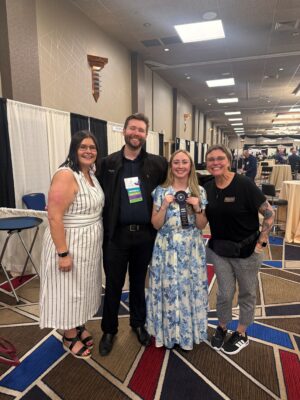 The UW School of Pharmacy had a strong presence at the recent Northwest Pharmacy Convention in Coeur d’Alene, ID, with 8 students, 7 faculty, and many alumni in attendance.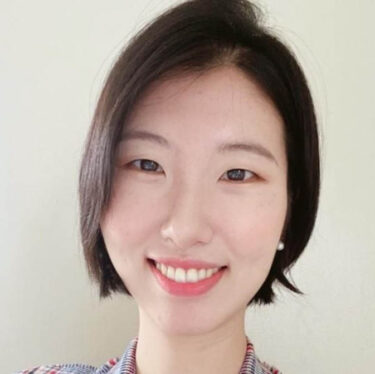
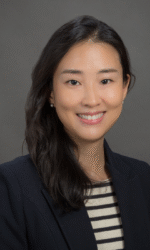
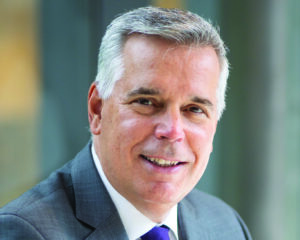 Sean D. Sullivan, Professor and former Dean in the University of Washington (UW) School of Pharmacy, and longtime leader of the Comparative Health Outcomes, Policy, and Economics Institute, or CHOICE Institute, has received the Avedis Donabedian Lifetime Achievement Award from the International Society for Pharmacoeconomics and Outcomes Research (ISPOR), the Professional Society for Health Economics and Outcomes Research. The award recognizes a career of sustained contribution to the science and practice of improving healthcare quality, value and decision-making.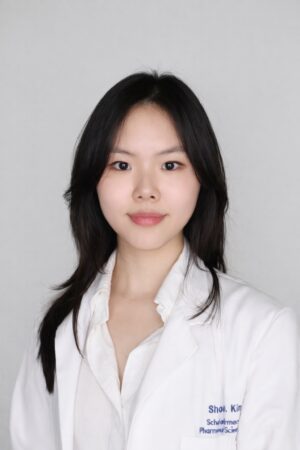
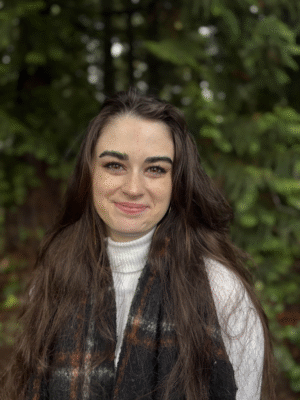
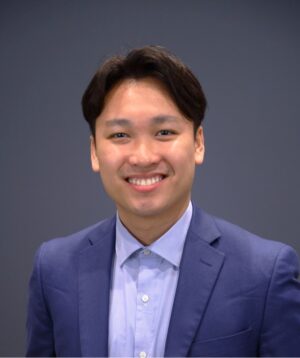

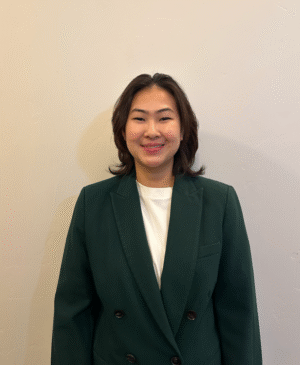
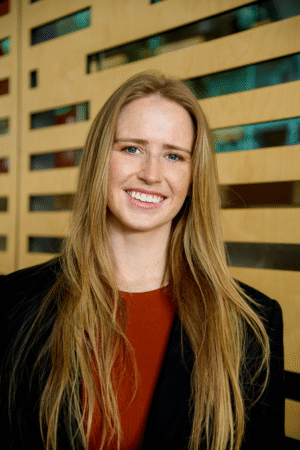
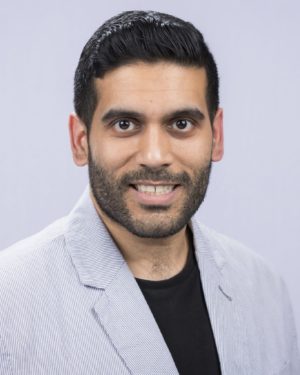
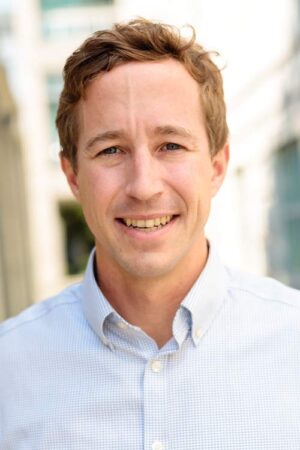




 A very special welcome to new Department of Pharmacy Assistant Professor, Dr.


 Olivia Yip, 2nd Year MS Fellow


 CHOICE PhD student Hui-Hsuan Chan was selected as the School’s 2025 Magnuson Scholar—an honor presented annually to one student from each of UW’s six Health Sciences schools. Funded by the Warren G. Magnuson Institute, the award recognizes both academic achievement and the potential for impactful research in fields like diabetes and public health.
 Zizi Elsisi, a PhD graduate of the CHOICE Institute, was honored with the 2025 Outstanding Dissertation Award for her rigorous and timely work on subscription-based payment models for Hepatitis C treatment in Louisiana and Washington.
 Chris Arian, from the Department of Pharmaceutics, also received the 2025 Outstanding Dissertation Award for his development of an intestinal microphysiological system (MPS) using a long-term cultured enteroid monolayer model. His innovative research is poised to significantly advance the field of drug metabolism and drug–drug interaction (DDI) prediction.
 PhD candidate Aurora Authement was recognized with the School’s 2025 Graduate Student Leadership Award for her outstanding contributions to the Pharmaceutics Department and her mentorship within the student community.
 Medicinal Chemistry PhD candidate Alesi Escobedo was selected for the 2025 Graduate Student Leadership Award in recognition of her exceptional service, mentorship, and positive impact across the department.
 Tori Dayer, PharmD and current PhD student at the CHOICE Institute, received the 2025 Graduate Student Leadership Award for her lasting impact on the program and her peers.
 The UWSoP is proud to announce that CHOICE PhD student Hui-Hsuan Chan was selected last month as a 2025 Magnuson Award recipient. With a keen interest in improving healthcare sustainability through robust health economics research, Hui-Hsuan focuses on managing high-cost chronic conditions like diabetes in an effort to alleviate their economic burden.
 We’re excited to share that Manpreet Dhankhar, a PhD student from
  In their new JAMA Network Open study, PhD candidate Felipe Montano-Campos, Associate Professor Aasthaa Bansal, and co-authors tracked 5 years of monthly tyrosine kinase inhibitor (TKI) adherence in chronic myeloid leukemia (CML) patients.
 To rule out the possibility that concordant relationships were driven by patient selection or provider sorting, the team formally tested whether concordance was associated with underlying clinical, sociodemographic, or care-seeking characteristics. It was not — the association with adherence remained robust.
 At the UW School of Pharmacy, innovation and compassion go hand in hand – just ask Assistant Professor Dr. Clayton English, whose dedication to advancing mental health care and psychiatric pharmacy has earned him recognition as a
  With broad clinical and research interests spanning psychiatric medication safety, deprescribing, mood disorders, adult ADHD and drug-induced behavioral conditions, English is a champion for interprofessional education, team-based care and student well-being.
 A recent study published in Value in Health by Julia Fox – a 3rd year PhD student at the CHOICE Institute – and coauthors reveals the staggering indirect costs of Alzheimer’s disease (AD), emphasizing the financial impact of unpaid caregiving and lost productivity across all stages of the disease.
 The National Academy of Medicine (NAM) has selected the UW School of Pharmacy’s Jennifer Bacci, Endowed Associate Professor in Innovative Pharmacy Practice, as one of seven outstanding health professionals for the class of 2024 NAM Fellowships. The fellows were chosen based on their professional qualifications, reputations and accomplishments, and the relevance of their current field expertise to the work of the NAM and the National Academies of Sciences, Engineering, and Medicine.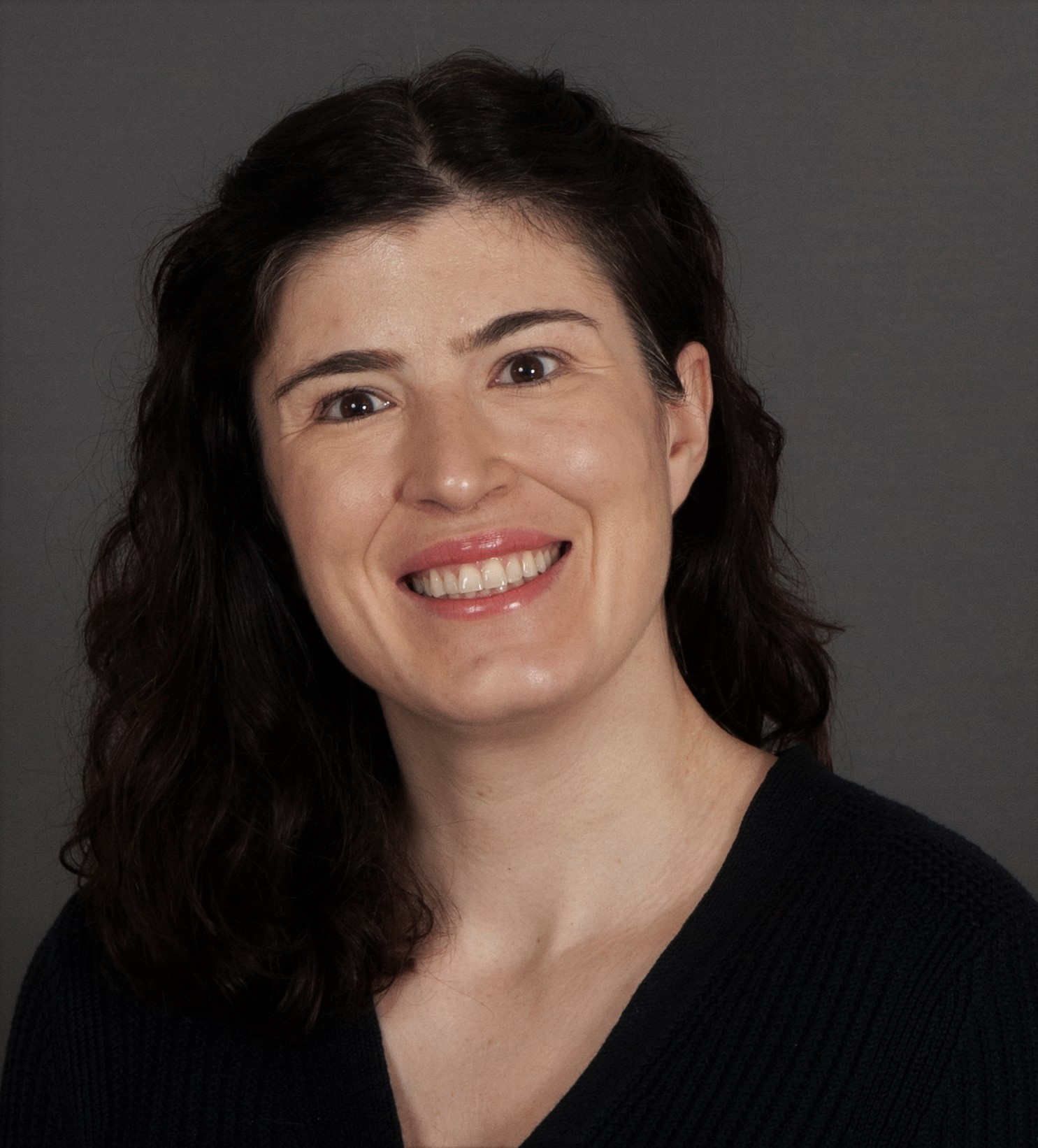
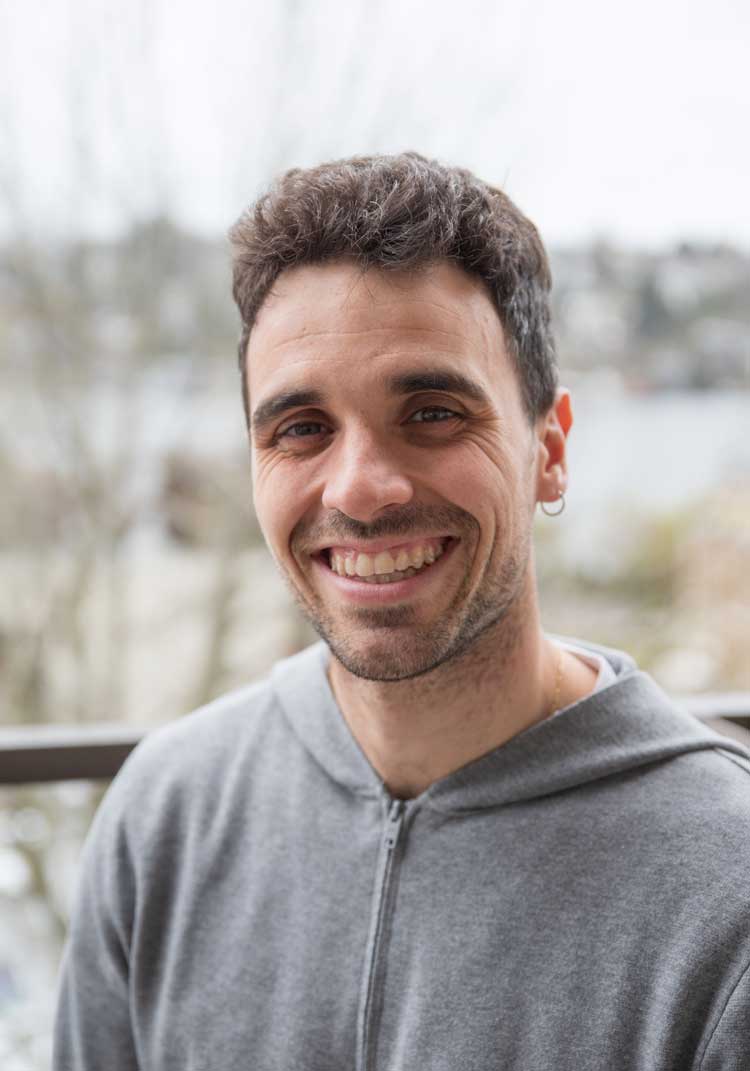 Congratulations to Aaron del Pozo Sanz, a post-doctoral scholar at the University of Washington School of Pharmacy’s Barker-Haliski Lab!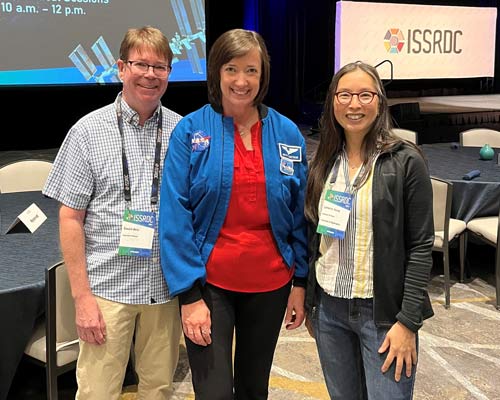
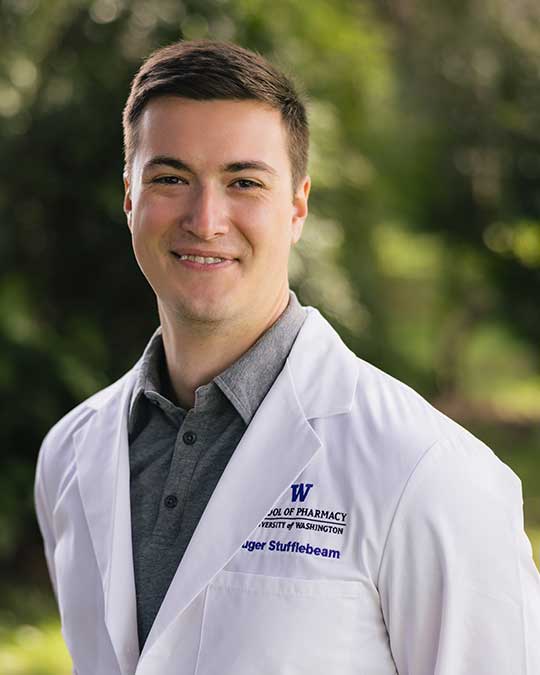 UWSOP PharmD student Ruger Stufflebeam has been selected for the 2023 United States Public Health Service Excellence in Public Health Pharmacy Award!


 UWSOP Professor and Chair of the Department of Pharmacy H. Steve White has been honored with the Extraordinary Contributions to the Field of Epilepsy Award by the American Epilepsy Society (AES). The award was announced this week at the 2020 AES Annual Event.
 Abhinav Nath, PhD, Associate Professor, Department of Medicinal Chemistry
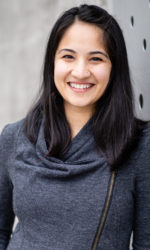
 Brian Werth, PharmD, Associate Professor, Department of Pharmacy
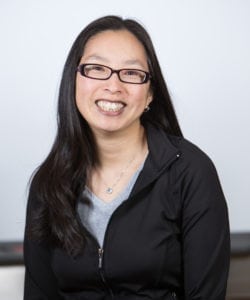 Cathy Yeung, PharmD, PhD, Assistant Professor, Department of Pharmacy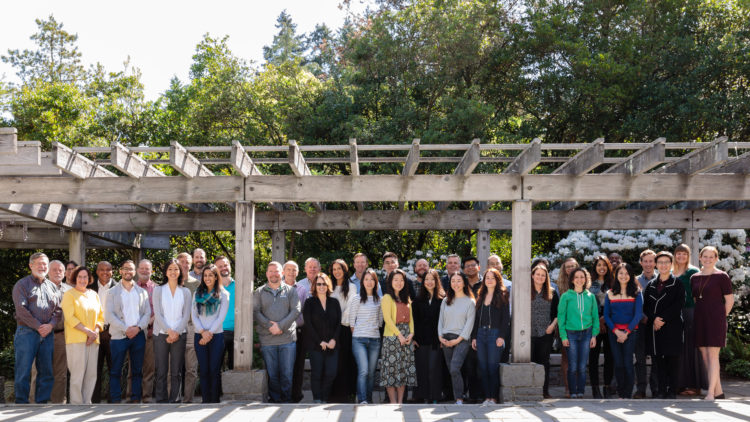
 Jackie Gardner | Epidemiologist & Legendary Advocate for Increased Access to Care
 Don Downing, ’75 | Advocate for Pharmacy and Women’s Reproductive Health
 Jennifer Bacci | Assistant Professor & Community Pharmacy Researcher

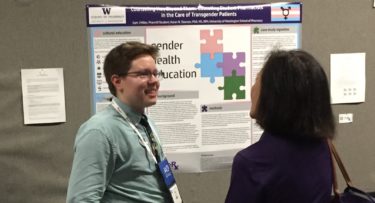
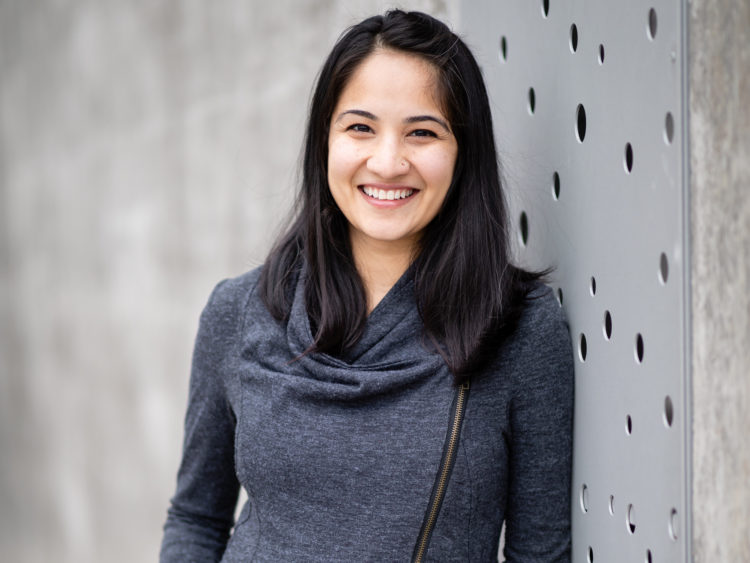



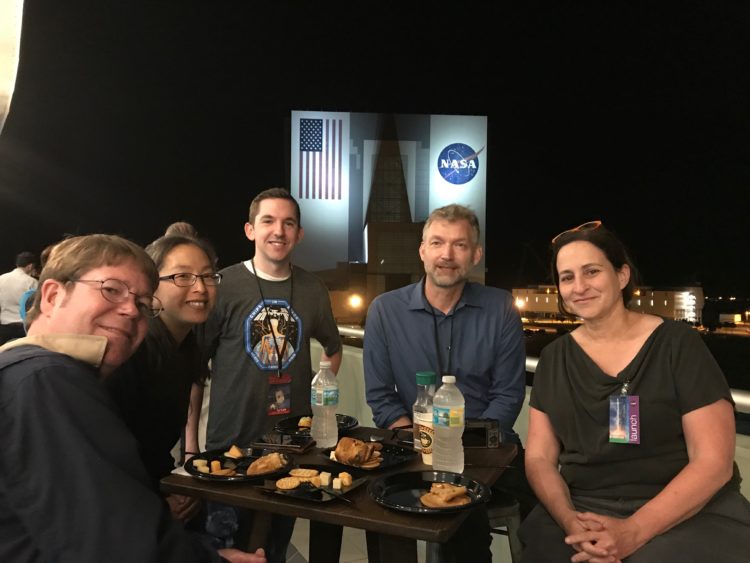


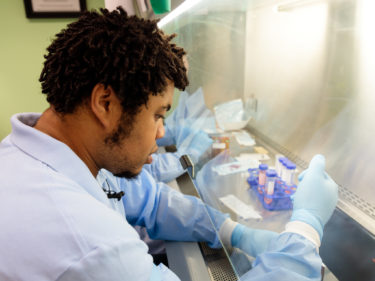

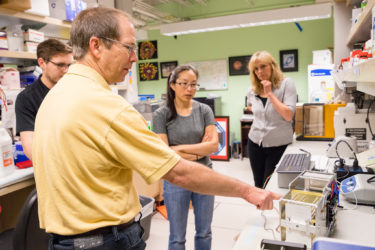


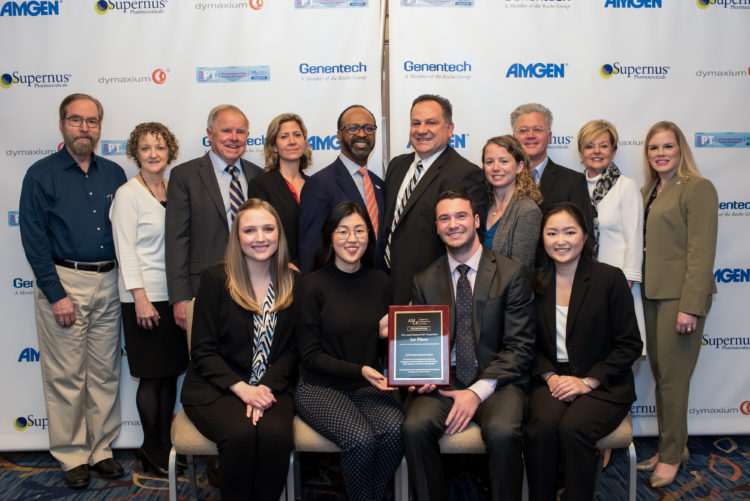

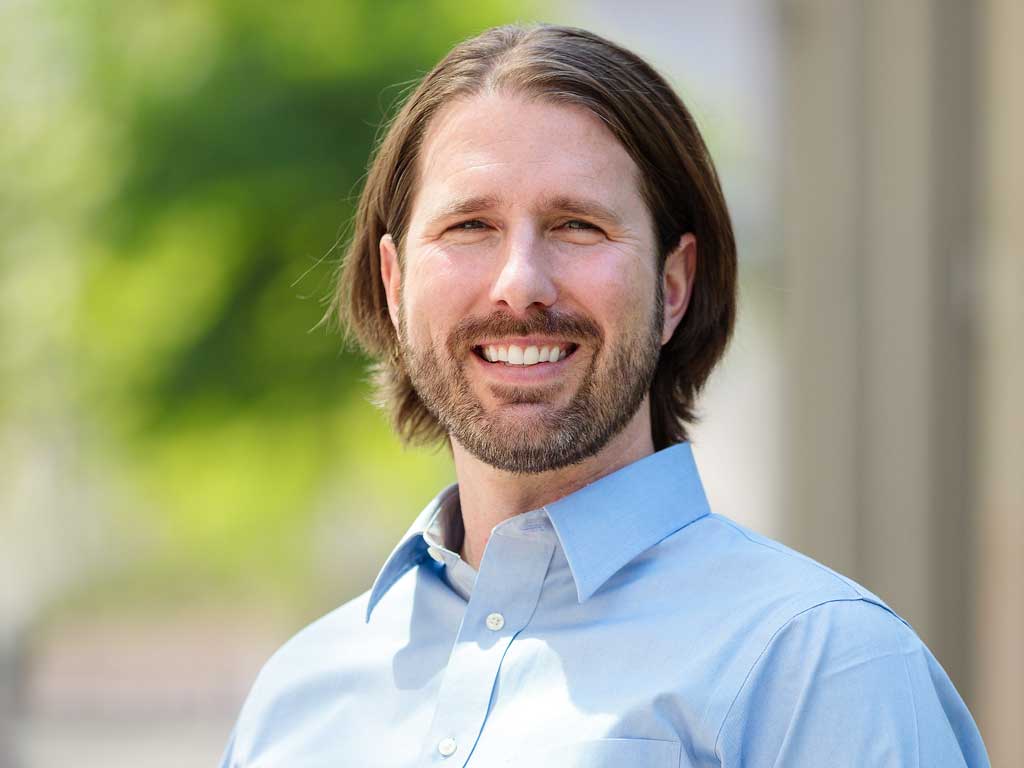
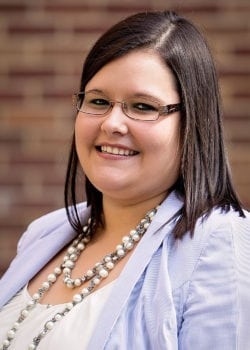
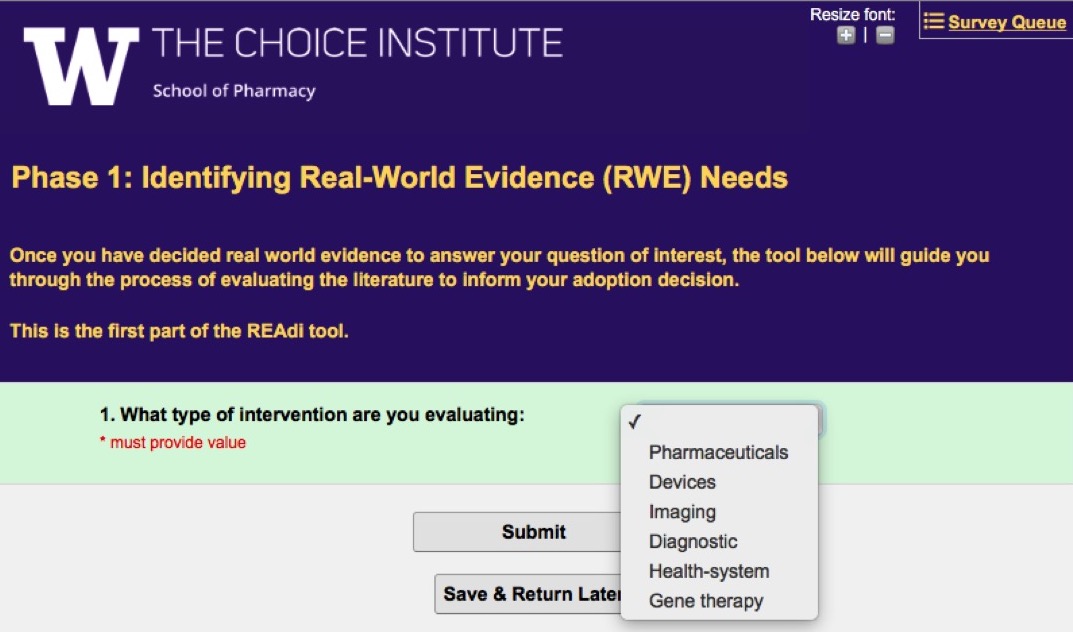
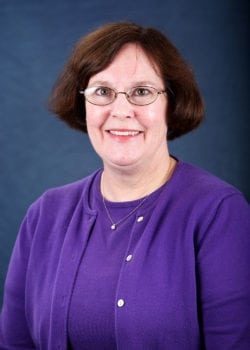
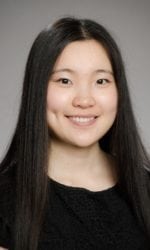
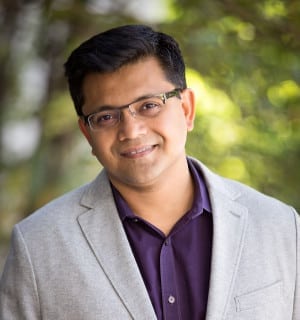

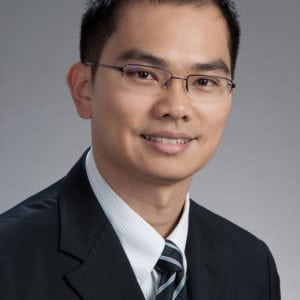
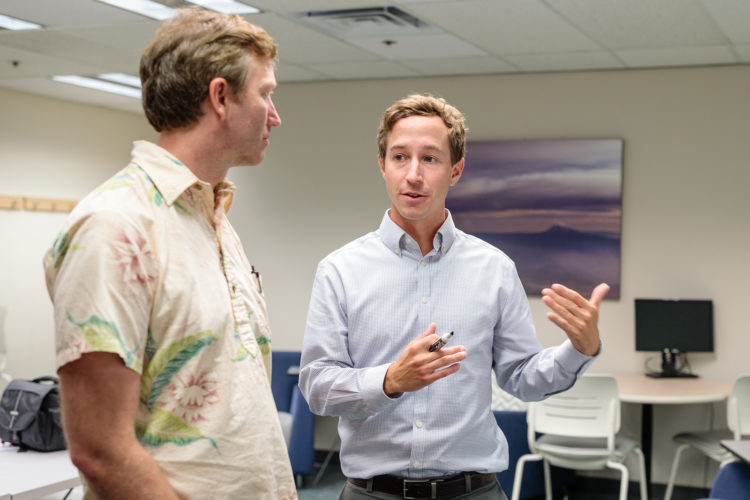
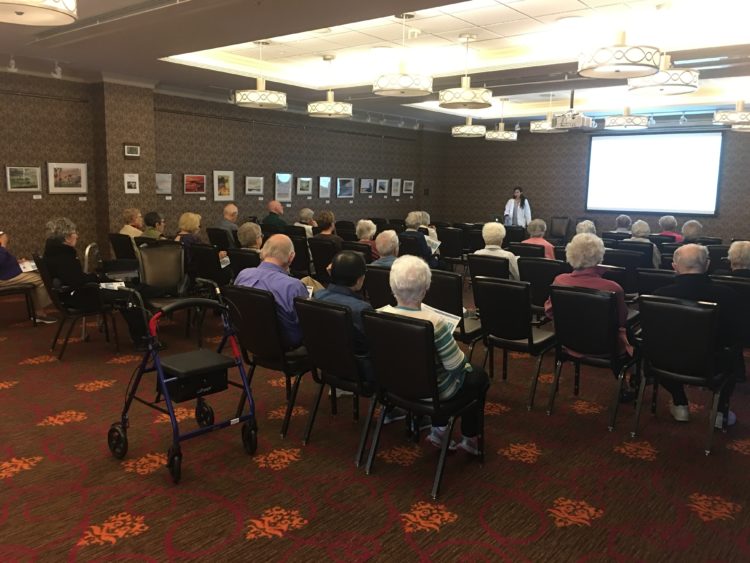
 Era Living communities are active and have many life-long learners as residents, including retired UW faculty. UWSOP and Era Living have a partnership designed to support residents’ health and create learning opportunities for our student pharmacists, under the mentorship of our faculty. Students and faculty regularly give well-attended talks on different subjects to empower the staff and residents in their own care. Topics include what to do to prevent contagious illnesses like pneumonia, whooping cough, and more.

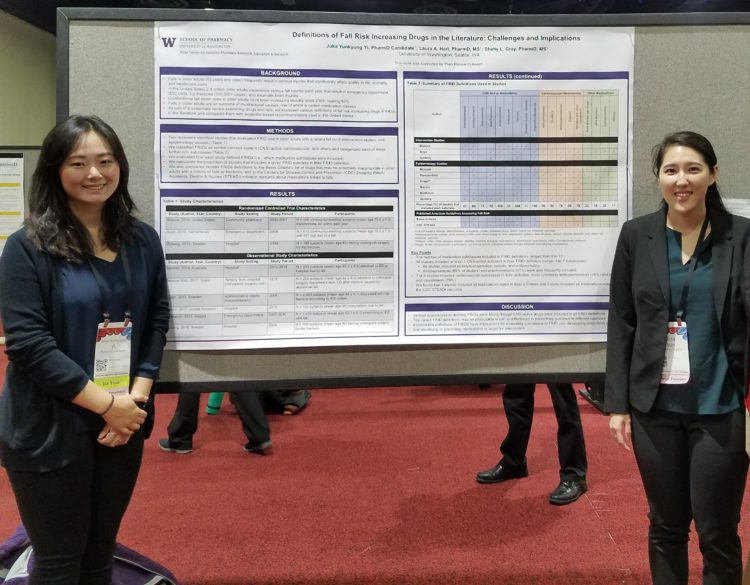
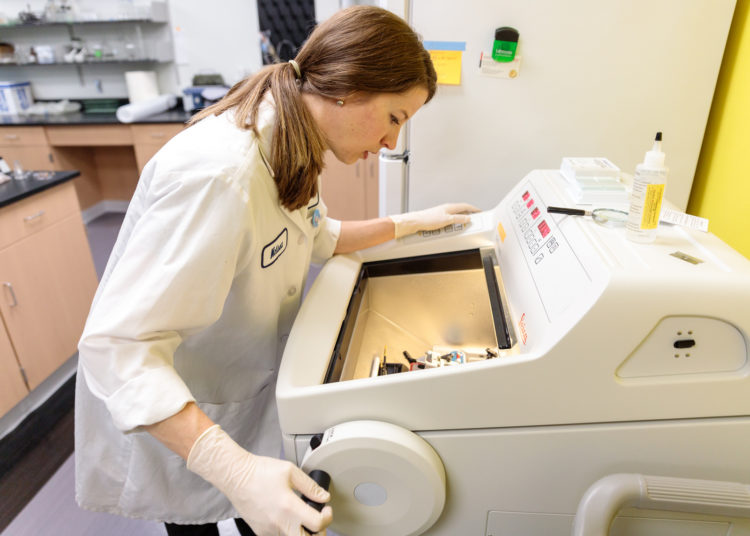
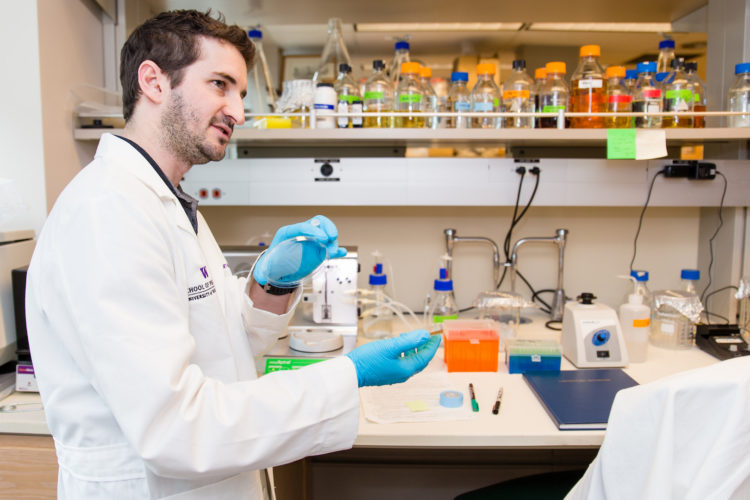
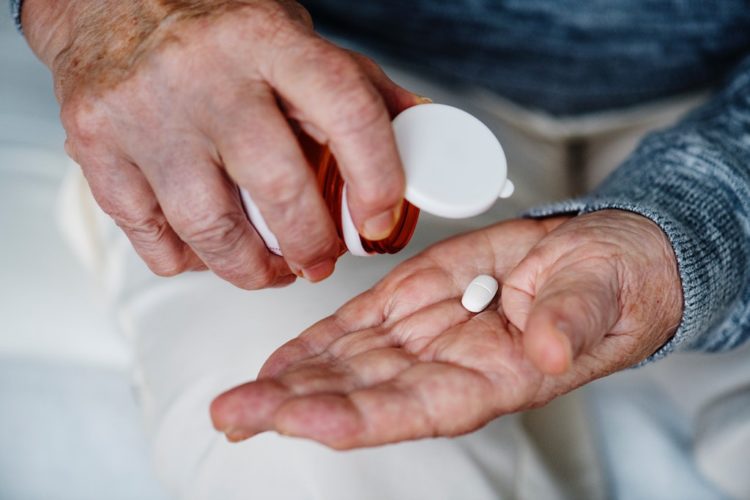
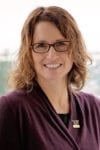
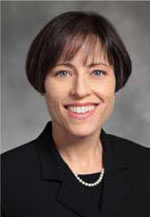
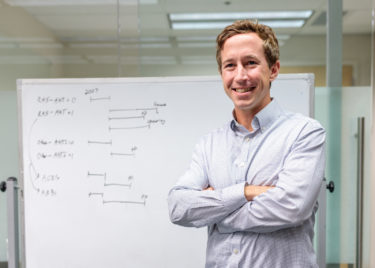
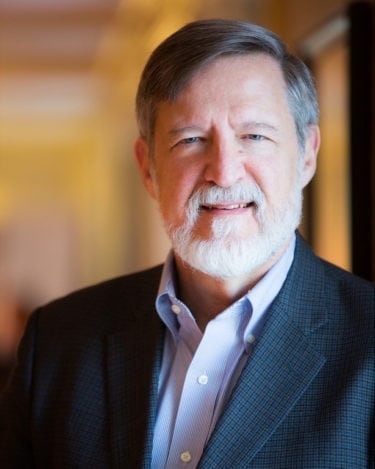
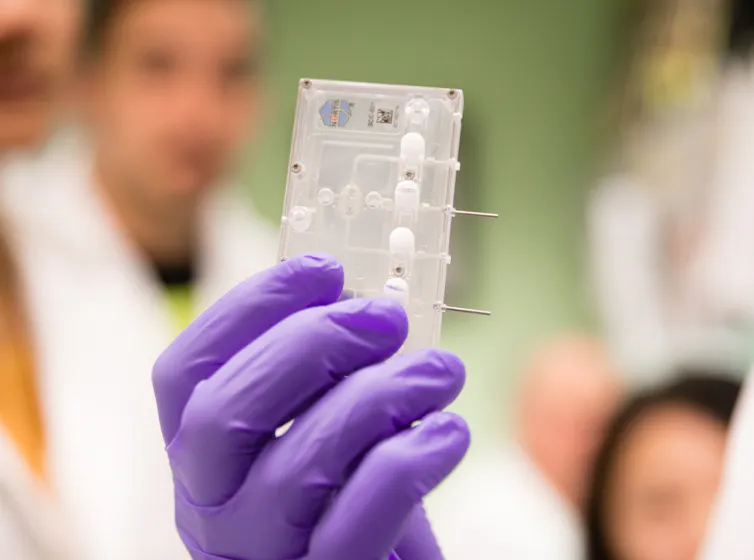
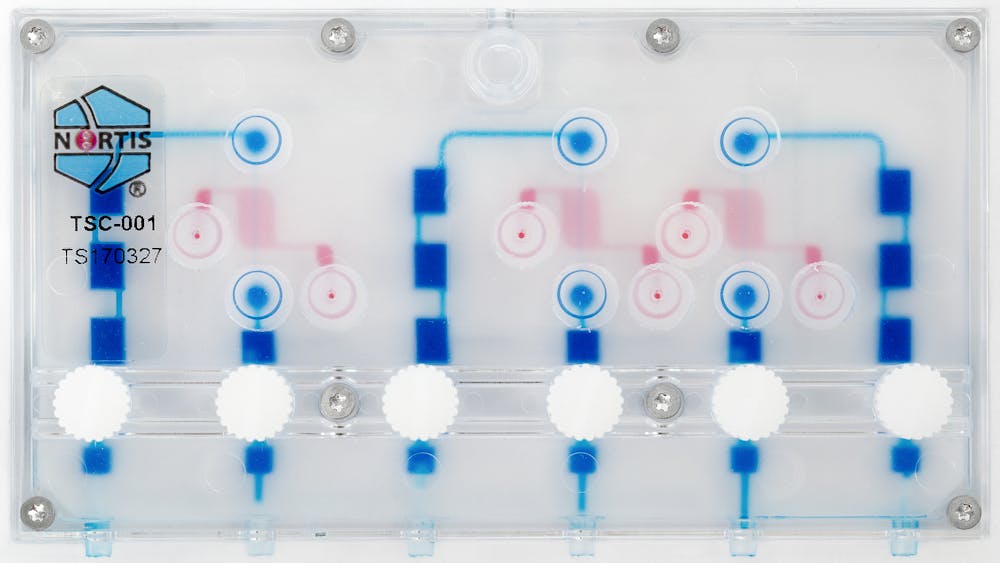

 Organs-on-chips can also be used to discover new drug targets. Our team is evaluating the kidney-on-a-chip as a tool to personalize drug selection and dosing in people with kidney cancer, polycystic kidney disease and chronic kidney disease. Other organs-on-chips labs around the country are studying diseases of the immune system, brain, lungs, heart and blood vessels. By working together, dozens of research teams are developing this new technology to revolutionize drug discovery, leading to the development of better and safer medications for all.

 In the meantime, Gray and Hanlon agree that anticholinergics in general should be avoided in older adults.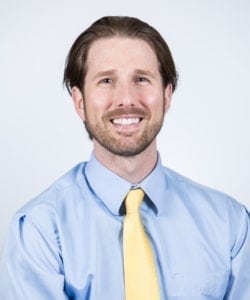
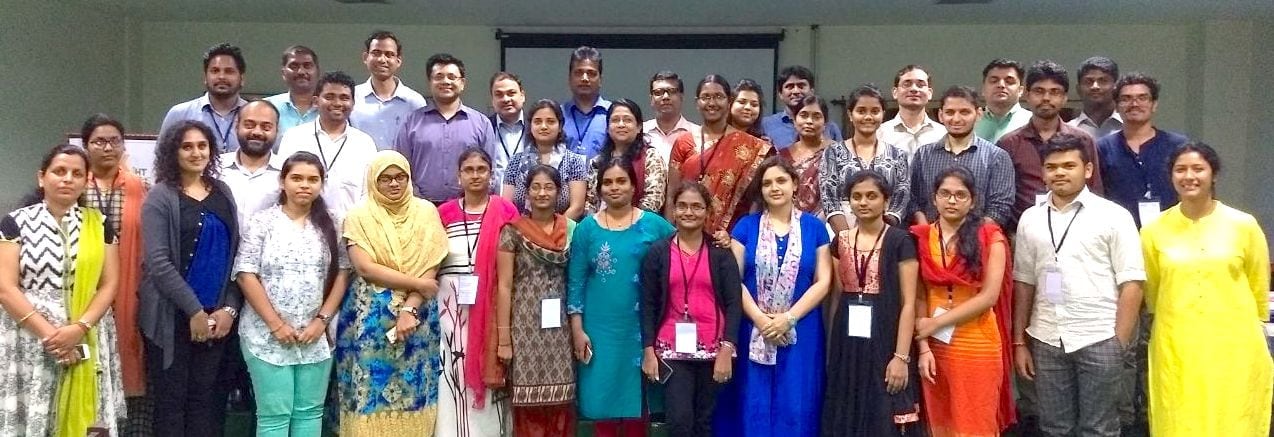

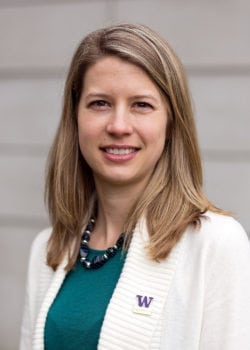
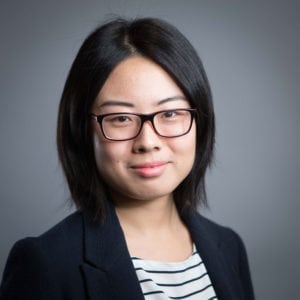 Meng Li, a 5th year CHOICE PhD candidate, along with Kai Yeung (CHOICE Alum), and Josh Carlson (CHOICE Faculty) won Journal of Managed Care & Specialty Pharmacy’s (JMCP) Best Paper Award. The paper was submitted to JMCP as a Research Brief. They simulated the costs and outcomes of trastuzumab for the treatment of metastatic breast and gastric cancers, under the traditional indication-based pricing (IBP) framework using clinical trials data and the outcomes guarantee framework using data from observational studies.
 Mark Bounthavong, 5th year CHOICE PhD candidate, has been nationally recognized by the U.S. Department of Veterans Affairs and was invited to speak on the topic of improving medication safety for veterans. His goal is to educate providers using unbiased, noncommercial evidence so that they can provide the best care for Veterans.
 Since January 2017, CHOICE PhD student Simrun (Simi) Grewal has worked with UW’s Strategic Training, Analytics, and Research Center (START) as a research assistant with the Bill & Melinda Gates Foundation’s (BMGF) Integrated Portfolio Management (IPM) Team.

 Fellows and projects will be selected by a committee of faculty in The CHOICE Institute based on academic merit. Generally, awards will be made to second and higher year students in CHOICE. Fellows will have a CHOICE faculty mentor as well as an advisor from WRF.
 Karan Dawson, Clinical Associate Professor, Department of Pharmacy; Consulting Pharmacist, UW Pharmacy Cares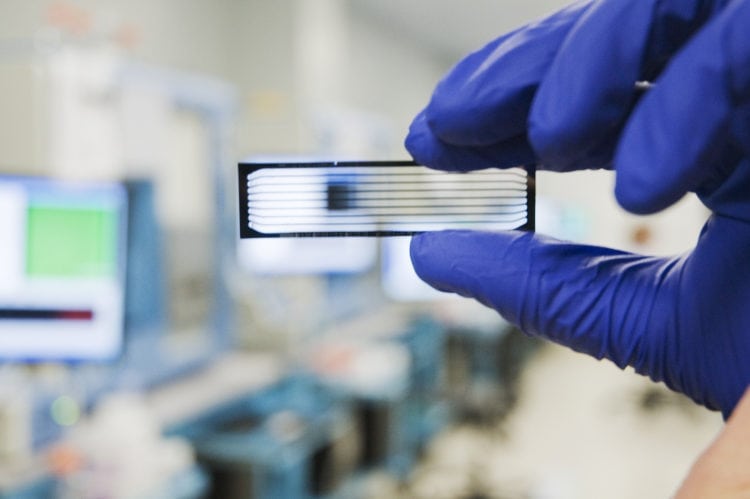
 The main question being asked right now is whether or not widespread genomic screening will be a cost effective method of preventative medicine for patients. Many predict that this is the future of health care because it will better inform health care providers about the individual patient, in other words, personalized medicine at a genomic level. The cost of widespread genomic testing in the United States would fall mainly to insurance companies—and they will want to be sure that testing does not open the door to unsustainable health care costs, says Veenstra.
 UWSOP Associate Dean Andy Stergachis co-edited the “Maternal Immunization Safety Monitoring in Low- and Middle-Income Countries: A Roadmap for Program Development” for the Bill & Melinda Gates Foundation and Global Alliance to Prevent Prematurity and Stillbirth, which was featured on the Gates Foundation blog, Impatient Optimists.

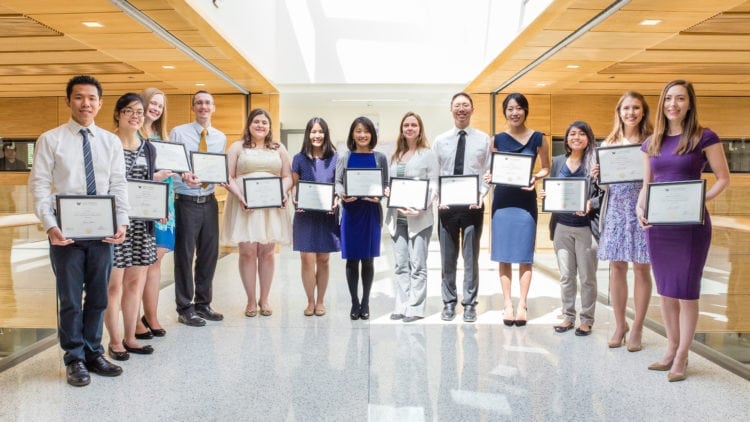

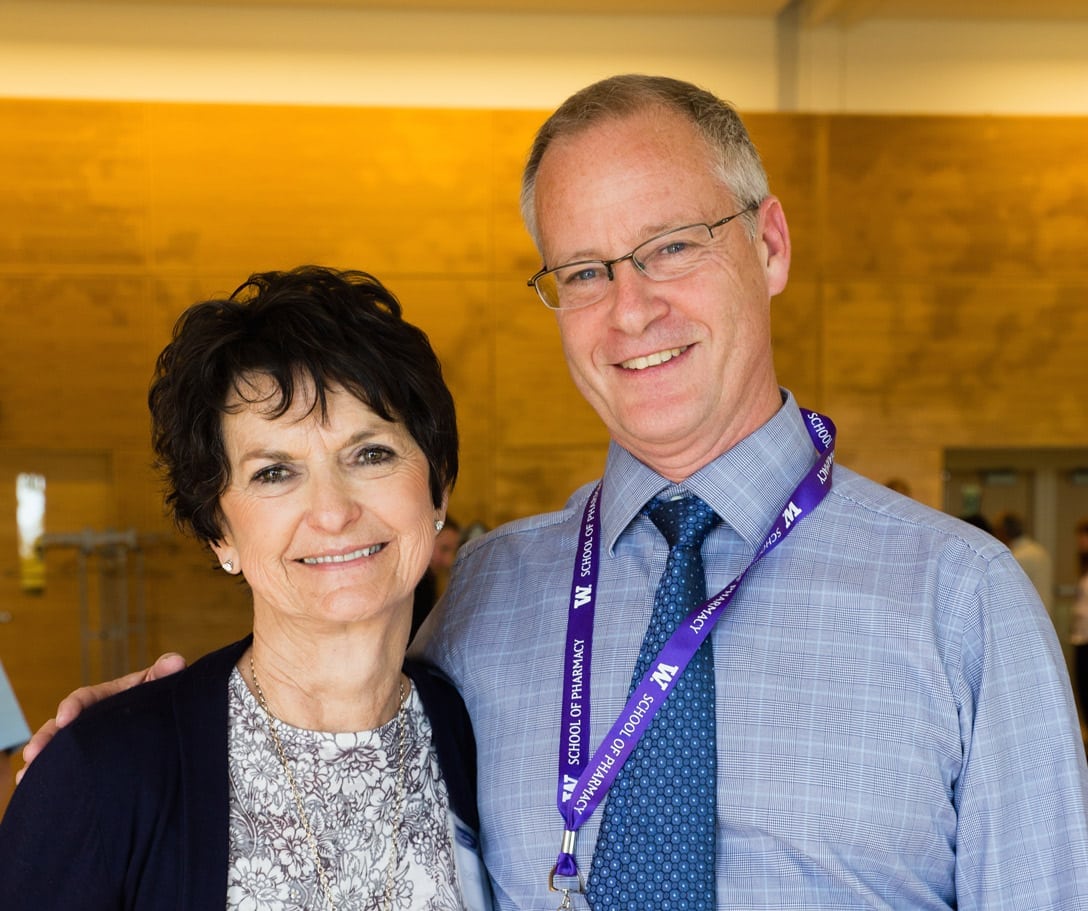
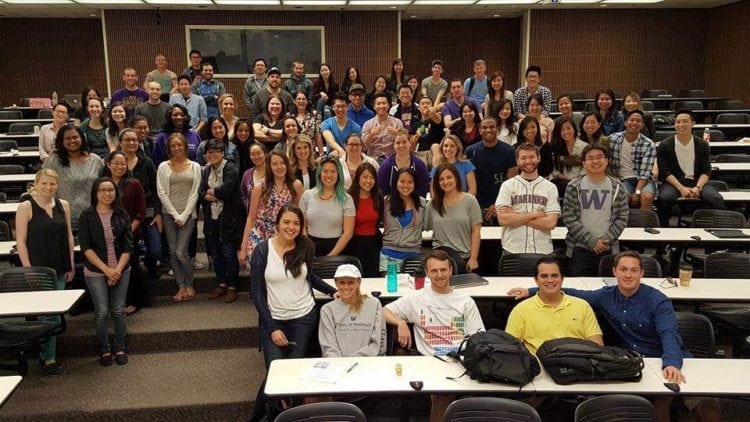


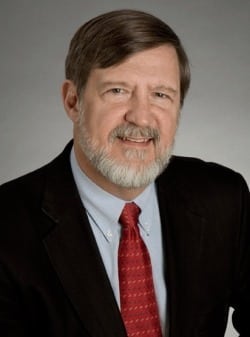

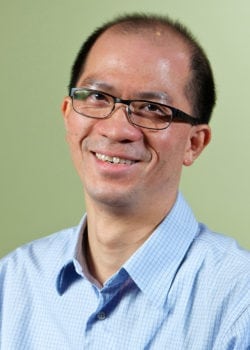
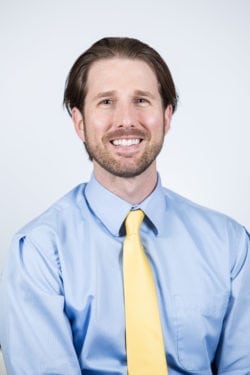
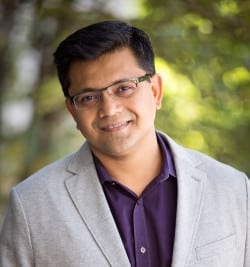


 She met her husband, Herb Bridge, at a picnic in 1947 while on a double date. Only Shirley wasn’t on a date with Herb; she was with his friend. Undaunted, Herb pursued Shirley and proposed on their second date. A few weeks later, he presented her with an engagement ring. In his autobiography, he describes their conversation. “Do you like it?” he asked. “Well, yes,” she said. “Fine. We’re engaged.” With that and a promise to support her career as a pharmacist, Herb’s search for a smart, career-oriented woman with a mind of her own was successful. They wed on January 25, 1948.
 The couple continued to grow professionally and became more civically active as their family grew. Herb was nicknamed “Mr. Downtown” for his advocacy in creating a vital city center while Shirley advocated for legislative changes. In 1973, Shirley had gone to her local bank to co-sign a loan for a friend. The bank manager said, “I’m sure Herb won’t mind [if I give you a loan], I’ll give him a call.” Shirley informed the bank manager that she minded a great deal. She advocated for a new law and within a year, Washington state became the first to ban discrimination in credit and insurance based on sex or marital status.
 The family endowed a professorship in Shirley and Herb’s name to fund female faculty and research in geriatric pharmacy. Shirley and Herb Bridge Endowed Professor Peggy Odegard established UW Pharmacy Cares with other UWSOP faculty, creating a faculty practice that provides a new approach to training our PharmD students, along with medication-related consultation and education to community-based partners. “The Bridge Endowment means a lot to this school,” said Peggy. “Without an endowment, innovative advances to pharmacy education and research are difficult to establish.” Shirley’s son, Jon, graduated magna cum laude with honors in economics at UW, followed by UW Law School, nine years active duty in the Navy and 22 in the reserve. Today, Jon shares leadership of Ben Bridge Jewelry as general counsel and co-CEO and with his cousin Ed Bridge, and serves on the Board for the Alliance for Education. With his wife, retired state Supreme Court Justice, Bobbe, herself an alumna and affiliate professor of law at UW, they founded the Center for Children and Youth Justice, a nonprofit for the reform of the juvenile justice and child welfare systems. Shirley’s son Dan became a Rabbi and served as Executive Director of Hillel UW from 1988-2007. After retiring from Hillel, he has consulted to many non-profits across Seattle. He currently serves as the Interim Executive Director of the Seattle Audubon Society and is the Emeritus Executive Director of Hillel UW. His wife Simcha Shtull has a private practice as a psychotherapist.