Shikoku is the fourth largest of the Japanese islands, and as of 1991 was *comparatively* unspoiled by modern development. A bunch of huge new bridges have since been built across the Inland Sea...
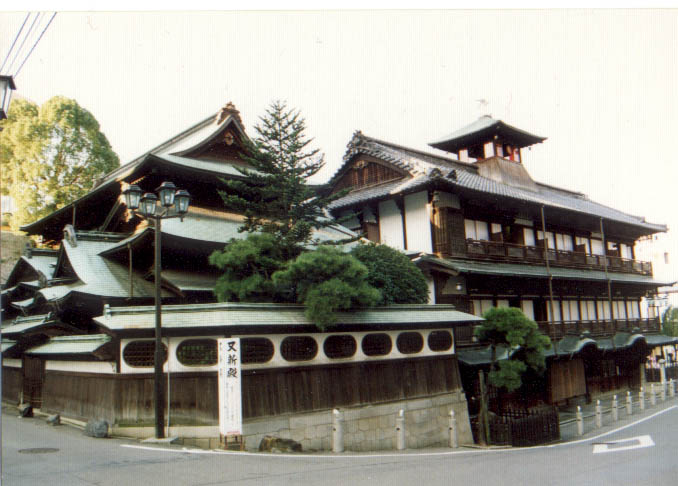
I visited a couple of very scenic sites which are well-known in Japan. The city of Matsuyama in NW Shikoku is famous for a traditional onsen (hot-spring bath) which was featured in a novel, and for a well-preserved hill-top castle of considerable beauty, and was my goal for the first day on my Japan Rail pass. After getting lost and blundering around a modern park and/or cemetery for an hour (my recollection of the exact details is vague), I found my way to the youth hostel, which is convenient to the onsen. Both highly recommended!
The Dogo Onsen. Cool,
huh?
The next morning, I toured the castle and quickly blazed through another roll of Fugicolor HG400. After briefly showing my dear old Pentax ME Super to an aged museum attendant, who seemed to wonder why an American tourist didn't have an American-made camera, I turned and nearly stepped off an eight-foot high internal terrace of the castle. These images thus come to you half a pace from disaster.
The main keep of the castle,
as seen from the east inside the outer wall.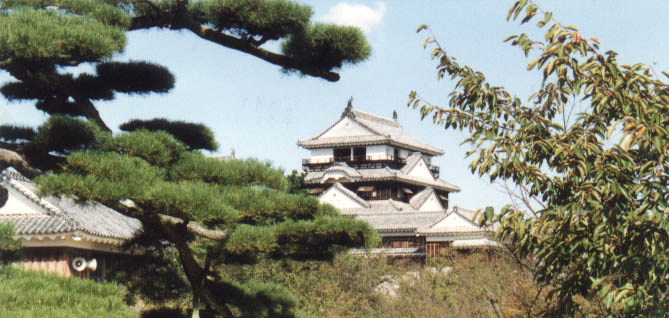
From the main keep, a
view to the NW of an inner wall, the city and the Inland Sea.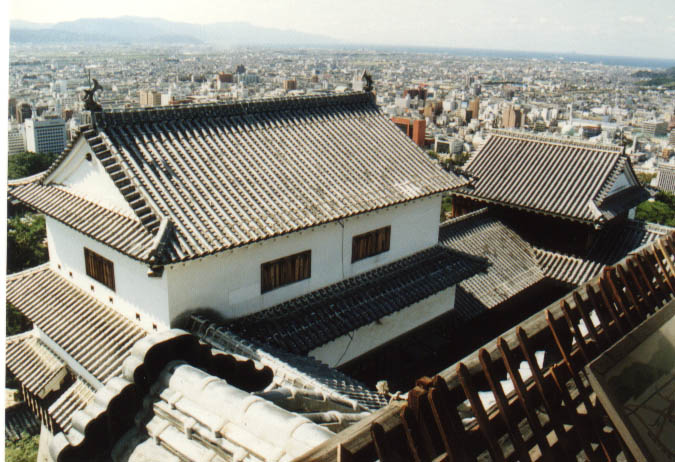
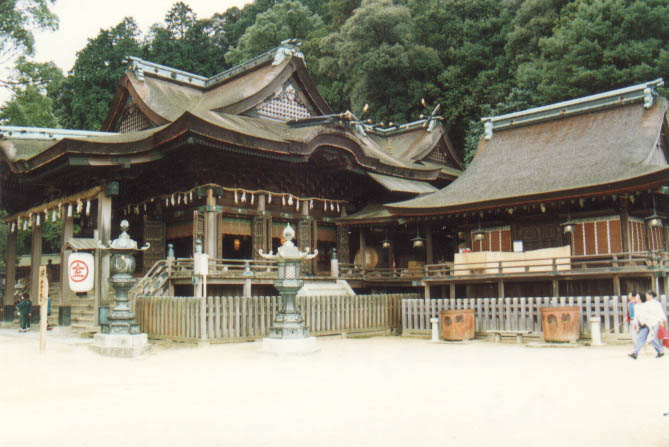
The town of Kotohira,
in central Shikoku, is known for a Kabuki theater and a temple
complex dedicated to mariners. Oddly enough, it is quite far
from the coast, at least by the scale of Shikoku. Perhaps a day
or two of hiking was supposed to demonstrate the sailors' sincerety.
Another roll of film wiped out.